

Residential Lights for Homes, Villas & Apartments in USA, UK, UAE, Saudi Arabia & Global Markets
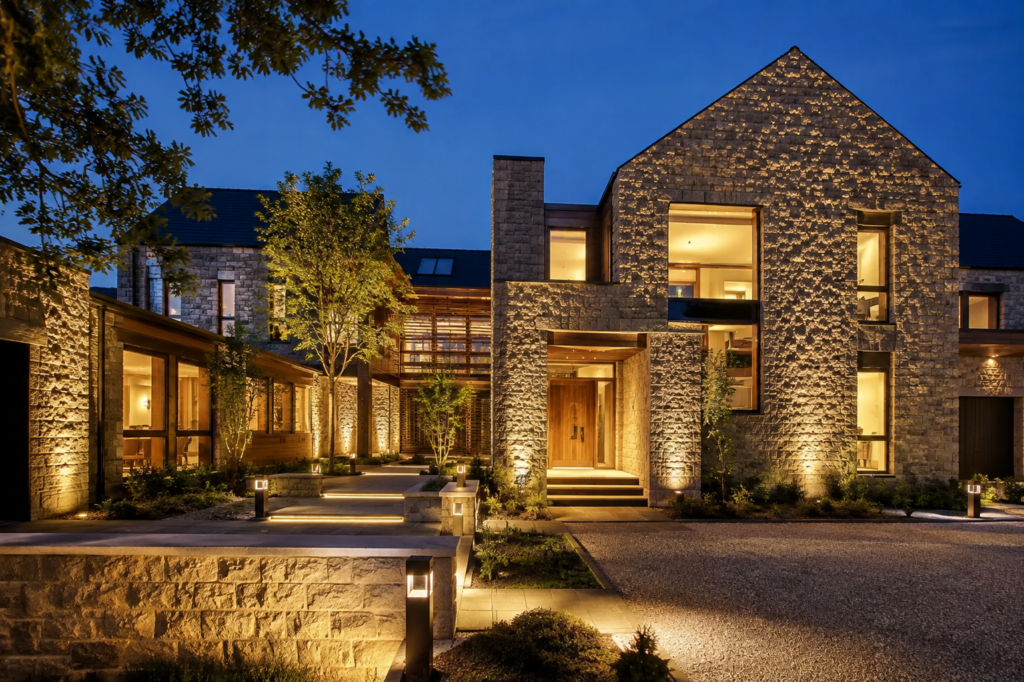 A beautiful home deserves more than basic illumination. The right Residential Lights can define architectural features, improve visual comfort and create different moods throughout the property.
From contemporary apartments to luxury villas, residential projects require a combination of functional, architectural and decorative illumination. At Luzion Lighting, we develop Residential LED Lights and complete light solutions around the architecture, interior finishes, room function and outdoor environment.
The goal is simple: provide the right amount of light, in the right place, with the right visual character.
Whether you are designing a private residence, villa development, apartment, farmhouse or premium residential community, carefully selected Residential Light Solutions can improve both the appearance and everyday experience of the property.
What Are Residential Lights?
Residential Lights are fixtures and lighting systems designed for homes, apartments, villas and other residential environments. They cover both indoor and outdoor applications, ranging from recessed ceiling fixtures to garden and façade products.
A residential project may use different light sources for different purposes:
- General illumination for everyday activities
- Accent illumination for artwork, furniture and architectural features
- Decorative fixtures for visual impact
- Outdoor products for gardens, pathways and façades
The important point is that residential illumination should work as a coordinated system rather than a collection of unrelated fixtures.
Residential Lights vs Conventional Home Lighting
| Stage | What It Includes |
|---|---|
| 1. Site Assessment | Understanding the villa layout, architecture, landscape, and lighting requirements. |
| 2. Lighting Concept | Developing a lighting approach based on the villa’s style, function, and ambience. |
| 3. Fixture Selection | Selecting suitable Facade Lights, landscape, pathway, pool, and decorative fixtures. |
| 4. Lighting Design & Simulation | Creating layouts, beam angles, light levels, and visual simulations using professional tools. |
| 5. Technical Planning | Finalising electrical points, controls, installation details, and lighting specifications. |
| 6. Installation Support | Providing technical guidance to ensure fixtures are positioned and installed correctly. |
| 7. Final Testing | Checking illumination, alignment, controls, and overall nighttime appearance. |
Why Residential Lights Matter
Good residential illumination is not simply about making a room brighter. It influences comfort, atmosphere, colour appearance, architecture and energy efficiency.
A well-planned system can make a compact apartment feel more spacious, bring depth to a living room and highlight materials such as marble, timber, glass and textured walls.
Key Benefits of Well-Planned Residential Lights
- Visual Comfort: Controlled brightness and glare help create a more comfortable environment.
- Architectural Enhancement: Light can emphasise walls, ceilings, textures, artwork and façade details.
- Energy Efficiency: LED technology can reduce energy consumption and maintenance requirements.
- Flexible Ambience: Dimming and lighting controls allow different scenes for different activities.
For premium residential projects, these factors become particularly important because lighting interacts directly with expensive architectural and interior finishes.
Types of Residential Lights
A successful residential project normally uses multiple fixture categories. Each serves a different visual or functional purpose.
Indoor Residential Lights
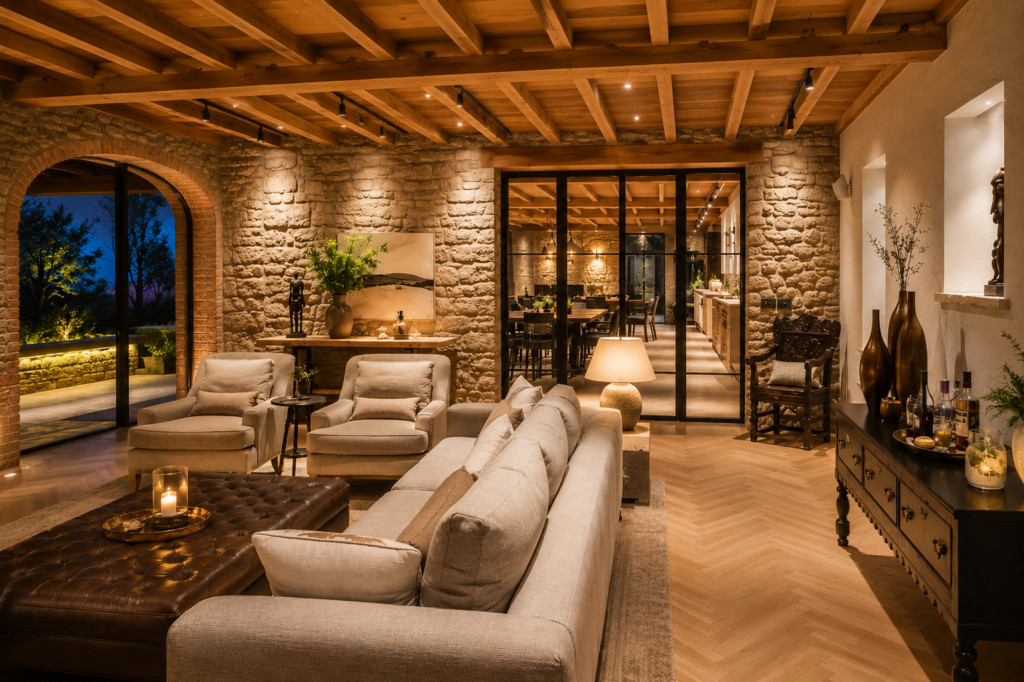 Indoor Residential Lights provide illumination throughout the interior and can be selected according to room function, ceiling design and desired atmosphere.
Common options include:
- Residential downlights and recessed lights
- Residential spotlights and track lights
- Residential linear and cove lights
- Residential wall, pendant and decorative lights
For contemporary interiors, recessed and concealed products can maintain clean architectural lines, while adjustable fixtures provide flexibility for artwork and feature surfaces.
Outdoor Residential Lights
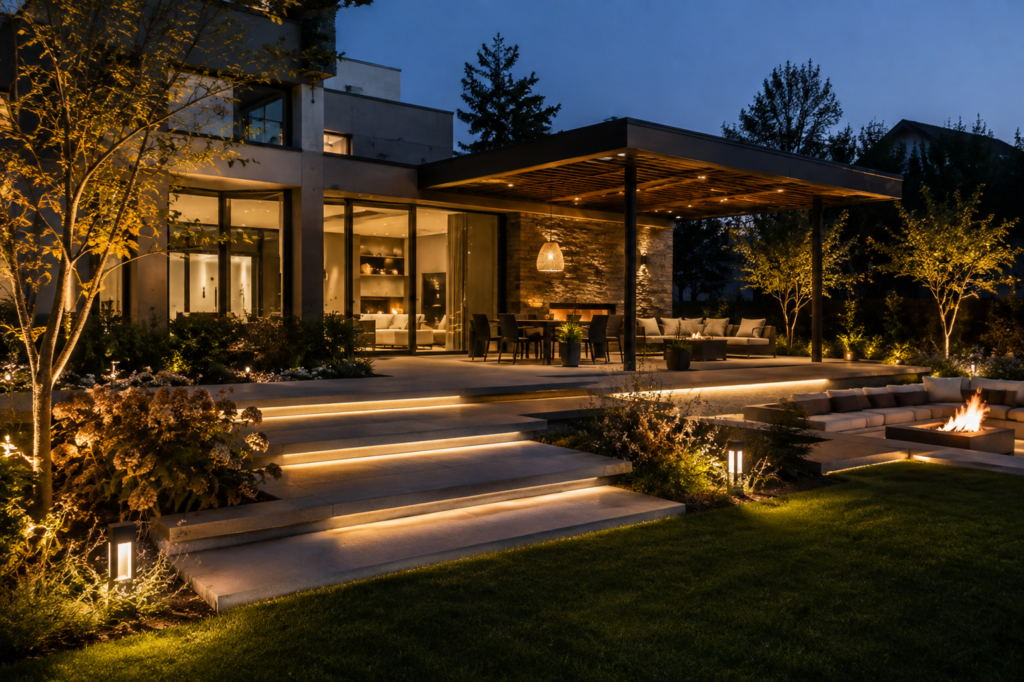
Outdoor Residential Lights are designed for areas such as gardens, entrances, terraces, balconies, pathways and building exteriors.
Outdoor applications require additional attention to environmental protection and installation conditions. The right lighting should be selected based on exposure to rain, dust, humidity and temperature variations. Proper IP-rated outdoor lighting helps ensure reliable performance and long-term durability in different weather conditions. Light distribution, colour temperature and mounting position should also be carefully considered to create a comfortable and visually balanced environment. Well-planned outdoor residential lighting can improve safety, highlight architectural features and enhance the overall character of the property after sunset.
Popular categories include:
- Residential Garden Lights
- Residential Landscape Lights
- Residential Path Lights
- Residential Bollard Lights
- Residential Spike Lights
- Residential Inground Lights
- Residential Step Lights
- Residential Facade Lights
The objective should not be to illuminate every outdoor surface equally. Controlled pools of light and carefully maintained shadows can create depth and make landscape architecture more visually interesting after dark.
Architectural Residential Lights
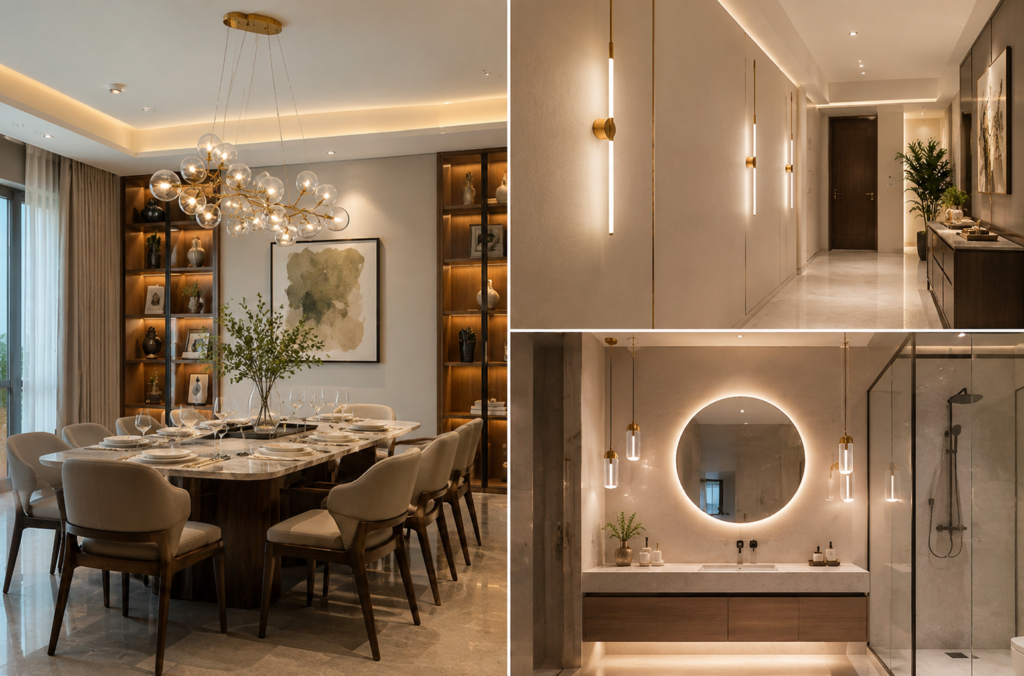 Architectural Residential Lights are designed to integrate with the building itself. Instead of making the fixture the centre of attention, the illumination highlights the architecture.
They are particularly useful for:
- Recessed ceilings and architectural details
- Wall washing and wall grazing
- Concealed linear illumination
- Staircases and niches
For modern villas and high-end residences, this approach can produce a cleaner visual result while allowing materials, geometry and landscaping to remain the focus.
Decorative Residential Lights
Decorative Residential Lights combine illumination with visual expression. They can become an important part of the interior design rather than remaining purely functional.
Chandeliers, pendant fixtures, statement wall lights and designer luminaires are commonly used in living rooms, entrance halls, dining areas and double-height spaces.
However, decorative fixtures work best when supported by other layers of illumination. A chandelier may create a focal point, while recessed or concealed lights provide the surrounding ambient illumination.
A Balanced Residential Lighting System
| Rating Type | What It Measures | Why It Matters for Commercial Projects |
|---|---|---|
| IP (Ingress Protection) | Resistance to dust and water | Prevents moisture/dust damage in outdoor and coastal environments |
| IK (Impact Resistance) | Resistance to physical impact | Protects fixtures in high-footfall public areas from accidental or intentional damage |
This layered approach creates a more natural and flexible environment than depending on a single fixture type.
Luzion Residential Light Solutions
At Luzion, residential projects are approached by connecting product performance with architectural requirements.
The selection process can consider:
- Space and application
- Light distribution and beam angle
- CCT and CRI requirements
- Glare and visual comfort
- Indoor or outdoor environmental conditions
- Controls and dimming requirements
- Energy efficiency and long-term maintenance
This allows architects, interior designers, Lighting consultants, developers and homeowners to select solutions that are technically appropriate as well as visually refined.
From Residential Lights for Homes and apartments to premium villas and international residential developments, the emphasis remains on creating lighting that supports the architecture rather than overpowering it.
Explore the Next Stage of Residential Light Design
The right product category is only the beginning. The next step is understanding where each type of residential light should be used.
The following section explores room-by-room applications—from living rooms and bedrooms to kitchens, bathrooms, staircases, terraces and outdoor areas—before moving into specialised solutions for villas, apartments and luxury residences.
RESIDENTIAL LIGHTS FOR EVERY ROOM, HOME & PROPERTY TYPE
Every room has a different function, atmosphere and architectural requirement. A living room may need flexible ambient and accent illumination, while a kitchen requires precise task illumination. Bedrooms generally benefit from softer, warmer sources, whereas bathrooms and home offices require more controlled and functional solutions.
This is why Residential Lights should be selected according to the way each space is used rather than choosing identical fixtures throughout the property.
Living Room Lights
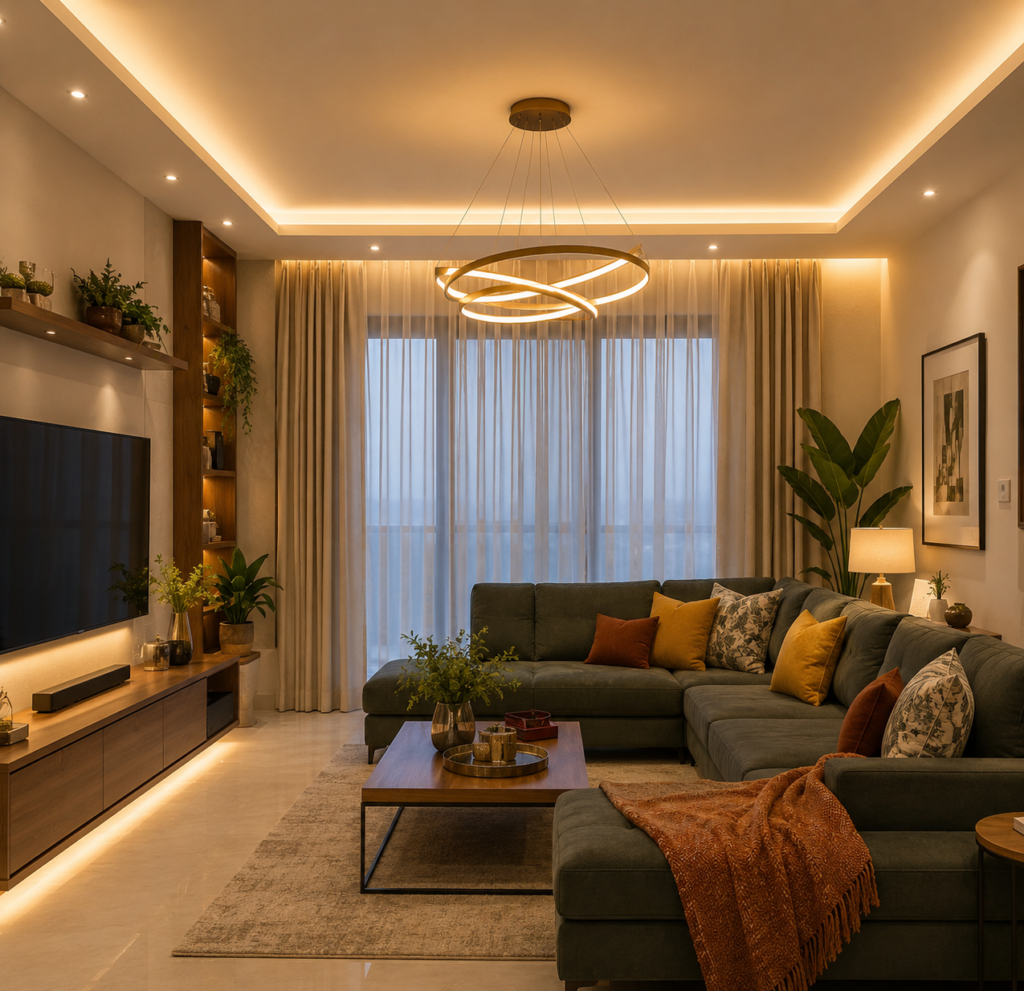 The living room is often the visual centre of a home, making the balance between comfort and architectural character particularly important.
Living Room Lights can combine recessed downlights, adjustable spotlights, concealed linear systems, wall lights and decorative fixtures to create different layers.
For a premium interior, consider:
- Modern Living Room Lights for clean, contemporary spaces
- Luxury Living Room Lights for high-end interiors
- Adjustable spotlights for artwork and feature walls
- Cove or linear lights for soft indirect illumination
Avoid placing too many downlights in a regular grid. Strategic positioning around furniture, walls and architectural features usually produces a more refined result.
Bedroom Lights
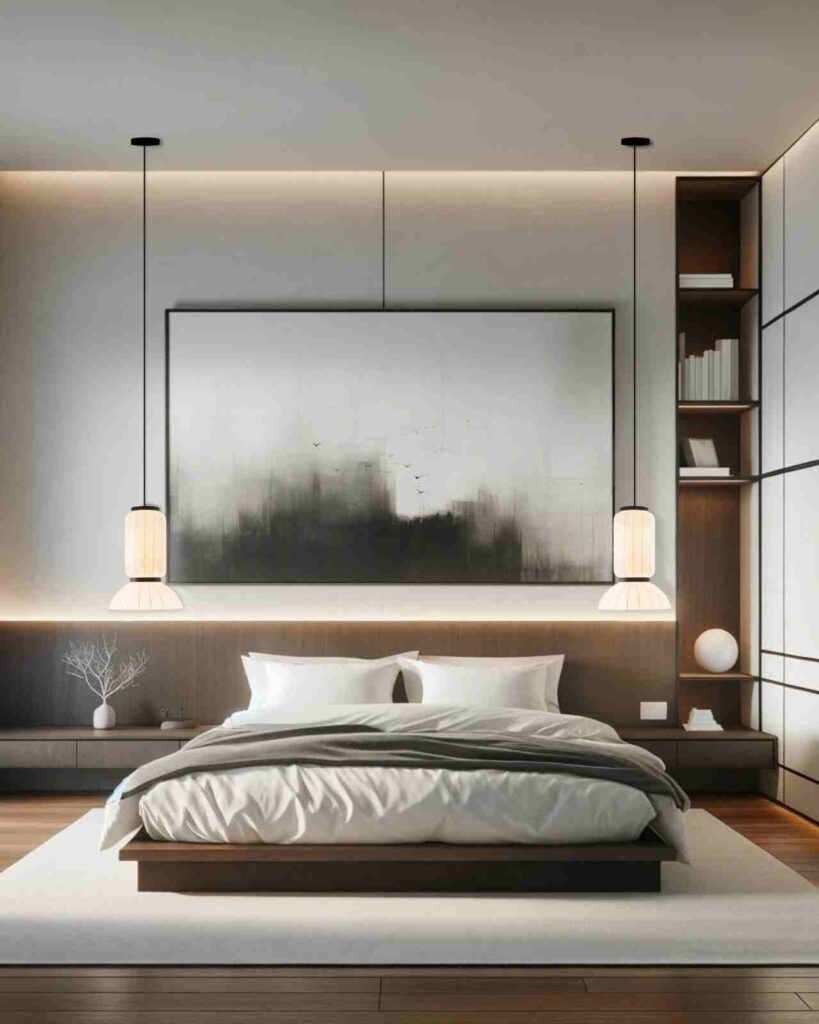 Bedrooms require a calmer approach. Excessive brightness or exposed glare can make the environment feel harsh, particularly during the evening.
Bedroom Lights should support relaxation while providing sufficient illumination for dressing, reading and other activities.
Suitable options include:
- LED Bedroom Lights with warm colour temperatures
- Bedside and reading lights
- Recessed or concealed ceiling lights
- Wall lights for decorative and ambient illumination
For Luxury Bedroom Lights, indirect illumination and dimming can create a softer atmosphere while allowing occupants to adjust the environment according to the time of day.
Kitchen Lights
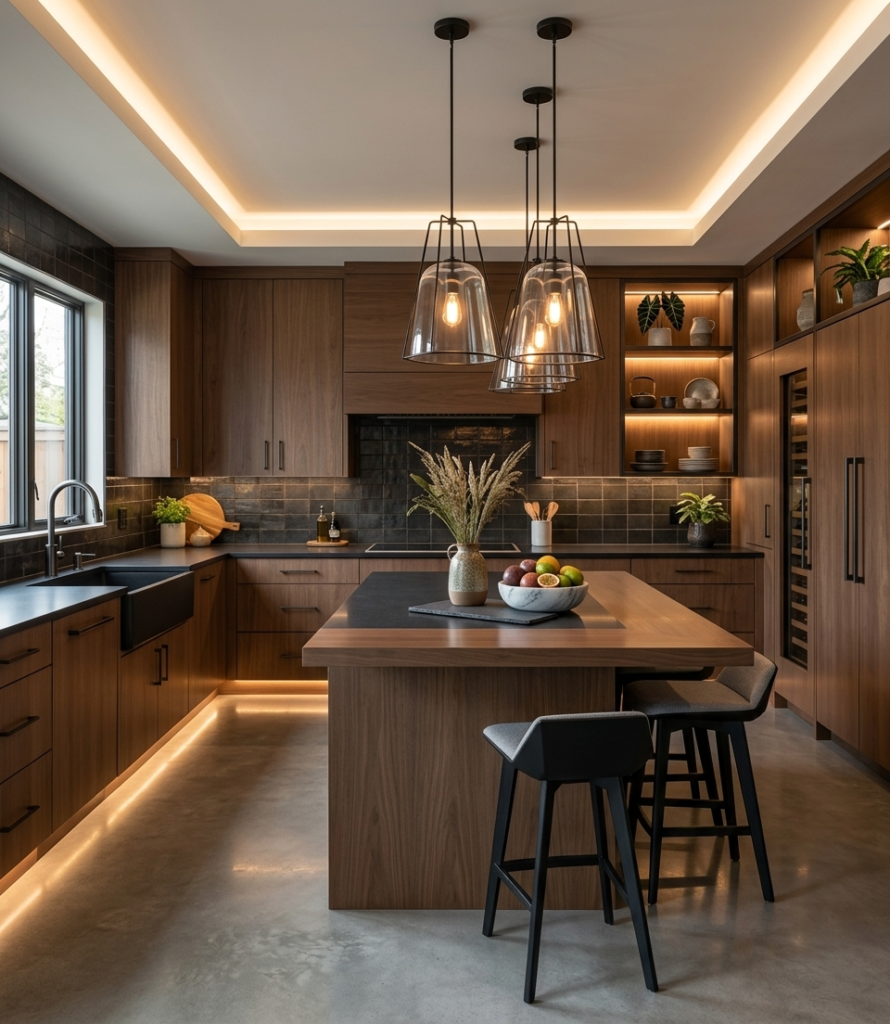 Kitchens require more precise illumination because food preparation, cooking and cleaning are task-oriented activities.
Kitchen Lights should minimise shadows across countertops and work surfaces while maintaining comfortable general illumination.
Common solutions include:
- LED Kitchen Lights for efficient general illumination
- Under-cabinet lights for work surfaces
- Linear lights for continuous countertop illumination
- Downlights and spotlights for general and accent illumination
High colour rendering can also be valuable in kitchens because it allows food, materials and finishes to appear more naturally.
Dining Room Lights
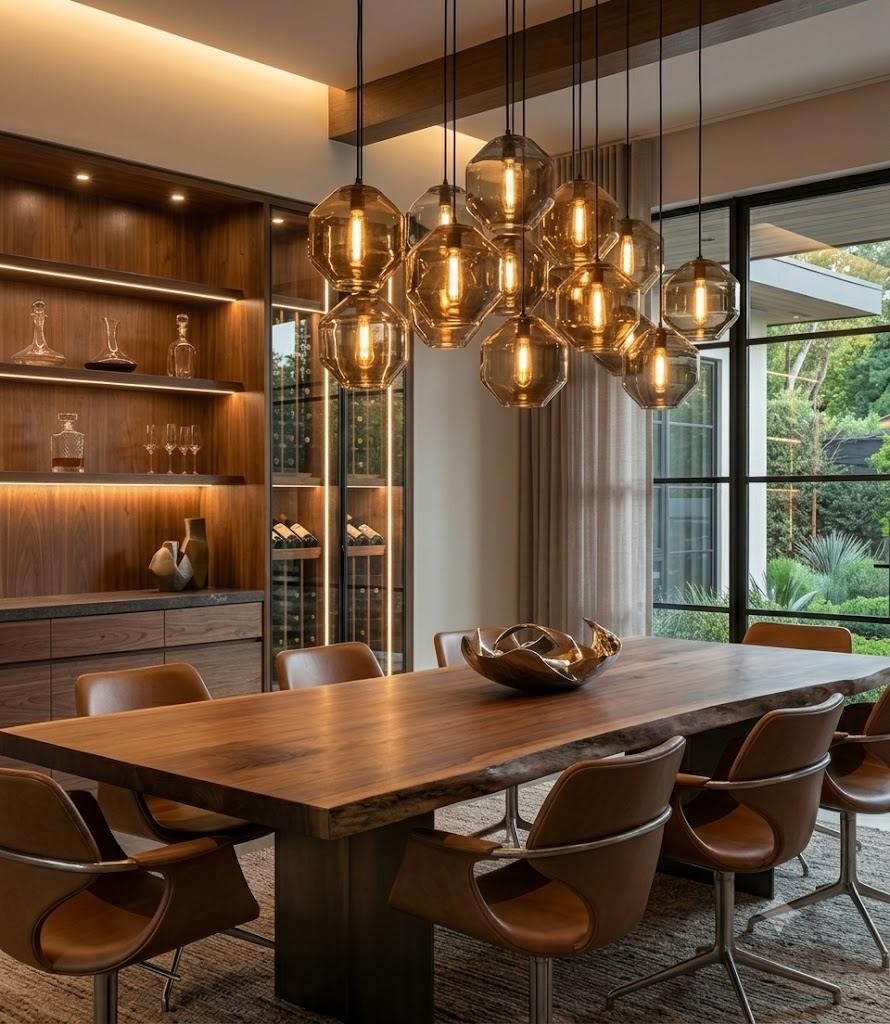 The dining area is an opportunity to combine functional illumination with a strong visual statement.
Dining Room Lights often centre around a pendant or chandelier positioned above the dining table. Additional ceiling or wall illumination can support the surrounding space without competing with the main fixture.
For premium interiors, Dining Pendant Lights, chandeliers and concealed architectural illumination can work together to create a sophisticated evening environment.
The fixture size, mounting height and light distribution should always relate to the table dimensions and ceiling height.
Bathroom Lights
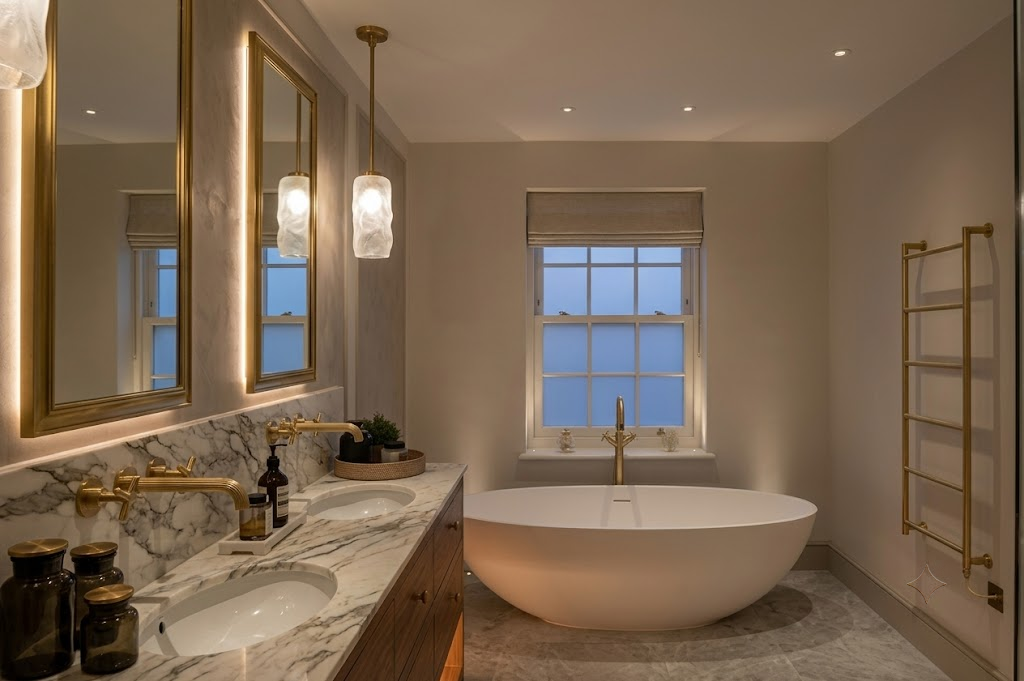 Bathrooms require both visual comfort and appropriate environmental protection.
Bathroom Lights should provide sufficient illumination for mirrors, grooming areas and general circulation without producing uncomfortable shadows.
Important considerations include:
- LED Bathroom Lights for efficient general illumination
- Mirror lighting for balanced facial illumination
- Appropriate IP-rated fixtures in moisture-prone areas
- Glare-controlled ceiling or wall-mounted products
For luxury bathrooms, vertical mirror illumination and concealed architectural light can provide a cleaner appearance than relying on one overhead source.
Staircase Lights
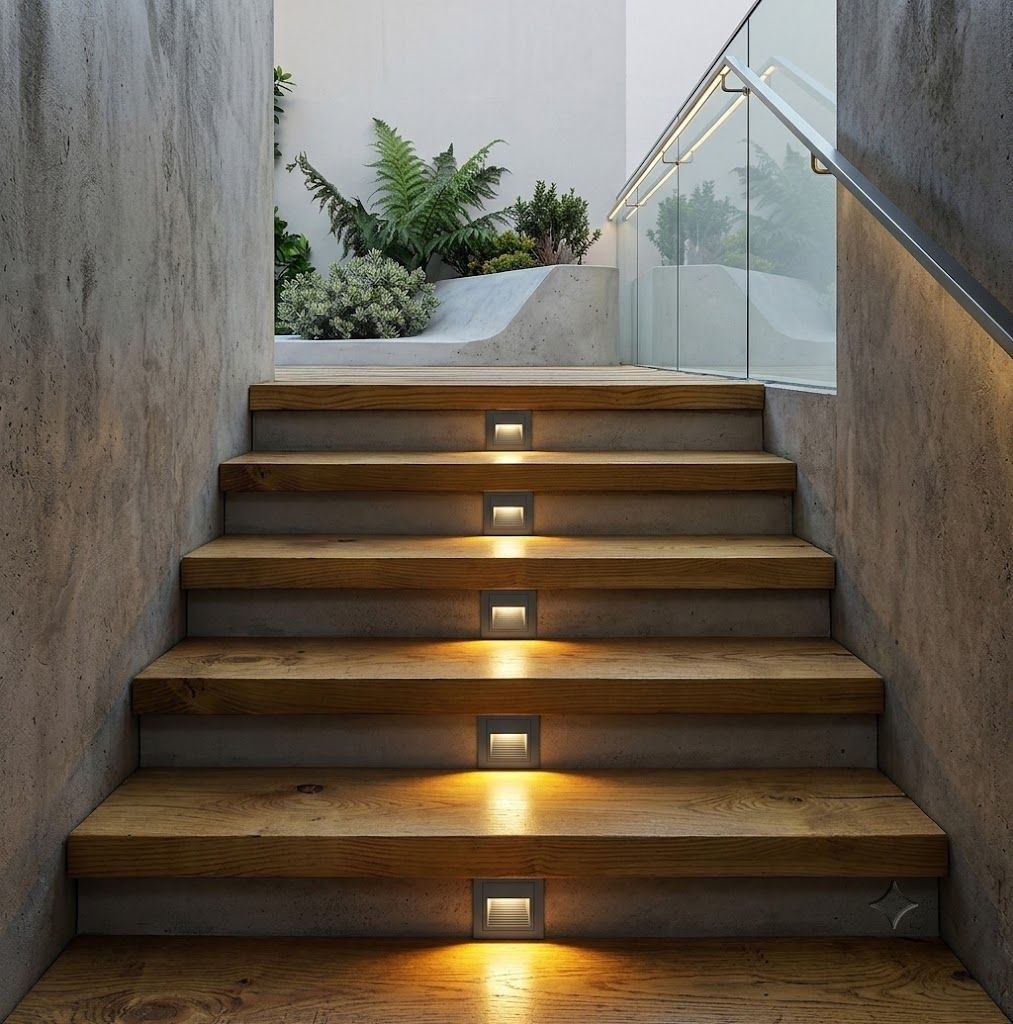 Staircases are both architectural features and circulation areas. Good illumination should improve visibility while enhancing the geometry of the staircase.
Staircase Lights can include recessed step fixtures, wall-mounted products, concealed linear profiles and handrail-integrated solutions.
For contemporary residences, Residential Step Lights can create a subtle floating effect when installed correctly without producing excessive brightness.
A well-designed staircase should remain visually comfortable from both the top and bottom of the stairs.
The placement and beam angle should be carefully coordinated to illuminate each step evenly while keeping the light source visually discreet. Warm, low-glare illumination can further highlight materials, textures and architectural details without overwhelming the staircase design.
Home Office Lights
- A home office needs functional illumination without excessive glare on computer screens.
- Home Office Lights should provide sufficient light for reading, writing and screen-based work while maintaining visual comfort for longer periods.
- A combination of controlled ceiling illumination, task lighting and indirect light can be more effective than a bright overhead fixture alone.
- For professional interiors, beam control and fixture positioning should be considered alongside desk orientation, windows and reflective surfaces.
Balcony, Terrace & Outdoor Residential Areas
Modern homes increasingly treat balconies and terraces as extensions of the interior. Lighting allows these spaces to remain usable and visually connected with the architecture after sunset.
Outdoor Residential Lights can be used around:
- Balconies and terraces
- Outdoor seating areas
- Driveways and entrances
- Garden paths
- Building façades
The fixture specification should reflect the exposure level, installation environment and local climate.
Residential Lights for Villas, Apartments & Luxury Homes
Residential projects vary considerably in scale and architecture. A compact apartment may require carefully controlled illumination within limited ceiling space, while a large villa can involve multiple indoor zones, landscaped gardens, façades, terraces and outdoor entertainment areas.
For this reason, Residential Lights for Villas should not simply be scaled-up versions of apartment lighting. The design needs to respond to building proportions, ceiling heights, landscape architecture and the relationship between interior and exterior spaces.
Villa Lights
Luxury villas often contain multiple architectural elements that benefit from carefully positioned illumination.
Villa Lights may be required for:
- Double-height living spaces
- Entrance halls and staircases
- Bedrooms and private areas
- Landscaped gardens and pathways
- Swimming-pool surroundings
- Exterior walls and façades
Luxury Villa Lights can combine recessed architectural products with decorative fixtures and outdoor landscape solutions to create a consistent visual language across the property.
For large villas, lighting scenes can also allow residents to adjust illumination for everyday living, entertaining, relaxation and security.
Apartment Lights
Apartments generally require a more space-conscious approach.
Apartment Lights should provide useful illumination without visually overcrowding the ceiling or reducing the sense of space.
Modern solutions may include:
- Compact recessed downlights
- Linear ceiling systems
- Wall-mounted fixtures
- Under-cabinet illumination
- Decorative pendants
For high-end apartments and penthouses, Modern Residential Lights can be integrated with architectural details to maintain clean ceiling lines while creating visual depth.
Bungalow & Farmhouse Lights
Bungalows and farmhouses often combine larger floor areas with gardens, verandas and outdoor circulation.
Here, the relationship between indoor and outdoor illumination becomes particularly important. Interior brightness should not completely overpower the garden or exterior environment when viewed through large windows.
Residential Landscape Lights, wall lights, path lights and carefully positioned architectural fixtures can create continuity between the building and its surroundings.
Luxury Residential Lights
Luxury residential projects require greater attention to detail because lighting interacts with premium materials, custom interiors and architectural features.
Luxury Residential Lights can be used to emphasise:
- Natural stone and marble
- Timber and textured surfaces
- Artwork and sculptures
- Feature ceilings
- Architectural walls
- Landscaping and water features
The objective is not maximum brightness. It is controlled illumination that creates depth, hierarchy and visual comfort.
Residential Indoor & Outdoor Lights Working Together
One of the most common mistakes in residential projects is designing interior and exterior illumination independently.
When a living room opens onto a terrace or garden, excessively bright indoor illumination can create reflections on glass and make the exterior appear darker. Conversely, carefully balanced interior and exterior levels can visually extend the perceived space.
This is where Residential Indoor Lights and Residential Outdoor Lights should be considered as one connected environment.
For example, a contemporary villa may combine warm interior illumination with subtle garden lights, façade accents and pathway illumination. The result is a cohesive nighttime appearance rather than two separate lighting environments.
Residential Architectural Lights for Modern Architecture
Contemporary residential architecture increasingly uses clean surfaces, recessed ceilings, large glazing areas and integrated materials. Lighting can reinforce these characteristics when the fixtures are selected and positioned carefully.
Residential Architectural Lights can be used for:
- Wall washing
- Wall grazing
- Recessed ceiling illumination
- Concealed linear lighting
- Façade highlighting
- Architectural niches and details
The best result often comes from making the source visually discreet while allowing the architecture to remain prominent.
Residential Decorative Lights as Design Elements
Not every fixture needs to disappear into the architecture.
In selected areas, Residential Decorative Lights can become an important design feature. A sculptural pendant over a dining table, a chandelier in a double-height entrance or a statement wall fixture can create a memorable focal point.
The key is balance.
Decorative products should work with architectural illumination rather than competing with every other element in the room. This combination gives designers greater freedom to create interiors that feel both luxurious and comfortable.
Selecting Residential Lights by Property Requirement
| Rating | Practical Meaning | Typical Consideration |
|---|---|---|
| IP65 | Dust-tight + protection against water jets | Exposed outdoor applications |
| IP66 | Dust-tight + protection against powerful water jets | More demanding exterior environments |
| IP67 | Dust-tight + temporary immersion protection | Ground/recessed locations where water exposure is possible |
The right Residential Lighting Solutions therefore depend on the property’s architecture, size, interior concept, outdoor environment and user requirements.
A professional specification should consider the complete project rather than selecting individual products room by room without a common design direction.
From Application to Technology
Once the spaces and property requirements are established, the next question is technical performance.
The following part will examine Residential LED Lights, including LED efficiency, CCT, CRI, beam angles, optics, drivers, thermal management, IP and IK ratings, dimming and smart control systems. These specifications are essential when selecting residential products for premium homes and international projects.
LED Technology for Residential Lights
The quality of a residential light depends on much more than its appearance. LED technology, optical performance, driver quality, thermal management and colour characteristics all influence how a fixture performs over time.
Modern Residential LED Lights offer high efficiency, long operating life and better control compared with many traditional light sources. But not every LED product delivers the same result. Two fixtures with similar wattage can produce very different levels of visual comfort, colour quality and usable illumination.
For premium homes and architectural projects, product selection should therefore consider both light output and light quality.
Why Choose Residential LED Lights?
LED technology has become a preferred solution for residential projects because it can combine compact fixture dimensions with efficient light generation and flexible control.
Key advantages include:
- Energy Efficiency — Lower energy consumption can help reduce operating costs.
- Long Service Life — Quality LED systems can reduce frequent lamp replacement and maintenance.
- Design Flexibility — Compact LED sources allow recessed, linear, concealed and miniature fixture designs.
- Control Compatibility — Dimming, scene control and smart-home integration can provide greater flexibility.
For developers and homeowners, the long-term value should be evaluated through the complete system rather than simply comparing the initial fixture price.
Residential Light CCT — Choosing the Right Colour Temperature
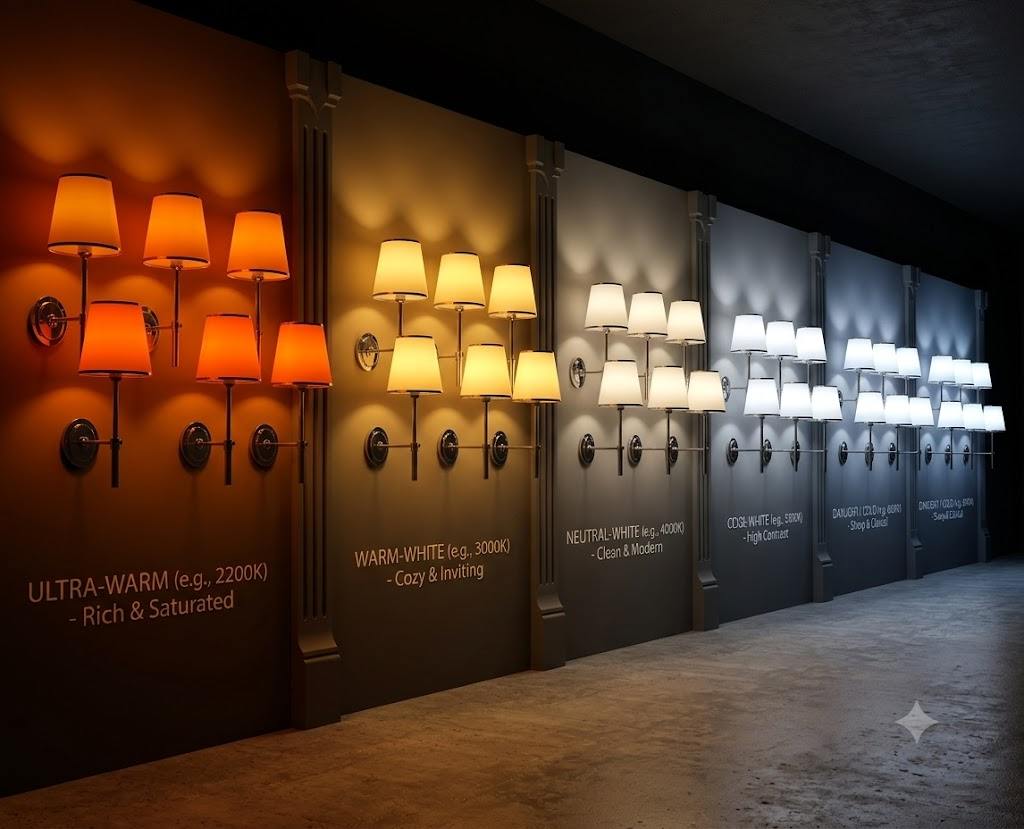 Colour temperature determines whether light appears visually warm, neutral or cool. It is measured in Kelvin (K).
In residential environments, warm and neutral colour temperatures are commonly selected because they can complement materials and create comfortable living environments.
For most living areas, 2700K–3000K warm white creates a relaxed and luxurious atmosphere, while 3000K–3500K can provide a cleaner appearance where a more contemporary feel is required. 4000K neutral white is generally better suited to functional areas where greater visual clarity is important.
Colour temperature should also be coordinated with the CRI (Colour Rendering Index), particularly where natural material colours, artwork and interior finishes need to appear accurately. For premium residential projects, a CRI of 90+ is often preferred for better colour fidelity and visual quality.
The selected CCT, CRI, lumen output and beam angle should work together rather than being specified independently. Dimmable LED fixtures can provide additional flexibility, allowing the lighting atmosphere to be adjusted according to the time of day, activity and mood.
| CCT | Visual Character | Typical Residential Application |
|---|---|---|
| 2700K | Very warm & intimate | Bedrooms, lounges, luxury interiors |
| 3000K | Warm & comfortable | Living rooms, villas, hospitality-style residences |
| 3500K | Balanced neutral | Modern interiors, kitchens, work areas |
| 4000K | Clean & neutral | Home offices, utility areas, functional spaces |
The correct CCT should also respond to the interior palette. Timber, warm stone and textured finishes can often benefit from warmer illumination, while contemporary spaces with neutral materials may work well with a more neutral specification.
For Luxury Residential Lights, consistency is equally important. Using unrelated colour temperatures across adjacent spaces can make a home feel visually disconnected.
CRI & Colour Quality
CRI (Colour Rendering Index) describes how accurately a light source reveals colours compared with a reference source.
This becomes important when residential interiors contain artwork, fabrics, natural wood, food, marble or carefully selected decorative finishes.
For many premium residential applications, designers may specify CRI 90+ where accurate colour appearance is important.
Higher colour rendering can be particularly useful for:
- Artwork and decorative objects
- Kitchens and dining areas
- Luxury fabrics and furniture
- Natural stone and timber
CRI should not be considered independently from CCT, optics and overall product quality. A technically high CRI fixture can still perform poorly if it creates excessive glare or has unsuitable light distribution.
Beam Angle & Optical Performance
Beam angle determines how widely light is distributed from a fixture. It has a major influence on the visual result.
A narrow beam can create a concentrated accent, while a wider beam can distribute light across a larger surface.
For example, an adjustable spotlight with a controlled narrow beam may be appropriate for artwork or a decorative object. A wider distribution may be better for general illumination across a living area.
Typical Beam Applications
- Narrow Beam: Artwork, sculptures and strong accent points
- Medium Beam: Feature walls, furniture and focused areas
- Wide Beam: General illumination and larger surfaces
- Wall Wash: Even illumination across vertical surfaces
The beam should always be considered alongside mounting height and target distance. A beam that appears appropriate at one ceiling height may produce a very different result in a double-height villa.
Optics, Glare & Visual Comfort
High-quality Residential Light Fixtures should control where the light goes rather than simply producing maximum brightness.
Poorly shielded LED sources can create uncomfortable glare, particularly when installed in living rooms, bedrooms, staircases and other areas where occupants frequently look toward the ceiling.
Optical design can use reflectors, lenses, diffusers, shielding and carefully designed cut-off angles to manage the visible brightness of the LED source.
For residential interiors, the objective is often comfortable illumination rather than maximum lumen output.
Good Optical Design Should Consider
- Light distribution
- Glare control
- Beam consistency
- Cut-off and shielding
- Light spill
- Uniformity
- Target surface
This is especially important in luxury residences where polished floors, marble, glass and metallic surfaces can increase reflected glare.
Residential Lights & Driver Quality
The LED chip is only one part of a complete LED fixture. The driver regulates electrical power supplied to the LED and can influence flicker, dimming performance, reliability and overall system stability.
For professional Residential LED Lighting, driver selection should be matched to the fixture and control system.
Depending on the application, projects may require:
- Constant-current or appropriate regulated LED drivers
- Dimmable drivers
- Remote or integrated drivers
- Smart control compatibility
Driver quality becomes particularly important in large residences where many fixtures operate together. Poor compatibility between fixtures, drivers and control systems can result in flicker, inconsistent dimming or unwanted operating behaviour.
Thermal Management & LED Reliability
Heat is one of the important factors affecting LED performance and long-term reliability.
Although LEDs are highly efficient, they still generate heat. If that heat is not effectively managed, component temperatures can increase and influence lumen maintenance and product life.
Good thermal design may involve an engineered aluminium housing, heat sink, appropriate ventilation and careful separation of heat-sensitive components.
For Residential Light Solutions, thermal performance becomes especially important in recessed fixtures, compact luminaires and installations where ventilation is limited.
A premium fixture should therefore be evaluated not only by its initial lumen output but also by how effectively it maintains performance throughout its operating life.
IP & IK Ratings for Residential Lights
Indoor and outdoor products face different environmental conditions. IP ratings indicate the level of protection against solid particles and moisture, while IK ratings relate to resistance against mechanical impact.
Outdoor residential applications may require greater protection than dry indoor areas.
| Application | Important Considerations |
|---|---|
| Living Room | Glare, optics, CCT & visual comfort |
| Bathroom | Moisture exposure & suitable IP rating |
| Garden | Weather resistance, IP & corrosion protection |
| Pool Area | Appropriate IP protection & installation conditions |
| Façade | Weather exposure, optics & thermal performance |
| Driveway | IP, mechanical durability & light distribution |
The required specification should always be based on the actual installation environment rather than selecting an IP or IK rating simply because it is higher.
Smart Residential Lights & Lighting Controls
Modern homes are increasingly integrating lighting with broader automation systems. Smart Residential Lights can allow occupants to adjust brightness, colour temperature or lighting scenes according to different activities.
A well-designed control system can create separate scenes for everyday use, entertaining, relaxation, night-time circulation and outdoor areas.
Depending on the project requirements, systems may include:
- DALI-based lighting control
- 0–10V dimming
- TRIAC or phase-cut dimming
- DMX for specialised applications
- Smart-home and scene-control integration
The correct control protocol depends on the project architecture, fixture compatibility and required level of automation.
Tunable White & Dynamic Residential Lights
Some premium residential environments benefit from adjustable colour temperature. Tunable White Residential Lights can allow the lighting environment to shift between warmer and cooler tones depending on the time of day or activity.
For example, a warmer setting can create a relaxed evening atmosphere, while a more neutral setting may support daytime activities.
This can be particularly useful in:
- Luxury villas
- Penthouses
- Home offices
- Wellness areas
- Entertainment spaces
However, dynamic lighting should be used with purpose. Technology should support the experience of the home rather than become a feature simply because it is available.
RGB & RGBW Residential Lights
Colour-changing systems can add another dimension to selected residential applications.
RGB Residential Lights use red, green and blue channels to create a broad range of colours. RGBW Residential Lights add a dedicated white channel, providing greater control when both coloured effects and usable white illumination are required.
| Feature | RGB | RGBW |
|---|---|---|
| Colour Effects | Excellent | Excellent |
| White Light Quality | Limited by RGB mixing | Dedicated white channel |
| Decorative Applications | Suitable | Suitable |
| Architectural Effects | Suitable | Excellent |
| Premium Residential Use | Selective | More versatile |
RGB or RGBW should generally be used selectively in residences—for example, entertainment areas, pools, landscape features or architectural accents—rather than replacing the primary white-light system throughout the property.
Residential Lights & Energy Efficiency
Energy efficiency is not simply about choosing the lowest wattage fixture.
A well-engineered lighting system considers luminous efficacy, optical efficiency, operating hours, controls, zoning and actual illumination requirements.
For example, dimming a fixture when full output is unnecessary can reduce energy use while maintaining the desired visual atmosphere.
Similarly, occupancy sensors, daylight-responsive controls and scheduled scenes can reduce unnecessary operation in suitable areas.
A More Efficient Residential System
- Select efficient LED products
- Use optics that direct light where required
- Avoid excessive illumination
- Divide spaces into controllable zones
- Use dimming and automation where appropriate
This approach can improve both operating efficiency and the overall quality of the residential environment.
Technical Specification Checklist for Residential Lights
When evaluating Residential LED Lights Manufacturer or supplier options, product specifications should be reviewed as a complete package.
| Specification | What to Check | Why It Matters |
|---|---|---|
| Wattage | Input power | Energy consumption |
| Lumens | Delivered light output | Actual illumination |
| Efficacy | lm/W | System efficiency |
| CCT | 2700K–4000K+ | Visual atmosphere |
| CRI | Preferably appropriate to application | Colour appearance |
| Beam Angle | Distribution | Accent or general illumination |
| IP Rating | Environmental protection | Outdoor/moisture applications |
| Driver | Quality & compatibility | Reliability & dimming |
| Lifetime | Rated operating life | Maintenance planning |
| Controls | DALI, 0–10V, DMX etc. | Automation & scene control |
Specifications should always be evaluated against the project’s actual requirements. A high specification on paper does not automatically guarantee the best lighting result.
Technical Expertise Behind Residential Light Selection
At Luzion, product selection can be supported by considering the relationship between the LED source, optics, driver, housing, thermal management and installation environment.
For architects and lighting consultants, this technical approach helps ensure that a fixture performs correctly after installation rather than simply looking attractive in a catalogue.
For homeowners and developers, it also provides a clearer way to compare products beyond price and wattage.
The best Residential Lighting Solutions balance technical performance with architecture, interior design and long-term usability.
From Technology to Design
Technology provides the foundation, but technical specifications alone do not create a beautiful residential environment.
The next stage is understanding how different layers of illumination work together—ambient, task, accent and decorative—and how glare, contrast, shadow, mounting position and architectural details influence the final experience.
The next part explores Residential Lighting Design Principles, including layered illumination, visual hierarchy, accent lighting, architectural integration and glare control.
Residential Lighting Design Principles
Good Residential Lighting Design is not about installing more fixtures. It is about deciding where light is needed, how it should behave and what the occupant should experience in each space.
A successful design balances illumination, contrast, shadow, colour, glare and architectural character. The fixtures should support the room rather than making the lighting equipment the dominant visual element.
For modern homes, the most effective approach is usually based on layers of light rather than one uniform source.
Layered Residential Lighting
Layered illumination combines different types of light to create flexibility and depth. Instead of expecting one ceiling fixture to illuminate an entire room, different sources perform different functions.
The main layers include:
- Ambient Light: Provides the general illumination needed for movement and everyday activities.
- Task Light: Concentrates illumination where specific activities take place, such as cooking, reading or working.
- Accent Light: Draws attention to artwork, materials, furniture or architectural features.
- Decorative Light: Adds visual character through pendants, chandeliers and statement fixtures.
These layers can operate independently or together, allowing a residence to change from a functional environment during the day to a softer, more atmospheric space in the evening.
Ambient Lighting for Residential Spaces
Ambient lighting establishes the basic illumination level of a room. Downlights, recessed fixtures, linear systems and indirect ceiling illumination can all contribute to this layer.
However, ambient illumination should not automatically mean uniform brightness across every surface.
A carefully designed system can leave selected areas darker while providing sufficient illumination where people actually use the space. This creates contrast and prevents the interior from appearing flat.
For Modern Residential Lights, concealed and recessed solutions can be particularly effective because the architecture remains visually clean.
Task Lighting
Task lighting provides focused illumination for activities that require greater visual clarity.
Typical residential applications include:
- Kitchen worktops and preparation areas
- Reading and study areas
- Bathroom mirrors
- Home office desks
The position of the fixture is as important as its output. A powerful light placed incorrectly can create shadows or glare, while a carefully positioned lower-output fixture may perform much better.
Accent Lighting
Accent lighting introduces hierarchy into an interior.
A spotlight can draw attention to artwork, a textured wall or a sculpture, while a wall washer can create an even illuminated surface. In outdoor areas, accent fixtures can highlight trees, landscape structures or architectural elements.
For Architectural Residential Lights, accent illumination is particularly useful because it allows designers to reveal the character of materials and geometry without increasing general brightness throughout the room.
Glare Control & Visual Comfort
Brightness and comfort are not the same thing.
A room can have adequate illumination and still feel uncomfortable if occupants are exposed to bright LED sources, reflections or poorly positioned fixtures.
Glare Control should therefore be considered during product selection and layout planning.
Important factors include:
- Fixture shielding
- Beam direction
- Mounting position
- Surface reflectance
- Viewing angles
- LED luminance
Recessed and well-shielded products can be particularly useful in bedrooms, living rooms and other spaces where visual comfort is a priority.
Architectural Integration
Premium residential interiors often use clean ceiling lines, concealed services and carefully detailed architectural elements. Lighting should complement this approach.
Architectural Residential Lights can be integrated into:
- False ceilings and recessed details
- Wall niches and feature surfaces
- Staircases
- Joinery and cabinetry
- Façades and landscape elements
Linear lighting can provide continuous illumination, while concealed sources can create a soft glow without making the fixture visually dominant.
This is particularly effective in contemporary villas where architectural simplicity is an important part of the design language.
Wall Washing & Wall Grazing
Wall washing and wall grazing are two different techniques that can dramatically influence how an interior feels.
Wall washing provides relatively even illumination across a wall surface. It can make a space feel brighter and help emphasise artwork or architectural finishes.
Wall grazing places the light closer to the surface, revealing texture and creating stronger contrast. It can be particularly effective for stone, brick, fluted panels and other textured materials.
The fixture optics, installation distance and wall finish should be evaluated together to achieve the intended effect.
Ceiling Lighting Design
Ceiling design has a direct relationship with residential illumination.
A regular grid of downlights may be simple to install, but it does not necessarily create the most sophisticated result. Fixture locations should instead respond to furniture, circulation, walls, artwork and architectural details.
For example, a living room may require different positions for:
- General illumination
- Sofa and reading areas
- Artwork
- Feature walls
- Decorative fixtures
This approach reduces unnecessary fixtures while improving visual hierarchy.
Residential Lights & Interior Materials
Light interacts with every material it reaches.
White walls can reflect substantial amounts of illumination, while dark finishes absorb more light. Glossy surfaces may produce reflections, whereas textured surfaces can create attractive shadow patterns when illuminated from the correct angle.
This means Residential Light Fixtures should be selected alongside the interior material palette.
Material & Light Considerations
| Material | Lighting Consideration |
|---|---|
| Marble | Control reflections and glare |
| Natural Wood | Warm CCT can complement the finish |
| Glass | Consider reflections and viewing angles |
| Metal | Manage highlights and reflected brightness |
| Textured Stone | Grazing can emphasise texture |
| Fabric | High-quality colour rendering can improve appearance |
Lighting should therefore be coordinated with interior design rather than specified after all finishes have already been finalised.
Outdoor Residential Lighting Design
Outdoor areas require a different design approach because darkness becomes part of the composition.
Residential Outdoor Lights can create depth by illuminating selected trees, walls, pathways and architectural elements while leaving other areas naturally darker.
The aim is to create a hierarchy rather than a uniformly bright landscape.
Outdoor Design Principles
- Use pathway lights only where circulation requires guidance.
- Highlight selected trees, planting and architectural features.
- Avoid excessive upward light and unnecessary spill.
- Coordinate façade and landscape illumination with the building design.
Residential Landscape Lights should also respect the character of the planting design. Trees, shrubs and hardscape elements may require different beam spreads and mounting positions.
Residential Facade Lighting
The exterior of a home is often the first element seen at night.
Residential Facade Lights can emphasise building geometry, columns, entrance features, textured walls and architectural lines without making the entire façade equally bright.
For modern villas, linear wall-grazing solutions, recessed products and controlled accent fixtures can create a refined appearance.
The lighting should also consider neighbouring properties, road visibility and unnecessary light spill. A premium façade is generally more effective when the illumination is controlled rather than excessive.
Landscape & Garden Lighting
Landscape lighting extends the architectural experience into outdoor areas.
Residential Garden Lights can be positioned around planting, pathways, trees, seating areas and water features. Spike lights offer flexibility for planting zones, while bollards and path lights can support circulation.
The best landscape designs usually combine several beam directions and mounting heights rather than repeating one fixture throughout the garden.
A well-balanced garden can therefore remain visually interesting even when the lighting levels are relatively restrained.
Residential Lighting Design & DIALux
For larger residential developments and technically demanding projects, digital lighting calculations can help designers evaluate illumination before installation.
DIALux Design Service can be used to model spaces, place luminaires and assess parameters such as illuminance and light distribution.
A typical professional workflow may include:
- Architectural drawings and room dimensions
- Furniture and interior information
- Luminaire selection
- Light distribution and mounting positions
- Calculation and review
- Adjustments and final documentation
For architects, MEP consultants and lighting professionals, this process helps identify potential problems before products reach the site.
How to Choose Residential Lights
Selecting the right product involves more than comparing wattage and appearance.
The fixture should be evaluated according to the space, intended visual effect, installation environment and technical requirements.
Four Key Selection Factors
- Application: Determine whether the fixture is intended for ambient, task, accent, decorative or outdoor use.
- Optics: Select the appropriate beam angle and distribution for the target surface.
- Light Quality: Consider CCT, CRI, glare and colour consistency.
- Construction: Review IP rating, materials, driver, thermal management and expected operating conditions.
For professional projects, these factors should be considered before finalising the product schedule.
Residential Lights: Common Selection Mistakes
Even high-quality products can deliver poor results when incorrectly specified or installed.
Common mistakes include:
- Using the same fixture and beam angle throughout the home
- Selecting products only according to wattage
- Ignoring glare and viewing angles
- Installing outdoor products without considering environmental exposure
Another common issue is designing the lighting after the architecture has been completed. Ceiling details, joinery, furniture layouts and electrical provisions can significantly influence fixture positioning.
Early coordination between the architect, interior designer, electrical consultant and lighting specialist generally produces a more integrated outcome.
Residential Lights: Price vs Long-Term Value
The lowest purchase price does not always represent the lowest project cost.
A professional evaluation should consider the complete lifecycle of the product, including energy consumption, expected service life, driver reliability, maintenance access and replacement requirements.
For developers and premium homeowners, a higher-quality Residential LED Lighting system may provide greater value when it delivers better optics, longer service life, improved colour quality and lower maintenance requirements.
What to Compare Before Buying
| Factor | Basic Evaluation | Professional Evaluation |
|---|---|---|
| Price | Initial fixture cost | Total lifecycle value |
| Wattage | Lower is better | Efficiency + actual performance |
| Lumens | Higher is better | Useful delivered illumination |
| CCT | Visual preference | Application + material coordination |
| CRI | Number alone | Colour quality for the space |
| Driver | Often overlooked | Reliability + control compatibility |
| IP | Higher seems better | Correct rating for environment |
| Optics | Fixture appearance | Distribution + glare control |
Residential Lights for Sustainable Homes
Sustainability is becoming an increasingly important part of residential development.
Efficient LED sources, intelligent controls, appropriate light levels and long-life products can contribute to reduced energy consumption and maintenance.
However, sustainable residential illumination should also avoid unnecessary light. Over-lighting a garden, façade or interior increases energy use without necessarily improving the experience.
A more responsible approach is to provide the right light, at the right intensity, only where it is needed.
Designing for Future Flexibility
Residential requirements can change over time. Furniture may move, rooms may change function and homeowners may introduce new automation systems.
Selecting adaptable products and providing suitable control infrastructure can make the lighting system easier to modify in the future.
For larger homes, zoning and dimming can allow different areas to operate independently instead of switching an entire floor on and off.
This improves usability while creating opportunities for more efficient operation.
From Design Principles to Global Residential Projects
A residential lighting concept must ultimately respond to the project location, architecture, climate, regulations, electrical standards and client expectations.
The next section expands the strategy from individual homes to global residential projects, covering international markets, regional requirements, project types and Luzion’s approach to supplying and customising residential light solutions for architects, developers, consultants and project owners.
Residential Lights for Global Projects
Residential architecture varies from one market to another, but the fundamental requirement remains consistent: the lighting should complement the building, support its occupants and perform reliably within its environment.
Luzion provides Residential Lighting Solutions for architects, interior designers, lighting consultants, developers, contractors and project owners working across residential markets. The approach can be adapted to contemporary apartments, luxury villas, private residences, residential communities and large-scale developments.
From India and the Middle East to Europe, North America, Australia, Africa and other international markets, project requirements can differ in climate, electrical systems, architectural styles and regulatory expectations. Product selection should therefore be based on the actual project conditions rather than applying one specification everywhere.
Residential Lights in India
India’s residential market includes everything from compact urban apartments to large villas, farmhouses and premium residential developments.
Residential Lights India projects may require solutions that balance energy efficiency, affordability, architectural appearance and long-term reliability.
Major cities such as Mumbai, Delhi, Bengaluru, Hyderabad, Chennai, Ahmedabad, Pune and Kolkata have diverse residential architecture, creating demand for both functional and premium lighting solutions.
For luxury homes, Luxury Residential Lights India can combine architectural downlights, decorative fixtures, linear systems, landscape products and façade illumination according to the property’s design.
Residential Lights in the UAE & Middle East
The Middle East has a strong demand for premium residential architecture, particularly villas, private residences, apartments and hospitality-inspired homes.
Residential Lights UAE projects often require careful consideration of outdoor environmental conditions, façade materials, landscape areas and extensive interior spaces.
In Dubai and Abu Dhabi, Residential Lights Dubai and Residential Lights Abu Dhabi can involve luxury villas, penthouses and high-end residential developments where architectural integration and visual quality are particularly important.
Across Saudi Arabia, Qatar, Kuwait, Oman and Bahrain, residential projects can similarly require durable outdoor products, efficient LED systems and coordinated indoor-outdoor illumination.
Residential Lights in Europe
European residential projects often place strong emphasis on energy efficiency, visual comfort, sustainability and architectural integration.
Residential Lights UK and European projects can range from traditional residences and townhouses to contemporary apartments and luxury developments.
Markets such as London, Manchester, Berlin, Munich, Paris, Milan, Madrid and Amsterdam include a wide variety of residential architecture, creating opportunities for recessed, linear, decorative, façade and landscape solutions.
For these environments, the specification should consider not only appearance but also efficiency, colour quality, control compatibility and the requirements of the individual project.
Residential Lights in North America
Residential architecture across the United States and Canada includes single-family homes, luxury residences, apartments, condominiums and large residential communities.
Residential Lights USA projects can require a combination of indoor architectural illumination, decorative fixtures, outdoor landscape products and smart control systems.
Major markets such as New York, Los Angeles, Miami, Chicago, Houston, Dallas, San Francisco and Seattle have different architectural and environmental conditions. The lighting concept should therefore be developed around the individual building rather than relying on a generic specification.
Similarly, Residential Lights Canada can serve apartments, private homes and luxury residences in markets such as Toronto, Vancouver, Montreal and Calgary, with greater attention to indoor comfort and property-specific requirements.
Residential Lights in Asia-Pacific
Asia-Pacific includes some of the world’s most diverse residential environments, from high-density urban apartments to large private homes and resort-style developments.
Residential LED Lights Australia can be used across houses, apartments, terraces, gardens and outdoor entertaining areas, while markets such as Singapore, Japan, South Korea and China have strong demand for compact, efficient and carefully integrated residential solutions.
In cities such as Sydney, Melbourne, Singapore, Tokyo, Seoul and Shanghai, residential projects may require different combinations of architectural, decorative and smart lighting depending on the property type.
Residential Lights in Africa & Latin America
Residential development across Africa and Latin America includes private homes, apartments, villas, gated communities and premium developments.
Residential Lighting Solutions can be adapted to different climatic conditions, architectural styles and project budgets.
Markets such as South Africa, Nigeria, Kenya, Egypt, Brazil, Argentina and Chile can require both indoor and outdoor products, particularly where homes include gardens, terraces, courtyards and extensive exterior areas.
For international projects, product durability, energy efficiency, maintenance requirements and local installation conditions should be considered from the beginning.
Global Residential Light Project Considerations
International projects require more than simply adding a country name to a product specification. The complete environment should be assessed before the final selection.
Important Project Factors
- Climate: Temperature, humidity, rain, dust and coastal exposure can influence outdoor product selection.
- Electrical Requirements: Voltage, frequency, driver compatibility and control systems should match the project.
- Architecture: Fixture dimensions, mounting methods and optics should respond to the building design.
- Standards & Compliance: Products should be evaluated against the applicable requirements of the project location.
This project-specific approach helps maintain consistent performance while allowing the design to adapt to different markets.
Residential Light Manufacturing & Customisation
Residential projects do not always fit standard catalogue dimensions. A feature ceiling may require a particular linear length, a villa façade may need a specialised optical distribution, or a designer may require a customised finish.
This is where Residential Light Manufacturing and product customisation can provide greater flexibility.
Luzion’s manufacturing approach combines product development, engineering and production capabilities to support project-specific requirements. Depending on the application, this can include modifications to dimensions, finishes, mounting arrangements, optics or other product characteristics.
Custom Residential Lights
Custom Residential Lights are particularly useful when standard products cannot achieve the intended architectural result.
Customisation may be considered for:
- Fixture dimensions and profiles
- Surface finishes
- Beam angles and optical requirements
- Mounting and installation configurations
Custom products should still maintain appropriate attention to thermal performance, driver compatibility, mechanical construction and testing.
Residential LED Lights Manufacturer Approach
Choosing a Residential LED Lights Manufacturer should involve more than reviewing a product catalogue.
Architects, consultants and developers should understand how the manufacturer manages product development, quality control, testing and technical support.
A capable manufacturer can contribute earlier in the design process by helping translate architectural requirements into practical luminaire specifications.
This is particularly valuable for projects involving custom dimensions, unusual mounting conditions, specialised optics or coordinated product families.
Research, Development & Engineering
The performance of a professional LED fixture begins during design and engineering.
Luzion’s product development approach can consider:
- LED source selection
- Optical design
- Driver integration
- Thermal management
- Mechanical construction
The objective is to develop products that perform consistently rather than simply meeting an attractive appearance requirement.
For Architectural Residential Lights, optical engineering is especially important because the intended visual effect may depend on precise beam control, shielding and light distribution.
Testing & Quality Control
Residential fixtures can remain operational for many years, so quality should be considered throughout the manufacturing process.
Testing and quality control can help evaluate product performance before installation and reduce the risk of avoidable site problems.
Depending on the product and project requirements, areas of evaluation may include:
- Electrical performance
- LED and driver operation
- IP protection
- Thermal behaviour
- Mechanical construction
For outdoor Residential Light Fixtures, environmental protection is particularly important because products may be exposed to rain, dust, humidity and temperature changes.
Bespoke Residential Light Solutions
Bespoke Lighting solutions can be particularly valuable for luxury villas, architectural residences and developer-led projects where the lighting needs to follow a specific design concept.
Instead of forcing the architecture to accommodate an existing fixture, a project-specific approach can explore how the luminaire should respond to the building.
This can include a coordinated family of Residential LED Lighting Fixtures across interior, exterior, landscape and façade applications.
The result is greater consistency between the lighting products and the overall architectural language.
Residential Lights for Architects, Designers & Developers
Different project stakeholders evaluate lighting from different perspectives.
Architects
Need fixtures that integrate with architectural details, ceiling systems, façades and materials.
Interior Designers
Focus on atmosphere, decorative appearance, colour quality and coordination with finishes.
Lighting Consultants
Require accurate technical data, photometric information, optical performance and control compatibility.
Developers & Contractors
Often prioritise reliability, availability, installation practicality, project coordination and lifecycle value.
A professional Residential Light Supplier should therefore be capable of supporting both design and technical requirements.
Project Support from Concept to Installation
Residential projects can benefit from technical support before products reach the site.
A coordinated process can help address product selection, fixture schedules, technical documentation and installation requirements before procurement.
For larger projects, lighting calculations and coordination with architectural and MEP drawings can further reduce the possibility of conflicts during installation.
This is particularly important for villas and large residential developments where lighting may involve hundreds of fixtures across interiors, landscapes, façades and external circulation areas.
Why Manufacturer Support Matters
A product is only one part of a successful residential lighting project.
Technical assistance can help architects and consultants understand whether a particular fixture is appropriate for a specific ceiling detail, wall finish, outdoor environment or control system.
For developers and contractors, responsive technical support can also simplify procurement and site coordination.
The ideal relationship is therefore not simply:
Manufacturer → Product → Customer
but rather:
Design Requirement → Technical Solution → Product → Installation → Long-Term Support
Building a Complete Residential Light Solution
A successful residential project may require products from several categories, but they should still feel like part of one coordinated system.
A typical luxury residence could combine:
- Interior architectural downlights and spotlights
- Linear and concealed illumination
- Decorative pendants and chandeliers
- Landscape, pathway and garden products
When these elements share appropriate colour characteristics, optical quality and design language, the final project feels more cohesive.
This is the difference between simply installing Residential Lights and developing a complete residential light environment.
From Global Capability to Luzion
Global project capability requires a combination of product quality, engineering knowledge, manufacturing support and project coordination.
Luzion works across these areas to support residential requirements ranging from individual premium homes to larger developments.
The final section will bring these capabilities together and explain Why Choose Luzion, followed by six high-intent FAQs and a strong consultation CTA designed to convert architects, designers, developers and residential project owners into qualified enquiries.
Why Choose Luzion for Residential Lights?
Selecting a residential light supplier is an important project decision. The quality of the final result depends not only on the fixture but also on product engineering, optical performance, manufacturing consistency, technical support and after-sales service.
Luzion combines lighting product development with project-focused technical support to help architects, interior designers, lighting consultants, developers and contractors select appropriate solutions for residential applications.
From individual premium residences to large developments, the focus is on delivering Residential Lighting Solutions that balance design, performance and long-term value.
Manufacturing & Product Development
Luzion’s manufacturing capabilities support the development and production of LED lighting products for different architectural and environmental applications.
Our capabilities include:
- R&D and Product Engineering for developing application-specific lighting solutions
- SMT & Assembly Facilities for controlled electronics and luminaire production
- Testing & Quality Control for evaluating product and component performance
- Customisation for project-specific dimensions, finishes and technical requirements
This manufacturing foundation allows project requirements to be considered during product selection and development rather than treating every application as a standard catalogue purchase.
Technical Expertise
A professional residential project may involve dozens or hundreds of individual fixtures. Small specification decisions can therefore have a significant impact on the final result.
Luzion can support project teams with considerations such as:
- LED performance and colour quality
- Beam angle and optical distribution
- CCT and CRI selection
- Driver and dimming compatibility
- IP protection and outdoor requirements
- Thermal management and fixture construction
- Lighting calculations and technical documentation
This technical approach is particularly valuable when specifying Residential LED Lights for luxury villas, apartments, large homes and architectural developments.
Custom & Bespoke Residential Lights
Every architectural project is different. Ceiling depths, façade details, interior finishes, landscape layouts and installation conditions may require modifications that standard products cannot always provide.
Luzion can explore Custom Residential Lights where a project requires a specific dimension, finish, mounting arrangement, optical characteristic or coordinated product family.
The purpose of customisation is not simply to make a product different. It is to solve a genuine architectural or technical requirement while maintaining appropriate performance and reliability.
Lighting Design & Project Support
For projects requiring a complete lighting concept, Luzion can work with architects, interior designers, consultants and developers to understand the intended application before recommending products.
The process may include:
- Project Understanding — Review architecture, interiors, landscape and project objectives.
- Product Selection — Identify appropriate fixture types, optics and specifications.
- Technical Coordination — Review dimensions, controls, mounting and environmental requirements.
- Project Support — Assist with documentation, coordination and product-related technical queries.
For larger projects, DIALux calculations and photometric information can also support technical evaluation and design coordination where required.
Residential Lights for Different Project Stakeholders
Architects & Interior Designers
Create lighting that integrates with ceilings, walls, furniture, materials, landscape and architectural features.
Lighting Consultants & MEP Consultants
Access technical specifications, photometric information, controls and project-specific product requirements.
Developers & Contractors
Evaluate product consistency, installation requirements, project coordination, durability and lifecycle value.
Homeowners & Villa Owners
Select residential products that combine comfort, aesthetics, energy efficiency and long-term reliability.
The objective is to make the specification process easier while ensuring that the selected Residential Light Fixtures are appropriate for the project.
Quality, Testing & Long-Term Reliability
The performance of a lighting system should be considered beyond the day of installation.
Quality components, appropriate thermal management, reliable drivers, suitable materials and controlled manufacturing processes can contribute to consistent performance over the product’s operating life.
For outdoor installations, environmental protection becomes equally important. The correct IP rating, construction materials and installation method should be matched to the actual conditions rather than selected purely on the basis of a specification number.
For premium residential projects, this attention to detail helps protect the investment made in architecture and interiors.
Residential Lights Buying Guide: What Should You Ask?
Before selecting a Residential Light Manufacturer or supplier, project teams should look beyond catalogue photographs.
Consider asking:
- What LED source and driver are used?
- What are the CCT, CRI, lumen output and efficacy?
- What beam angles and optical options are available?
- What IP or IK rating is appropriate for the application?
- Is the fixture compatible with the required dimming or smart control system?
- Can the product be customised if the architecture requires it?
- What technical documentation and project support are available?
A clear answer to these questions provides a better basis for comparison than fixture price alone.
Residential Lights: The Complete Selection Approach
The strongest residential projects bring together design, technology and practical execution.
A well-developed lighting specification should consider:
Architecture → Application → Light Quality → Optics → Controls → Environment → Installation → Lifecycle
This approach applies whether the requirement is a single apartment, a luxury villa, a residential tower or a large international development.
The result is a residential lighting system that performs as intended while contributing to the character and value of the property.
FAQs – Residential Lights
1. What are the best Residential Lights for a luxury home?
The best Residential Lights depend on the room, ceiling type, design style and required lighting effect. Consider recessed lights, downlights, linear lights, wall lights, pendant lights and outdoor fixtures based on the application.
2. What should I look for in Residential LED Lights?
Check lumen output, wattage, efficacy, CCT, CRI, beam angle, driver quality, dimming compatibility, lifespan and warranty. For outdoor use, also check the IP rating.
3. Which Residential Lights are best for villas?
Villas often require a combination of recessed lights, downlights, linear lights, wall lights, landscape lights, façade lights and outdoor lighting. The selection should match the architecture and lighting plan.
4. What colour temperature is best for Residential Lights?
Warm white 2700K–3000K is commonly used for bedrooms, living rooms and hospitality areas. 3500K–4000K may suit kitchens, work areas and functional spaces.
5. Can Luzion provide Custom Residential Lights?
Yes. Luzion provides Custom Residential Lights with project-specific dimensions, finishes, mounting options and optical requirements.
6. Where can I buy Residential Lights for a project?
Choose a reliable Residential Light Manufacturer that provides product specifications, technical support, lighting calculations, customisation and after-sales service.
7. Are Residential LED Lights energy efficient?
Yes. Residential LED Lights generally use less energy and have a longer service life than traditional lighting technologies. Performance depends on product quality, driver efficiency and correct installation.
8. Can Luzion help with Residential Lighting Design?
Yes. Luzion supports Residential Lighting Design with product selection, technical specifications, photometric data, DIALux calculations and project coordination.
Start Your Residential Lighting Project with Luzion
The right residential lighting system begins with understanding the architecture—not simply choosing fixtures from a catalogue.
Whether you are developing a luxury villa, designing a private residence, specifying an apartment project or planning a larger residential development, Luzion Lighting can help you evaluate the appropriate Residential Lights, LED technology, optics, controls and project-specific requirements.
Speak With a Residential Lighting Expert
Share your drawings, project requirements or lighting concept with Luzion.
We can help you move from:
Concept → Product Selection → Technical Specification → Lighting Design → Project Execution
Talk to a Luzion Lighting Expert
Explore Residential Lights Consultancy
subscribe for newsletter

Luzion is a leading manufacturer and exporter of high-quality LED lighting solutions. With a focus on design, research, and innovation, we offer a wide range of products for commercial, industrial, residential, and outdoor spaces.


