

Hospitality Lighting Design | Service, Solution, System UAE & GCC
Luxury Hospitality Lighting Design: Creating Unforgettable Guest Experiences
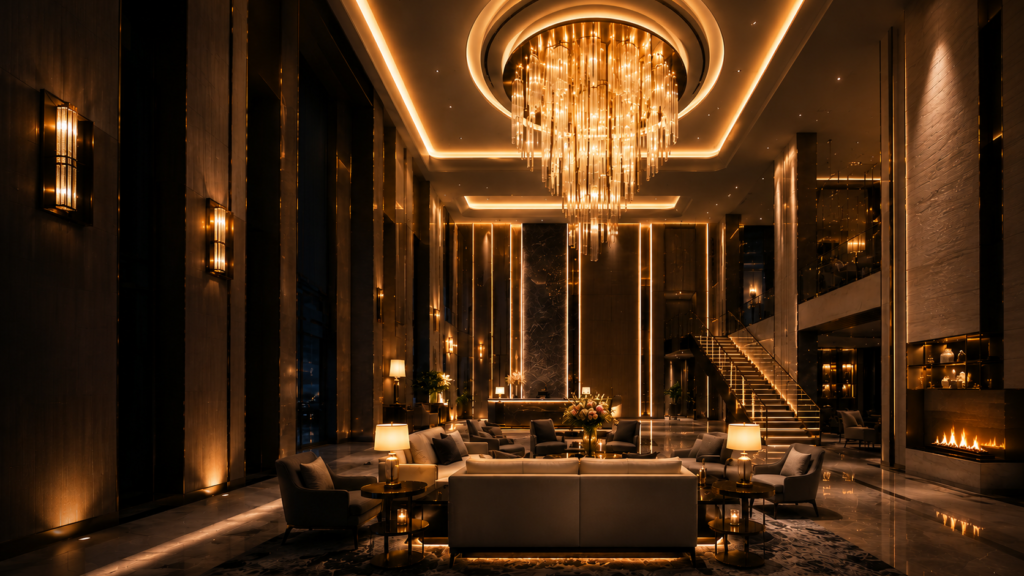 In the UAE and across the GCC, hospitality is about far more than function. It is about atmosphere, identity, and the feeling a space leaves behind long after a guest has gone. With Luzion Lighting’s expertise in Hospitality lighting design and tailored lighting solutions for hotels, restaurants, and resorts, brands can create spaces that feel refined, memorable, and unmistakably premium.
The most successful hospitality environments do not simply look beautiful. They feel considered. They feel effortless. And more often than not, that feeling begins with light.
At its best, lighting does much more than illuminate a room. It shapes emotion, guides movement, highlights architecture, and gives a brand its visual voice. From the first impression of a grand hotel lobby to the intimate glow of a fine dining restaurant, lighting becomes part of the guest journey. It influences how people arrive, how they linger, and how they remember.
For premium hospitality brands, lighting is not a finishing touch. It is a strategic design layer. Businesses investing in professional lighting solutions understand that light can elevate a property from attractive to exceptional. It can create distinction in a competitive market, support operational efficiency, and reinforce the level of quality guests expect from luxury destinations.
The Role of Lighting in Hospitality Spaces
Lighting defines how a space is experienced. It affects mood, comfort, spatial perception, and even the way materials and finishes are perceived. In hospitality environments, where every detail contributes to the guest experience, lighting must be approached with precision and intent.
A well-planned architectural lighting for hospitality scheme considers the relationship between light, texture, scale, and circulation. It is not about adding brightness everywhere. It is about layering illumination in a way that supports the architecture and enhances the atmosphere.
A hotel lobby, for example, requires a sense of arrival—something elegant, welcoming, and memorable. A restaurant, by contrast, may need intimacy, warmth, and visual control. A resort terrace may call for a softer, more atmospheric approach that extends the experience into the evening. This is where experienced hospitality lighting consultants bring real value. They translate brand ambition into lighting strategies that feel both refined and practical.
In luxury hospitality, the best lighting is often the least obvious. It does not compete with the architecture; it completes it.
Why Professional Hospitality Lighting Matters
Working with a specialized hospitality lighting company ensures that lighting is treated as an integrated part of the design process rather than an afterthought. Professional lighting design involves far more than selecting fixtures. It requires technical coordination, visual sensitivity, energy planning, and a deep understanding of guest behavior.
A thoughtful lighting strategy can:
- Enhance guest comfort and emotional connection
- Strengthen brand identity and visual consistency
- Improve functionality, safety, and wayfinding
- Increase the perceived value of interiors and exteriors
- Support energy-efficient operations and long-term performance
In premium environments, lighting often becomes one of the most defining elements of the space. A carefully executed luxury hospitality lighting design can transform a hotel lobby into a signature arrival experience, or a restaurant into a destination in its own right.
For developers, operators, and design teams, this is where lighting becomes a business asset. It supports reputation, guest satisfaction, and commercial performance all at once.
The Business Value of Lighting in Hospitality
Exceptional lighting does more than create beauty. It creates value.
In hospitality, value is measured not only in aesthetics but in guest perception, operational efficiency, and brand loyalty. A well-designed lighting scheme can influence how long guests stay in a restaurant, how comfortable they feel in a lounge, and how premium a hotel appears in photographs, reviews, and memory.
This is why hospitality lighting design should be viewed as a strategic investment. It contributes to:
- Brand differentiation: A distinctive lighting identity helps a property stand apart in a crowded market.
- Guest experience: Lighting shapes mood, comfort, and emotional response.
- Operational flexibility: Smart controls allow spaces to adapt throughout the day and evening.
- Energy performance: Efficient systems reduce consumption without compromising quality.
- Asset longevity: Durable, well-planned lighting systems support long-term value and easier maintenance.
In the GCC, where hospitality standards are exceptionally high and expectations are shaped by global luxury benchmarks, lighting must perform at both a visual and operational level. It must feel elegant, but it must also work intelligently.
Hospitality Lighting Across Different Spaces
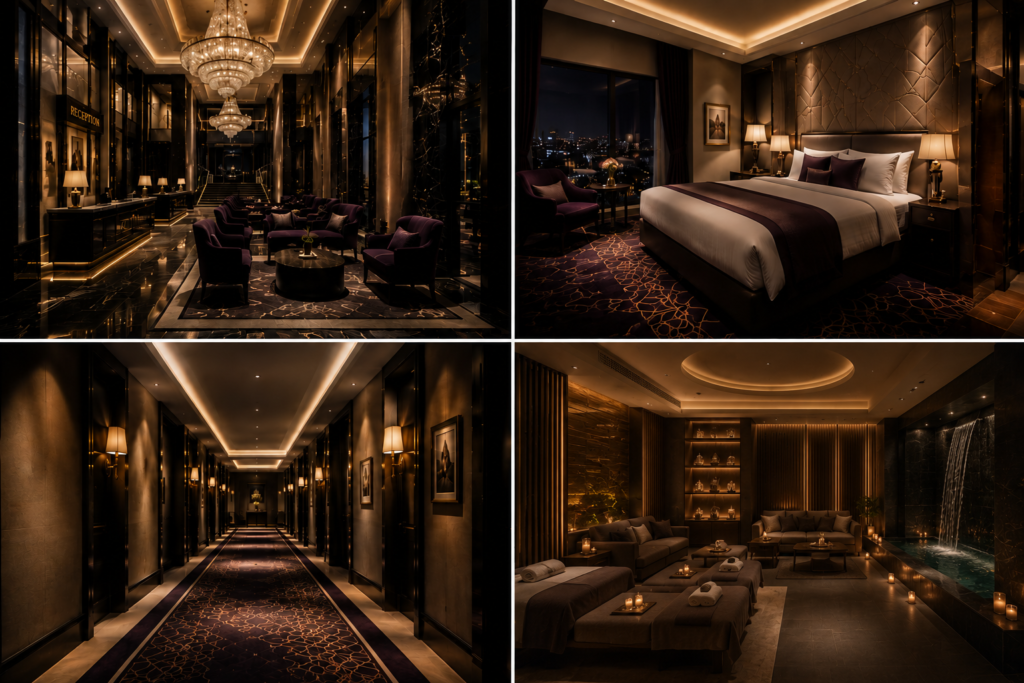 Lobby and Arrival Areas
The lobby is the first chapter of the guest journey. It should communicate confidence, warmth, and clarity from the moment a guest enters. Lobby lighting concepts often combine statement fixtures, concealed ambient lighting, and accent layers that highlight architectural features without overwhelming the space.
The goal is not simply to impress. It is to create a sense of welcome that feels calm, luxurious, and aligned with the brand.Every detail, from light intensity to color temperature, is carefully curated to guide the guest’s first impression and set the emotional tone for the entire stay.
Guest Rooms and Suites
In hotel room lighting design, comfort and flexibility are essential. Guests should be able to transition easily between reading, relaxing, dressing, and sleeping. Layered lighting, bedside controls, soft cove illumination, and carefully positioned task lighting all contribute to a more intuitive experience.
In luxury suites, lighting should feel discreet yet responsive. It should support privacy, comfort, and a sense of personal retreat.
Corridors and Transitional Spaces
Often overlooked, corridors and circulation areas are critical to the overall guest experience. These spaces should feel safe, elegant, and consistent with the wider design language. Subtle lighting can guide movement, create rhythm, and reinforce the sense of arrival and departure throughout the property.
Facades and Exterior Identity
Exterior lighting is a powerful branding tool. Hotel facade lighting enhances architectural form, creates night-time visibility, and establishes a memorable presence from the street or driveway. In luxury hospitality, the facade is not just an envelope—it is a statement.
Spas, Lounges, and Wellness Areas
Wellness spaces require a softer, more restorative lighting approach. Here, the emphasis is on calm, balance, and sensory comfort. Lighting should support relaxation while maintaining the refined aesthetic expected in premium hospitality environments.
Restaurant & Dining Lighting: Setting the Perfect Mood
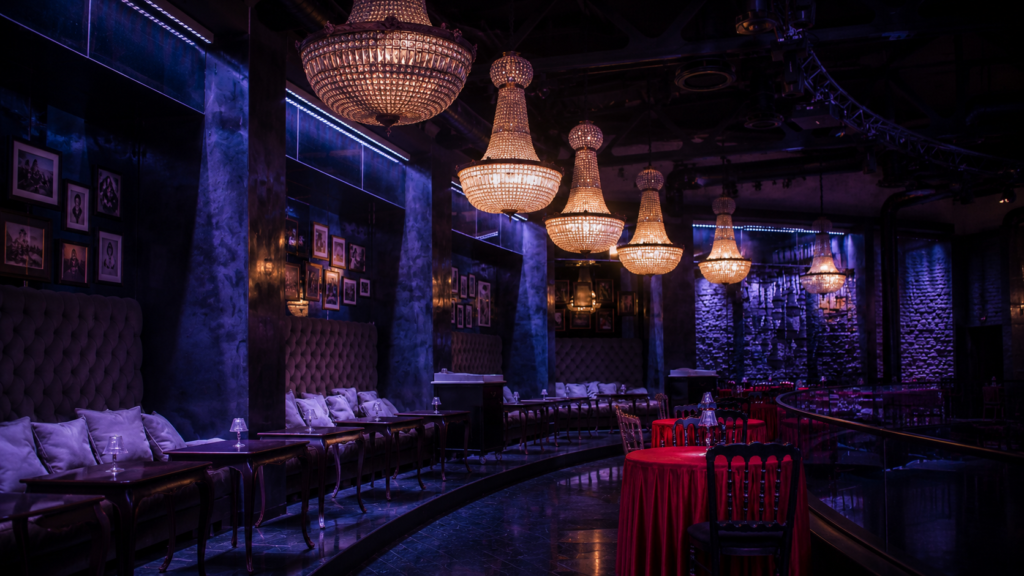 Dining spaces are among the most emotionally sensitive environments in hospitality. Lighting influences appetite, conversation, pacing, and the overall sense of occasion. A restaurant may serve excellent food, but if the lighting is wrong, the experience can feel flat or uncomfortable.
Professional restaurant lighting design is about creating the right atmosphere for the concept, cuisine, and clientele. Fine dining venues typically benefit from warm, low-level illumination that creates intimacy and visual focus. Casual dining spaces may require a brighter, more energetic approach.
Key elements of fine dining lighting design include:
- Warm color temperatures, typically between 2700K and 3000K
- Layered lighting to create depth and softness
- Accent lighting to highlight tables, artwork, or architectural details
- Controlled brightness to maintain comfort and visual elegance
Modern café environments often blend Decorative Lighting with practical illumination to create spaces that feel inviting, social, and visually memorable. Meanwhile, bar and lounge concepts often rely on dynamic contrast, allowing the atmosphere to shift naturally from day to evening.
For premium dining destinations, high-end restaurant lighting is not just about visibility. It is about creating a mood that feels curated, confident, and refined.
Outdoor Hospitality Lighting: Extending the Experience
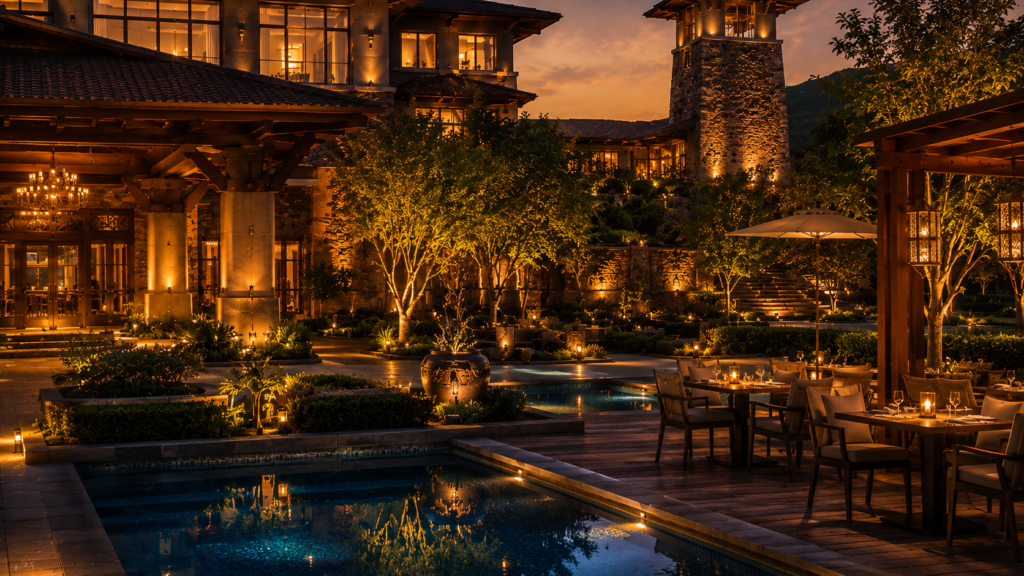 Outdoor spaces are no longer secondary in hospitality. In many luxury properties, they are among the most desirable and memorable areas. Terraces, gardens, courtyards, pool decks, and beachfront settings all require lighting that is both atmospheric and functional.
Effective outdoor hospitality lighting transforms exterior areas into immersive destinations. It supports safety, enhances visual appeal, and encourages guests to spend more time outdoors.
Key applications include:
- Landscape lighting for resorts to highlight planting, pathways, and architectural edges
- Poolside lighting design to balance safety with a relaxed evening atmosphere
- Outdoor dining lighting ideas that create intimacy and visual comfort
- Terrace lighting concepts that elevate the dining experience after sunset
In the GCC, where outdoor hospitality is often a major part of the guest experience, lighting must perform in challenging climatic conditions while maintaining a premium aesthetic. The right solution feels subtle by day and transformative by night.
Luxury Lighting: Elevating Hospitality to the Next Level
In Dubai, Abu Dhabi, Riyadh, Doha, and across the wider GCC, luxury hospitality is defined by precision, detail, and distinction. Lighting plays a central role in that language of excellence.
Luxury lighting design hospitality is about more than visual impact. It is about creating a bespoke experience that reflects the identity of the brand and the ambition of the project. Every fixture, beam angle, finish, and control sequence should feel intentional.
High-end projects often include:
- Custom-designed fixtures tailored to the architecture
- Integrated smart lighting systems for flexibility and control
- Dynamic lighting scenes that adapt to different times and functions
- Artistic installations that create a signature visual moment
Bespoke hospitality lighting ensures that the project feels unique rather than generic. It allows the lighting to respond to the architecture, the interior concept, and the guest journey in a way that feels seamless and elevated.
For developers and operators seeking distinction, premium lighting solutions can become one of the most powerful tools in shaping a memorable brand experience.
Smart & Energy-Efficient Lighting Solutions
Luxury and efficiency are no longer opposing ideas. Today’s hospitality projects are expected to deliver both. This is where advanced lighting control systems hospitality become essential.
Smart lighting allows operators to adjust scenes, manage energy use, and create consistency across different spaces and times of day. It gives hospitality teams greater control while improving the guest experience.
With intelligent systems, properties can:
- Adjust lighting levels based on occupancy or time of day
- Create preset scenes for breakfast, lunch, dinner, events, or late-night service
- Reduce energy consumption without compromising atmosphere
- Improve operational efficiency and maintenance planning
Using LED lighting for hospitality supports both performance and sustainability. It offers long life, lower energy use, and excellent visual quality. In addition, energy-efficient hotel lighting contributes to long-term cost savings and aligns with the growing demand for responsible design.
For modern hospitality brands, sustainability is not a compromise. It is part of the standard.
The Impact of Lighting on Guest Experience
Lighting influences how guests feel before they consciously notice it. It affects comfort, orientation, appetite, relaxation, and even the perceived quality of service.
Understanding how lighting affects guest experience allows designers to create spaces that feel intuitive and emotionally resonant. Warm lighting can make a room feel more inviting. Brighter lighting can support activity and clarity. Accent lighting can draw attention to artwork, textures, or architectural details that define the character of the space.
In hospitality, these subtle decisions matter. They shape the rhythm of the guest journey and contribute to the overall sense of quality.
A successful lighting scheme does not simply illuminate a space. It gives the space a point of view.
Choosing the Right Lighting Partner
Selecting the right hospitality lighting consultant is one of the most important decisions in any hospitality project. The right partner understands not only lighting technology, but also architecture, branding, guest psychology, and operational realities.
When choosing a lighting partner, look for:
- Proven experience in hospitality projects
- A strong understanding of luxury design standards
- The ability to deliver customized, project-specific solutions
- Knowledge of international trends and regional expectations
- A collaborative approach from concept through completion
A reliable lighting design consultancy team will work closely with architects, interior designers, operators, and contractors to ensure that the lighting strategy is both beautiful and buildable.
The best results come from early collaboration. When lighting is considered from the beginning, the final outcome feels more integrated, more refined, and more valuable.
Future Trends in Hospitality Lighting
The hospitality industry continues to evolve, and lighting is evolving with it. Guests now expect more personalization, more comfort, and more seamless integration between design and technology.
Emerging trends include:
- Human-centric lighting that supports wellbeing and circadian rhythm
- Interactive lighting systems that respond to use and occupancy
- Integration with smart building technology for greater control
- Sustainable and eco-conscious design approaches
- More bespoke and experiential lighting moments within public spaces
As expectations rise, custom lighting design for hospitality will become even more important. Properties that invest in thoughtful, future-ready lighting will be better positioned to deliver memorable experiences and long-term value.
FAQ: Hospitality Lighting Design
What is hospitality lighting design?
Hospitality lighting design is the strategic planning of lighting for hotels, restaurants, resorts, lounges, and other guest-facing spaces. It combines aesthetics, functionality, and guest experience to create environments that feel comfortable, memorable, and aligned with the brand.
Why is lighting so important in hotels and restaurants?
Lighting influences mood, comfort, perception, and behavior. In hotels and restaurants, it helps define the atmosphere, supports the architecture, and shapes how guests experience the space from arrival to departure.
What type of lighting works best for fine dining spaces?
Fine dining lighting design typically uses warm color temperatures, layered illumination, and controlled brightness. The goal is to create intimacy, elegance, and visual comfort while allowing food and interiors to look their best.
How does smart lighting improve hospitality spaces?
Lighting control systems for hospitality allow operators to adjust scenes, manage energy use, and adapt lighting to different times of day or service modes. This improves flexibility, efficiency, and guest comfort.
Can hospitality lighting help reduce energy costs?
Yes. LED lighting for hospitality and energy-efficient hotel lighting can significantly reduce energy consumption while maintaining high visual quality. Smart controls can further improve efficiency and operational performance.
Do you offer bespoke lighting solutions for UAE and GCC projects?
Yes. Bespoke hospitality lighting is especially important in the UAE and GCC, where luxury standards are high and each project must feel distinctive. Custom solutions ensure the lighting reflects the architecture, brand, and guest experience goals of the property.
Ready to Elevate Your Hospitality Space?
If you are planning a hotel, restaurant, resort, or luxury dining destination in the UAE or GCC, now is the time to shape the guest experience from the very first impression. Luzion Lighting can help you create a lighting strategy that feels refined, functional, and unmistakably premium.
Whether you need a complete hospitality lighting concept, a tailored luxury lighting approach, or smart solutions for a new development or refurbishment, our team can guide you from concept to completion.
subscribe for newsletter

Luzion is a leading manufacturer and exporter of high-quality LED lighting solutions. With a focus on design, research, and innovation, we offer a wide range of products for commercial, industrial, residential, and outdoor spaces.


