
Search
Category
- Bollard Light
- Commercial Lighting
- Energy-Efficient Lighting
- LAMPS
- LED Lights
- LED Uplighter
- Light and Colour Theory
- Lighting & Signage Solutions
- Lighting Design and Facade Lighting
- Lighting Design Consultancy UAE
- lighting design principles
- Lighting Fundamentals and Design Principles
- Lighting Solutions
- Nature of Light in Lighting Design
- Panel Lights vs. Spot Lights
- Portable Lights
- Signage Solutions
- Smart Controllers for Streetlights
- Solar Lights
- Tree Lighter
- Uncategorized
Recent Posts


Austrian bespoke lights

Scandinavian Bespoke Lights

British Bespoke Lights

French Bespoke Lighting
Tags
- Architectural Lighting
- Architectural Lighting Design
- Architectural Lighting Design UAE
- automation
- Best Lighting Design Consultancy in UAE
- COB LED Technology
- COB Spotlights
- Color Temperature in Lighting
- Commercial Lighting Design
- Commercial Lighting Fixtures
- Commercial Lighting Innovations
- Commercial Lighting UAE
- Cylinder COB Lights
- Dialux Lighting Design
- Dialux Lighting Design UAE
- Energy Efficient Lighting
- Energy-Efficient Lighting USA
- Exterior Lighting Solutions
- Facade & Exterior Lighting
- Facade Lighting
- Facade Lighting Design
- Facade Lighting Design UAE
- Facade lighting ideas
- Facade Lighting UAE
- Facade Uplighting
- Green Building Design
- Indoor & Exterior Lighting Solutions
- Interior Lighting Design
- Lamps
- LED Lighting Solutions
- LED lights
- LED Panel
- LED Uplighters
- LED vs Halogen
- Light and Color Theory
- Lighting Basics
- Lighting Consultancy UAE
- Lighting Design
- Lighting Design Consultancy in UAE
- Lighting Design Principles
- Lighting Design UAE
- Lighting Fundamentals Guide
- Lighting Layers
- Lumen Output in Lighting
- Modern Building Lighting Ideas
- Modern Lighting Ideas
- Office Lighting Solutions
- Outdoor Lighting Consultants UAE
- Panel Lights vs. Spot Lights
- Portable Lights
- smart light
- Smart Lighting Systems
- Sustainable Architecture
- Sustainable Lighting UAE
- Villa Lighting UAE
- Lighting Solutions


10 Outdoor Lighting Mistakes – And How to Avoid Them
10 Outdoor Lighting Mistakes That Cost Architects, Developers & Contractors — And How to Avoid Them
If you’ve ever walked a completed project at night and felt like something was “off” — a facade that looks flat instead of dramatic, a driveway with awkward dark patches, a resort pool area with glare bouncing off every surface — chances are it wasn’t a design failure. It was a lighting mistake. And on a commercial or architectural project, that mistake doesn’t just look bad. It shows up as rework costs, delayed handovers, and awkward conversations between the architect, the contractor, and the client about who’s fixing it.
Most articles on common outdoor lighting mistakes are written for homeowners tweaking their garden lights on a weekend. That’s fine advice if you’re deciding between two solar path lights. It’s close to useless if you’re specifying lighting for a hotel facade, a villa compound, or a commercial building where the mistakes are measured in thousands of dollars and months of delay, not a trip back to the hardware store.
This guide is written for the people who actually deal with that: architects, developers, consultants, and contractors. We’ll walk through the outdoor lighting design mistakes we see repeatedly on real projects, why they happen, and what to check before they become expensive.
Why Outdoor Lighting Mistakes Cost More on Commercial Projects
A homeowner who picks the wrong bulb color can swap it out in an afternoon. A developer who discovers the facade lighting doesn’t match the architectural intent — after the building is handed over — is looking at scaffolding, electrical rework, and a client who’s no longer happy.
The scale changes everything. A single outdoor lighting design error on a villa might mean one dim corner of a garden. The same category of error on a 200-key hotel or a commercial tower means uneven illumination across an entire facade, inconsistent color temperature that guests notice immediately, or a control system that simply doesn’t talk to the rest of the building’s automation.
That’s the gap this article fills. Not “here’s a nicer bulb,” but the outdoor lighting problems that actually derail commercial and architectural projects — and how to catch them before they’re built into the structure.
1. Treating Lighting as an Afterthought in the Design Timeline
Here’s a scenario we see constantly: the architectural drawings are finalized, the facade materials are ordered, and then someone asks, “so what’s the lighting plan?” At that point, you’re not designing lighting — you’re retrofitting it into a building that wasn’t built to accommodate it.
This is probably the single most common of all outdoor lighting planning mistakes, and it’s almost never caught early because lighting feels like a “finishing touch” rather than a structural consideration. But conduit routes, recessed fixture cavities, and power distribution all need to be planned alongside the architectural and MEP drawings — not after them.
What to do instead: Bring a lighting consultant into the conversation at schematic design stage, not construction stage. If the facade has recessed grazing lights or in-ground uplights, those need conduit and junction boxes cast into the structure before concrete pours, not chased into finished stone afterward.
2. Ignoring Climate and Environmental Conditions
This one’s personal for anyone working in the GCC. A lighting mistake that’s cosmetic in a mild climate becomes a hardware failure in a desert or coastal one.
| Environmental Factor | Common Mistake | What Actually Happens |
|---|---|---|
| High UV exposure | Using standard (non-UV-stabilized) polycarbonate housings | Housings yellow, crack, and lose impact resistance within 1–2 years |
| Sand and dust | Skipping IP6X-rated sealing on ingress points | Fine dust infiltrates drivers and optics, reducing output and causing early failure |
| Coastal/marina salt air | No salt-spray corrosion testing on housings and hardware | Corrosion sets into fixture bodies and mounting hardware within months |
| High ambient heat | Ignoring thermal management in fixture design | LED lumen depreciation accelerates, and driver lifespan drops sharply |
This is exactly why architectural outdoor lighting design in this region can’t just borrow specifications written for European or North American climates. A fixture rated IP65 in a temperate climate isn’t automatically the right choice for a rooftop installation in Dubai in July. Ask for climate-specific test data, not just a generic IP rating on a spec sheet.
3. Poor Fixture Placement, Direction, and Glare Control
Glare is the difference between a facade that looks intentional and one that looks like it’s under interrogation lighting. We’ve walked sites where every uplight was aimed straight at eye level for anyone approaching the building — technically “lit,” but uncomfortable to actually look at.
Architectural façade lighting mistakes in this category usually come down to three things: fixtures aimed without testing, no consideration of pedestrian or driver sightlines, and overlighting instead of layering. A facade doesn’t need to be uniformly bright — it needs contrast, shadow, and a few well-placed highlights to actually read as architecture at night.
What to do instead: Run a night mock-up before final installation on any large facade or landscape project. A few hours with test fixtures and a genset will save you from discovering the glare problem after the scaffolding comes down. This also applies to façade lighting design errors around glazing — a poorly aimed uplight can bounce straight back through a window into a guest room or office.
4. Mismatched Dimming and Control Systems
This is a mistake that looks fine on paper and falls apart in commissioning. Someone specifies 0-10V dimming for one zone, DALI for another, and a Bluetooth mesh controller for a third — often because different contractors sourced different fixtures at different times — and then nobody can get the whole system to dim together, or worse, fixtures flicker because the driver and controller don’t speak the same protocol.
Commercial building lighting mistakes like this are avoidable, but only if the control protocol is locked in during design, not left to whichever electrical contractor is doing the final fit-out. Mixing protocols across a single building isn’t impossible to manage, but it needs to be intentional, with gateways specified in advance — not discovered as a problem during testing.
5. Skipping Photometric Planning
“We’ll space them evenly” is not a lighting plan — it’s a guess. On a driveway or garden, an uneven guess might be forgivable. On a hotel facade or a commercial plaza, uneven lux levels are immediately visible and hard to fix after installation.
Photometric planning tools like DIALux let you simulate beam angles, spacing, and lux levels before a single fixture goes up. Skipping this step is one of the more technical outdoor lighting design errors, because the mistake isn’t obvious until the fixtures are physically installed and the dark patches or hot spots show up.
What to do instead: Request a photometric simulation from your lighting supplier or consultant before finalizing fixture quantities and spacing — especially for large facades, parking areas, or pathway lighting where consistency matters.
6. Overlooking IP and IK Ratings for Public Spaces
IP ratings (moisture and dust protection) get talked about often. IK ratings — impact resistance — get ignored far more often than they should, especially for lighting near public walkways, vehicular areas, or anywhere foot traffic is high.
| Rating Type | What It Measures | Why It Matters for Commercial Projects |
|---|---|---|
| IP (Ingress Protection) | Resistance to dust and water | Prevents moisture/dust damage in outdoor and coastal environments |
| IK (Impact Resistance) | Resistance to physical impact | Protects fixtures in high-footfall public areas from accidental or intentional damage |
A residential-grade in-ground uplight might carry a perfectly fine IP rating but crack the first time a delivery cart rolls over it in a hotel loading zone. For outdoor lighting for commercial buildings, especially in public-facing or high-traffic areas, IK rating deserves the same attention as IP rating during specification — not an afterthought.
7. Missing Certification and Test Documentation
This mistake doesn’t show up until much later — sometimes not until a fixture starts failing prematurely across an entire property, and everyone’s asking why.
Architectural lighting mistakes at the procurement stage often come down to skipping documentation checks: no LM-79 (photometric performance) or LM-80 (lumen maintenance) test reports, no verified CE/UL/ETL certification, and in worse cases, counterfeit or substandard driver components sourced to hit a lower price point.
What to do instead: Request test documentation as part of the procurement process, not after installation issues arise. It takes a few extra days upfront and can save an entire property from a fixture recall later.
8. Poor Coordination Between Architects, Contractors, and Electrical Teams
This is where a lot of good design intent quietly dies. The architect specifies a lighting concept, the MEP contractor lays conduit based on a slightly outdated drawing, and by the time the lighting designer’s final fixture selection comes in, the cable routes don’t match the fixture locations anymore.
Outdoor lighting planning mistakes at the coordination level are rarely anyone’s fault individually — they’re a communication gap. But they result in the same outcome every time: value engineering under time pressure, where fixtures get swapped for “whatever fits the existing conduit” instead of what the design actually called for.
What to do instead: Lock in fixture specifications before conduit and cable routing is finalized, and keep the lighting designer, MEP contractor, and architect on the same drawing set throughout construction — not just at handoff points.
9. Choosing Fixtures on Price Instead of Total Cost of Ownership
A cheaper fixture that fails in three years and needs full replacement — including labor, scaffolding, and downtime — is not actually cheaper. This is one of the most common outdoor lighting problems we see driving repeat complaints from developers: the upfront number looked good, and the ten-year number didn’t.
What to do instead: Compare fixtures on total cost of ownership — purchase price, expected lifespan, maintenance access difficulty, and energy consumption — not just the line-item cost on a quote. A facade fixture that requires a cherry picker to replace should be held to a much higher reliability standard than one you can swap from ground level.
10. Overlighting or Underlighting Facades and Landscapes
More light isn’t better light. We’ve seen facades so uniformly floodlit that all the architectural detail — the texture, the recesses, the material changes — disappears into a flat wash of brightness. We’ve also seen the opposite: landscape lighting so sparse that half a property’s pathways sit in the dark.
Landscape lighting design mistakes at a commercial or villa scale usually come down to skipping the layering principle — ambient, accent, and task lighting each play a different role, and a design that leans entirely on one layer feels either flat or chaotic. Villa outdoor lighting mistakes especially tend to overlight driveways and entrances while underlighting gardens and water features that actually deserve the visual attention.
11. Outdoor Lighting Mistakes Specific to Hotels, Resorts, and Villas
Hospitality lighting has its own failure points because guest experience is on the line, not just curb appeal.
Hotel outdoor lighting mistakes we see repeatedly: inconsistent color temperature between buildings on the same property (guests notice this walking from the lobby to their room), glare at pool and lounge areas from poorly angled fixtures, and wayfinding paths that look beautiful in daylight renders but leave guests genuinely unsure which way to walk at night.
Villa outdoor lighting mistakes tend to be more about missed opportunity than technical failure — water features, mature trees, and architectural entrances that could be genuine focal points at night are often left with generic floodlighting instead of considered accent lighting.
12. Maintenance and Warranty Planning Mistakes
Handover day is when everyone breathes a sigh of relief — and it’s also exactly when maintenance planning tends to get forgotten. No agreed spare-parts strategy, no clarity on who replaces a failed driver in year three, and warranty terms that were never actually checked against local operating conditions.
Commercial outdoor lighting mistakes at this stage are invisible until something breaks — and then the facilities team is scrambling to find a compatible replacement fixture for something installed two years ago that’s since been discontinued.
What to do instead: Agree on a maintenance and spare-parts plan at handover, not after the first failure. Confirm warranty terms explicitly cover the climate conditions the fixtures will actually operate in.
A Mid-Article Reality Check
If even two or three of these sound familiar from a recent project, you’re not alone — these are the same common lighting design mistakes we see across facade, landscape, and hospitality projects in this region, often because the lighting supplier was brought in too late to actually prevent them.
This is exactly the gap Luzion Lighting works to close — bringing manufacturing-level technical knowledge (climate-tested housings, verified certification, photometric support) into the design conversation early, instead of after the mistakes are already built in. If you’re currently specifying or troubleshooting outdoor lighting for a commercial, hospitality, or residential project, talk to our team before the fixture order goes in — not after.
13. A Quick Checklist for Architects, Consultants, and Developers
Before finalizing any outdoor lighting package, run through this:
- Is the lighting plan integrated into architectural and MEP drawings, not added afterward?
- Are fixture housings rated for the actual climate conditions (UV, sand, salt air, heat)?
- Has glare been tested with a night mock-up before final installation?
- Is the dimming/control protocol confirmed and consistent across all zones?
- Has a photometric simulation been run for facades, pathways, or parking areas?
- Do fixtures in public or high-traffic areas meet appropriate IK ratings?
- Has certification documentation (LM-79, LM-80, CE/UL/ETL) been verified?
- Are the architect, contractor, and electrical team working from the same current drawing set?
- Has total cost of ownership been compared, not just upfront price?
- Is there an agreed maintenance and spare-parts plan at handover?
This covers the most common outdoor lighting design mistakes, but every project has its own site conditions worth reviewing individually.
Getting Outdoor Lighting Right From the Start
None of these mistakes are exotic — they’re the same handful of issues showing up project after project, mostly because lighting gets treated as a finishing detail instead of a design discipline with its own technical requirements. The fix isn’t complicated either: bring in technical expertise early, ask for documentation before you need it, and test before you commit fixtures to concrete.
Working on a commercial, hospitality, or residential project and want a second opinion on the lighting specification before it’s finalized? Get in touch with Luzion Lighting — we work directly with architects, consultants, developers, and contractors across the region to catch these issues at the design stage, not after handover.
FAQs
1. What are the most common outdoor lighting mistakes on commercial projects?
The most frequent issues are treating lighting as a late-stage addition instead of part of the architectural plan, mismatched dimming/control protocols across zones, skipped photometric planning leading to uneven illumination, and choosing fixtures based on upfront cost rather than total cost of ownership.
2. How is architectural facade lighting different from residential outdoor lighting?
Facade lighting operates at a much larger scale and needs photometric planning, coordination with structural and MEP drawings, and climate-rated components, whereas residential lighting is typically a smaller, more forgiving installation that can be adjusted after the fact without major cost.
3. What IP rating is needed for outdoor lighting in hot, humid, or coastal climates?
Most outdoor fixtures in these conditions should carry at least an IP65 rating, but the IP number alone isn’t enough — housings should also be UV-stabilized and, for coastal or marina projects, tested for salt-spray corrosion resistance specifically.
4. Why does outdoor lighting fail faster in the GCC region compared to other climates?
High ambient heat accelerates LED lumen depreciation and reduces driver lifespan, while sand, dust, and intense UV exposure degrade housings and seals faster than they would in milder climates — which is why fixtures need to be tested for these specific conditions, not just generically weatherproofed.
5. What should architects check before finalizing an outdoor lighting design?
At minimum: photometric simulation results, climate-appropriate IP and IK ratings, confirmed dimming/control protocol compatibility across all zones, and certification documentation (LM-79, LM-80, CE/UL/ETL) from the manufacturer.
6. How can hotels and resorts avoid inconsistent outdoor lighting across a property?
Standardizing color temperature and fixture specifications across all buildings and landscape zones from the start — rather than sourcing fixtures individually per phase or contractor — is the most reliable way to keep a property’s outdoor lighting visually consistent for guests.
Ready to get your outdoor lighting specification right the first time?
Contact Luzion Lighting for climate-tested fixtures, verified certification, and photometric support — built for architectural, commercial, and hospitality projects across the GCC.
Related posts

15 Sep 2026
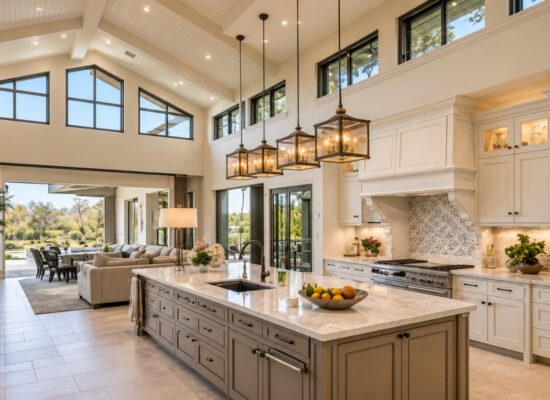
Austrian bespoke lights
Austrian Bespoke Lighting & Custom Lights for Global Projects Exceptional architecture deserves lighting that feels as considered as the space…
15 Sep 2026
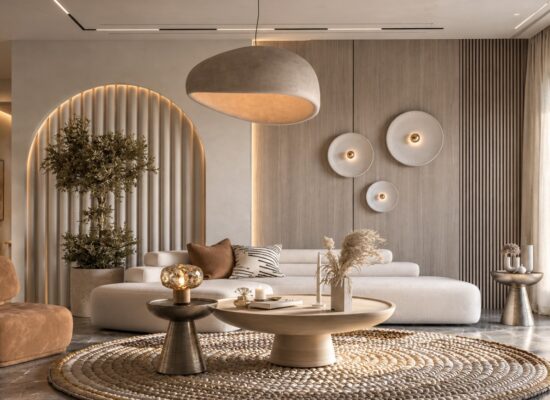
Scandinavian Bespoke Lights
Scandinavian Bespoke Lighting for Luxury & Architectural Projects Scandinavian bespoke lighting brings together understated elegance, functional design and refined craftsmanship…
11 Sep 2026
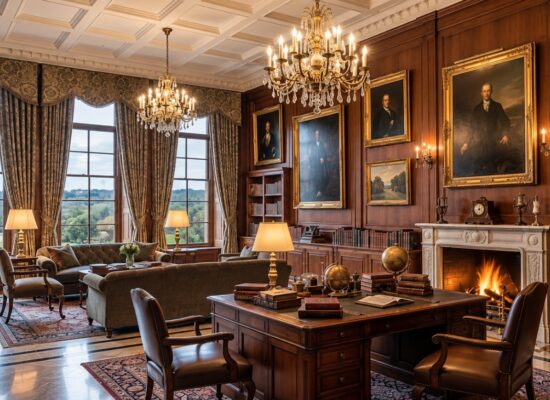
British Bespoke Lights
British Bespoke Lights: Craftsmanship, Design & Custom Lighting What Are British Bespoke Lights? British bespoke lights are custom-designed lighting fixtures…

11 Sep 2026
French Bespoke Lighting
French Bespoke Lighting: Design, Craftsmanship & What Makes It Different What Is French Bespoke Lighting? refers to lighting fixtures designed,…
subscribe for newsletter

Luzion is a leading manufacturer and exporter of high-quality LED lighting solutions. With a focus on design, research, and innovation, we offer a wide range of products for commercial, industrial, residential, and outdoor spaces.
