
Search
Category
- Bollard Light
- Commercial Lighting
- Energy-Efficient Lighting
- LAMPS
- LED Lights
- LED Uplighter
- Light and Colour Theory
- Lighting Design and Facade Lighting
- Lighting Design Consultancy UAE
- lighting design principles
- Lighting Fundamentals and Design Principles
- Lighting Solutions
- Nature of Light in Lighting Design
- Panel Lights vs. Spot Lights
- Portable Lights
- Signage Solutions
- Smart Controllers for Streetlights
- Solar Lights
- Tree Lighter
- Uncategorized
Recent Posts

Neon vs LED Neon: Which Is Better for Signage?
Tags
- Architectural Lighting
- Architectural Lighting Design
- Architectural Lighting Design UAE
- automation
- Best Lighting Design Consultancy in UAE
- COB LED Technology
- COB Spotlights
- Color Temperature in Lighting
- Commercial Lighting Design
- Commercial Lighting Fixtures
- Commercial Lighting Innovations
- Commercial Lighting UAE
- Cylinder COB Lights
- Dialux Lighting Design
- Dialux Lighting Design UAE
- Energy Efficient Lighting
- Energy-Efficient Lighting USA
- Exterior Lighting Solutions
- Facade & Exterior Lighting
- Facade Lighting
- Facade Lighting Design
- Facade Lighting Design UAE
- Facade lighting ideas
- Facade Lighting UAE
- Facade Uplighting
- Green Building Design
- Indoor & Exterior Lighting Solutions
- Interior Lighting Design
- Lamps
- LED Lighting Solutions
- LED lights
- LED Panel
- LED Uplighters
- LED vs Halogen
- Light and Color Theory
- Lighting Basics
- Lighting Consultancy UAE
- Lighting Design
- Lighting Design Consultancy in UAE
- Lighting Design Principles
- Lighting Design UAE
- Lighting Fundamentals Guide
- Lighting Layers
- Lumen Output in Lighting
- Modern Building Lighting Ideas
- Modern Lighting Ideas
- Office Lighting Solutions
- Outdoor Lighting Consultants UAE
- Panel Lights vs. Spot Lights
- Portable Lights
- smart light
- Smart Lighting Systems
- Sustainable Architecture
- Sustainable Lighting UAE
- Villa Lighting UAE
27Oct 2026
- Signage Solutions


LED Video Walls: Types, Applications and Design Guide
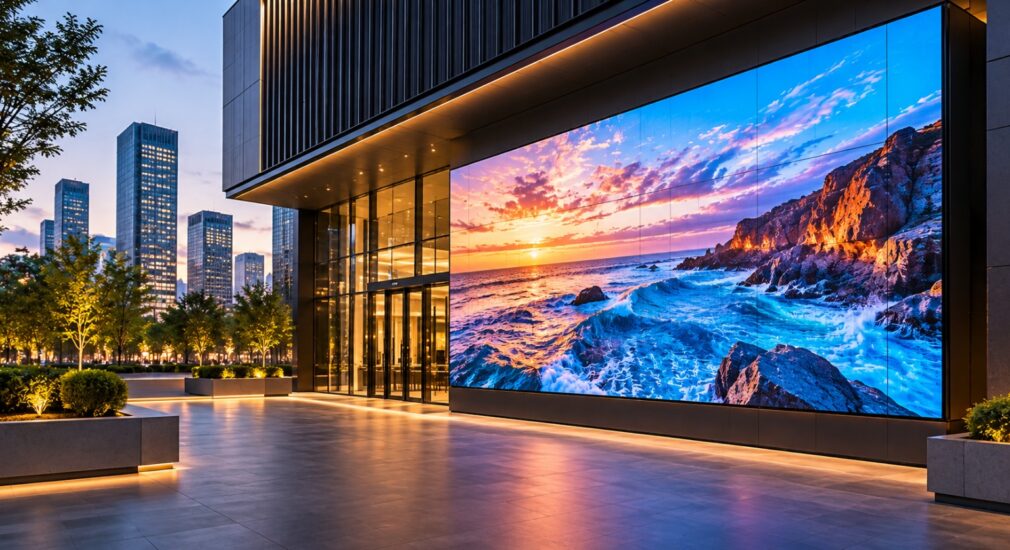
LED video walls have become an important part of modern commercial environments, from shopping malls and hotels to corporate offices, retail destinations and entertainment venues. They deliver large-format digital visuals for advertising, information, branding and immersive experiences.
For architects, developers, signage contractors and commercial property owners across the UAE and GCC, selecting the right LED video wall involves more than screen size. Pixel pitch, viewing distance, brightness, installation conditions and content requirements all influence the final result.
This guide explores the main types of LED video walls, their applications and the key considerations for commercial projects.
What Is an LED Video Wall?
An LED video wall is a large digital display created by combining multiple LED modules or panels into a single visual surface. Unlike conventional display screens, modular LED systems can be configured in different sizes and aspect ratios to suit the available space.
Depending on the application, LED video walls can display advertising campaigns, corporate presentations, promotional videos, live feeds, wayfinding information and branded visual content.
They are commonly installed in shopping centres, hotel lobbies, commercial buildings, exhibition spaces, airports and outdoor advertising locations.
Types of LED Video Walls
1. Indoor LED Video Walls
Indoor LED video walls are designed for controlled interior environments where image clarity, colour reproduction and viewing comfort are important.
Common applications include shopping mall atriums, hotel reception areas, corporate lobbies, conference rooms, retail showrooms and exhibition halls.
Fine-pitch LED displays are particularly useful when viewers are positioned close to the screen. The appropriate pixel pitch depends on screen dimensions, viewing distance, content and budget.
2. Outdoor LED Video Walls
Outdoor LED video walls are designed for installations exposed to daylight and environmental conditions. They are commonly used on commercial building facades, roadside advertising structures, retail destinations and entertainment venues.
Outdoor systems require suitable brightness, weather protection, thermal management and structural support. The enclosure, electrical components and installation method should be selected according to the actual site conditions.
In UAE and GCC locations, high temperatures, dust, direct sunlight and coastal exposure may influence product specification and maintenance planning.
3. Fine-Pitch LED Video Walls
Fine-pitch LED video walls use closely spaced pixels to deliver detailed images at relatively short viewing distances.
They are suitable for premium corporate environments, control rooms, high-end retail spaces, hospitality interiors and presentation areas where visual detail is essential.
Selecting a fine-pitch display should involve evaluating viewing distance, content resolution, screen dimensions and the intended viewing experience rather than choosing the smallest available pixel pitch by default.
4. Creative and Custom LED Video Walls
Custom LED video walls allow designers to explore display formats beyond conventional rectangular screens. Depending on the selected system, installations may incorporate curved surfaces, creative configurations or displays integrated into architectural features.
These solutions can support branded environments in hotels, retail developments, entertainment venues and experiential spaces.
Early coordination between architects, lighting designers, AV consultants and installation teams helps ensure that the display integrates with the surrounding architecture.
Key Specifications to Consider
Choosing a suitable LED video wall requires a clear understanding of the project’s technical and operational requirements.
| Specification | Why It Matters |
|---|---|
| Pixel pitch | Influences image detail and suitable viewing distance |
| Brightness | Determines visibility under the intended lighting conditions |
| Resolution | Affects the level of detail supported by the display |
| Viewing angle | Helps maintain visibility from different positions |
| Refresh rate | Influences visual performance, particularly for moving content and camera capture |
| Environmental protection | Supports suitability for indoor or outdoor conditions |
| Maintenance access | Affects servicing time and long-term operational convenience |
| Control system | Determines how content is processed, scheduled and displayed |
The correct specification depends on the installation environment, display dimensions, content type and expected operating hours.
LED Video Wall Applications in Commercial Projects
Shopping Malls and Retail Destinations
Shopping malls use LED video walls for promotional campaigns, brand advertising, seasonal content and visitor information. Large atrium displays can become visual focal points, while retail-facing screens support targeted messaging.
Hotels and Hospitality
Hotels can incorporate LED video walls into reception areas, conference facilities, ballrooms and event spaces. Displays can present welcome messages, event schedules, brand content and presentations.
The design should complement the interior finishes and avoid creating unnecessary visual glare in guest-facing areas.
Corporate Offices
Corporate environments use LED video walls for presentations, company communications, collaborative meetings and reception branding. Screen resolution, content compatibility and viewing distance are particularly important for these installations.
Building Facades and Outdoor Advertising
Outdoor LED video walls can provide dynamic advertising and visual communication on suitable commercial buildings and dedicated display structures.
Facade installations require careful coordination of structural loading, wind exposure, electrical infrastructure, viewing angles and applicable advertising regulations.
Exhibition and Entertainment Venues
Exhibition centres, auditoriums and entertainment spaces use large LED displays to deliver presentations, event visuals, live content and immersive experiences. Modular configurations can accommodate different stage layouts and production requirements.
LED Video Wall Design Considerations for UAE and GCC
Commercial LED installations across Dubai, Abu Dhabi, Sharjah, Riyadh, Jeddah, Doha, Muscat, Kuwait City and Manama should be designed around their specific site requirements.
1. Viewing distance and screen size: Determine where audiences will stand or sit before finalising the display dimensions and pixel pitch.
2. Ambient light: Evaluate daylight exposure and surrounding artificial lighting to establish suitable brightness and viewing comfort.
3. Heat management: Select equipment and ventilation arrangements appropriate to the operating environment, particularly for outdoor installations in hot climates.
4. Structural integration: Coordinate mounting systems, support structures, cable routes and maintenance access with the building design.
5. Content management: Confirm compatibility with the required video formats, playback equipment, control systems and scheduling workflows.
6. Regulations and approvals: Check the relevant local requirements for facade displays, advertising structures, electrical safety and installation permits before proceeding.
A coordinated specification helps balance visual performance, reliability, architectural quality and ongoing maintenance.
LED Video Walls vs Traditional Digital Signage
Traditional digital signage often uses individual LCD displays or smaller screens to communicate information and promotional content. LED video walls use modular LED technology to create larger, more flexible display surfaces.
LED video walls can be advantageous for large-format installations, expansive viewing areas and custom configurations. Conventional digital signage may be more appropriate for smaller spaces, standard information displays or projects where a simpler screen installation meets the requirements.
The best solution depends on the display size, viewing distance, operating environment, content requirements and total project cost.
Frequently Asked Questions
1. What is an LED video wall used for?
LED video walls are used for advertising, corporate presentations, retail promotions, visitor information, event visuals and large-format digital communication.
2. What is the difference between indoor and outdoor LED video walls?
Indoor displays are designed for interior viewing conditions, while outdoor displays require appropriate brightness, environmental protection and thermal management for exposed installations.
3. What is pixel pitch in an LED video wall?
Pixel pitch is the distance between the centres of adjacent pixels, usually measured in millimetres. A smaller pixel pitch generally supports greater image detail at closer viewing distances.
4. Are LED video walls suitable for shopping malls?
Yes. They can be installed in atriums, retail zones, entrances and promotional areas, subject to suitable design, mounting and operational requirements.
5. What should be considered when installing an outdoor LED video wall in the UAE?
Important considerations include sunlight visibility, operating temperatures, dust protection, structural loading, electrical safety, maintenance access and local authority approvals.
6. How do I choose the right LED video wall?
Start by defining the installation location, viewing distance, screen dimensions, content requirements, ambient light conditions and budget. These factors help determine the appropriate display technology and specifications.
Custom LED Display Solutions by Luzion Lighting
Commercial LED display projects require careful consideration of architectural integration, visibility, environmental conditions and maintenance requirements.
Luzion Lighting works in architectural and commercial lighting and signage solutions, supporting projects where visual communication and the built environment need to work together.
For developments across the UAE and GCC, project teams should evaluate the display requirements alongside facade lighting, architectural signage, electrical coordination and the wider design intent.
Explore Luzion Lighting’s signage solutions to discover relevant options for commercial and architectural projects.
Related posts
27 Oct 2026
Directional vs Directory Signage: Key Differences, Uses and Design Tips
Directional vs directory signage is an important distinction when planning an effective wayfinding system for commercial buildings, offices, hotels, hospitals…
26 Oct 2026
Monument vs Pylon Signs: Which Is Better for Commercial Projects?
Outdoor signage plays an important role in helping businesses establish visibility, guide visitors and create a professional identity. For shopping…
26 Oct 2026
Neon vs LED Neon: Which Is Better for Signage?
Choosing between traditional neon and LED neon depends on the desired appearance, energy consumption, installation requirements and long-term maintenance. Both…
24 Oct 2026
Digital Signage in UAE & GCC: Types, Applications and Design Guide
Digital signage has become an important part of how businesses communicate with customers, visitors and employees. From retail displays and…
24 Oct 2026
Wayfinding Signage in UAE & GCC: A Complete Design Guide
Wayfinding signage helps people navigate buildings, public spaces and large commercial developments without confusion. From hospital departments and hotel reception…
subscribe for newsletter

Luzion is a leading manufacturer and exporter of high-quality LED lighting solutions. With a focus on design, research, and innovation, we offer a wide range of products for commercial, industrial, residential, and outdoor spaces.
