

Search
Category
- Bollard Light
- Commercial Lighting
- Energy-Efficient Lighting
- LAMPS
- LED Lights
- LED Uplighter
- Light and Colour Theory
- Lighting & Signage Solutions
- Lighting Design and Facade Lighting
- Lighting Design Consultancy UAE
- lighting design principles
- Lighting Fundamentals and Design Principles
- Lighting Solutions
- Nature of Light in Lighting Design
- Panel Lights vs. Spot Lights
- Portable Lights
- Signage Solutions
- Smart Controllers for Streetlights
- Solar Lights
- Tree Lighter
- Uncategorized
Recent Posts

Irish bespoke lights

Japanese bespoke lights

Greek bespoke lights

Turkish luxury chandeliers

Polish bespoke chandeliers
Tags
- Architectural Lighting
- Architectural Lighting Design
- Architectural Lighting Design UAE
- automation
- Best Lighting Design Consultancy in UAE
- COB LED Technology
- COB Spotlights
- Color Temperature in Lighting
- Commercial Lighting Design
- Commercial Lighting Fixtures
- Commercial Lighting Innovations
- Commercial Lighting UAE
- Cylinder COB Lights
- Dialux Lighting Design
- Dialux Lighting Design UAE
- Energy Efficient Lighting
- Energy-Efficient Lighting USA
- Exterior Lighting Solutions
- Facade & Exterior Lighting
- Facade Lighting
- Facade Lighting Design
- Facade Lighting Design UAE
- Facade lighting ideas
- Facade Lighting UAE
- Facade Uplighting
- Green Building Design
- Indoor & Exterior Lighting Solutions
- Interior Lighting Design
- Lamps
- LED Lighting Solutions
- LED lights
- LED Panel
- LED Uplighters
- LED vs Halogen
- Light and Color Theory
- Lighting Basics
- Lighting Consultancy UAE
- Lighting Design
- Lighting Design Consultancy in UAE
- Lighting Design Principles
- Lighting Design UAE
- Lighting Fundamentals Guide
- Lighting Layers
- Lumen Output in Lighting
- Modern Building Lighting Ideas
- Modern Lighting Ideas
- Office Lighting Solutions
- Outdoor Lighting Consultants UAE
- Panel Lights vs. Spot Lights
- Portable Lights
- smart light
- Smart Lighting Systems
- Sustainable Architecture
- Sustainable Lighting UAE
- Villa Lighting UAE
14Aug 2026
- Lighting & Signage Solutions


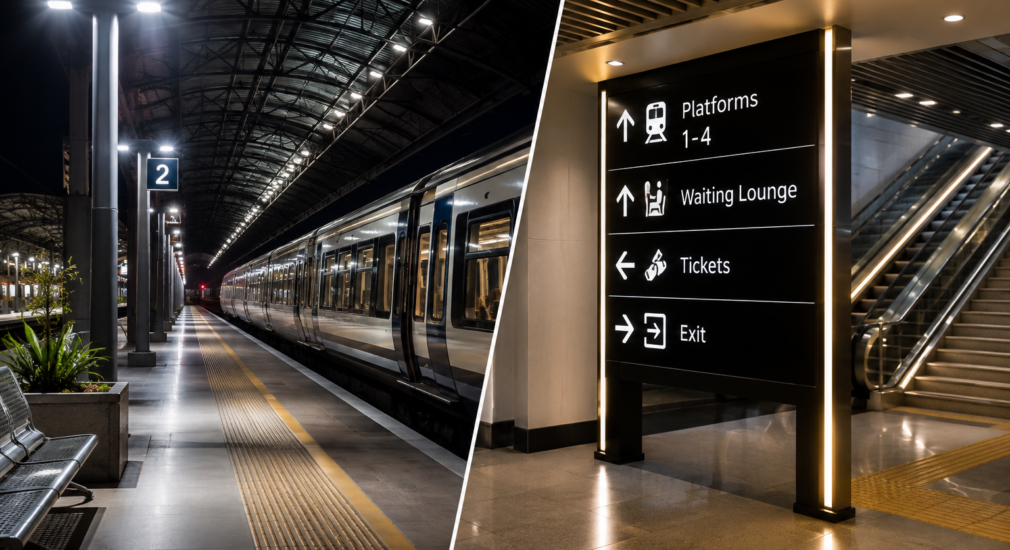
Railway Lighting & Signage Solutions
Engineering Safer, Smarter & More Passenger-Centric Railway Environments
Railway infrastructure is no longer judged only by trains, platforms and transport capacity. Today, a successful railway station must deliver visibility, passenger safety, intuitive wayfinding, operational efficiency, architectural quality and long-term reliability—often within demanding public-infrastructure environments. This makes Railway Lighting & Signage Solutions an integrated design discipline rather than a simple selection of luminaires or signboards.
Luzion Lighting approaches railway projects by connecting Railway Station Lighting, Railway Platform Lighting, architectural illumination, safety lighting and Railway Signage Solutions into one coordinated environment. From station entrances and concourses to platforms, foot-overbridges, parking areas, railway yards and service zones, every lighting and signage element should support how passengers move, understand and experience the space. The objective is clear: create infrastructure that remains visually comfortable, technically dependable and commercially efficient throughout its operating life.
Across the GCC, USA, UK—including
Railway Lighting & Signage Solutions UAE,
Railway Lighting & Signage Solutions Dubai,
Railway Lighting & Signage Solutions Abu Dhabi,
Railway Lighting & Signage Solutions Saudi Arabia,
Railway Lighting & Signage Solutions Riyadh,
Railway Lighting & Signage Solutions Doha,
Railway Lighting & Signage Solutions Muscat,
Railway Lighting & Signage Solutions Kuwait,
Railway Lighting & Signage Solutions Oman,
Railway Lighting & Signage Solutions Bahrain,
Railway Lighting & Signage Solutions USA, and
Railway Lighting & Signage Solutions UK
Need a coordinated railway lighting and signage concept?
TALK TO A RAILWAY LIGHTING EXPERT
What Are Railway Lighting & Signage Solutions?
Railway Lighting & Signage Solutions combine engineered illumination and information systems to make railway environments safer, easier to navigate and more operationally effective. A complete solution can incorporate Railway LED Lighting, platform illumination, station interior lighting, high-mast systems, yard lighting, emergency lighting, directional signs, platform identification, passenger information, safety signage and accessibility-oriented wayfinding.
The engineering challenge is not simply to increase brightness. Railway environments require the right balance of illuminance, uniformity, glare control, colour rendering, colour temperature, optical distribution, visual hierarchy and energy efficiency. A platform may require consistent horizontal illumination for passenger movement, while stairs, ramps and circulation routes need carefully controlled vertical visibility. Similarly, signage must remain legible from the intended viewing distance without creating unnecessary visual clutter or glare.
For architects and infrastructure designers, this means integrating luminaires and signage into the station architecture from the early planning stage. For MEP consultants and contractors, it means coordinating electrical loads, mounting arrangements, controls, protection ratings, maintenance access and installation conditions. For procurement teams, it means evaluating not merely initial price but performance, durability, warranty, testing, energy consumption and lifecycle cost.
Core Solution Areas
- Railway Station Lighting — concourses, entrances, waiting areas and circulation zones.
- Railway Platform Lighting — platform decks, canopies, stairs and passenger movement areas.
- Railway Yard & High Mast Lighting — large outdoor operational and maintenance environments.
- Railway Signage & Wayfinding — directional, identification, safety and passenger-information systems.
Technical Application Visual
| Railway Environment | Railway Environment | Typical Solution Direction |
|---|---|---|
| Station Concourse | Uniform visibility + visual comfort | Linear LED, downlights, architectural illumination |
| Railway Platform | Safety + uniform illumination | Platform LED systems, canopy lighting |
| Yard / Depot | Large-area visibility | High-mast and flood lighting |
| Circulation Areas | Wayfinding + safety | Controlled illumination + directional signage |
| Emergency Routes | Rapid identification | Emergency lighting + illuminated exit signage |
Why Integrated Design Matters
A railway station can contain excellent luminaires and high-quality signage yet still perform poorly if the two systems are designed independently. Excessive contrast around a sign can reduce readability; poorly positioned luminaires can create glare on reflective surfaces; inconsistent colour temperature can weaken architectural continuity; and inadequate uniformity can create visually uncomfortable transitions between bright and dark zones.
A professionally developed Railway Lighting Design therefore considers the station as a connected visual environment. Photometric planning, mounting heights, beam angles, optical distributions, CRI, CCT, IP and IK ratings, driver performance and maintenance requirements should be evaluated alongside signage visibility and passenger movement. Where appropriate, DIALux lighting calculations and photometric simulations can help validate illumination levels before installation, reducing the risk of costly site-level corrections.
This approach is particularly valuable for major infrastructure developments where architects, MEP consultants, railway contractors, government authorities, EPC companies and procurement teams must work from a coordinated technical specification. The result is not simply brighter infrastructure—it is a more predictable, maintainable and passenger-focused environment.
Planning a new railway station, platform or infrastructure upgrade?
START YOUR RAILWAY LIGHTING DESIGN
Railway Lighting Systems Designed Around Every Operational Zone
A railway project is not a single lighting environment. A passenger approaching a station entrance, a commuter waiting on a platform, an operator working inside a depot and a maintenance team moving through a railway yard all require different visual conditions. That is why effective Railway Lighting Systems are planned according to activity, mounting height, viewing distance, environmental exposure, maintenance access and required illumination performance. Luzion Lighting develops application-focused solutions spanning Railway Station Lighting, platform illumination, concourse lighting, high-mast systems, outdoor LED lights, emergency lighting and architectural illumination—allowing one coordinated lighting strategy to support different railway zones without compromising performance or visual consistency.
For large infrastructure developments, this application-based approach also helps architects and MEP consultants coordinate lighting with structural elements, platform canopies, electrical services, signage, passenger circulation and maintenance routes. It becomes particularly valuable in projects across UAE and Saudi Arabia, where high ambient temperatures, dust, outdoor exposure and demanding operational schedules make thermal management, ingress protection, surge protection and maintainability important parts of the specification rather than optional upgrades.
Railway Lighting Applications
- Station & Concourse Lighting — entrances, ticketing areas, waiting halls, corridors and passenger circulation.
- Platform Lighting — canopy-mounted, ceiling, linear and area illumination for passenger zones.
- Yard, Depot & Workshop Lighting — high-mast, flood and industrial LED systems for operational areas.
- Emergency & Safety Lighting — evacuation routes, stairs, exits and critical circulation zones.
Railway Station & Platform Lighting: Where Passenger Experience Meets Safety
Railway Station Lighting must achieve more than general illumination. The station entrance establishes the first visual impression, while concourses need clear spatial definition and comfortable illumination across ticketing, information and circulation areas. Waiting halls benefit from balanced ambient illumination, while staircases, ramps, escalators and pedestrian routes require carefully controlled visibility. In premium or redeveloped stations, architectural illumination can also highlight structural forms, ceilings, facades and key destinations without overpowering functional lighting.
Railway Platform Lighting introduces another level of engineering complexity. The lighting arrangement must support passenger movement while minimizing uncomfortable glare and excessive contrast. Canopy geometry, luminaire spacing, mounting height and optical distribution influence the uniformity achieved across the platform. Linear LED systems can provide continuous visual rhythm beneath canopies, while carefully selected downlights or directional luminaires can address specific passenger zones. Where platforms are exposed to weather, appropriately rated IP65/IP66 LED lighting, corrosion-resistant construction and robust surge protection become important considerations.
A well-designed platform should also work visually with Railway Platform Signage, platform identification and directional wayfinding. Lighting should make signs easy to locate and read, but should not create reflections that reduce legibility. This is where lighting consultants, signage designers and architects benefit from working from one coordinated visual strategy.
Platform Lighting Detail
| Railway Zone | Lighting Objective | Recommended Solution Direction |
|---|---|---|
| Station Entrance | Recognition + arrival experience | Architectural LED + facade illumination |
| Concourse | Uniformity + passenger circulation | Linear LED, downlights, controlled optics |
| Platform | Safety + visual comfort | Canopy LED, linear systems, downlights |
| Yard / Depot | Large-area operational visibility | High mast + LED flood lighting |
| Stairs / FOB | Vertical visibility + movement | Linear, wall-mounted or directional LED |
| Parking / Access | Security + circulation | LED area, pole and flood lighting |
Product Architecture: Selecting the Right Luminaire for the Right Zone
The right Railway LED Lighting Manufacturer does not simply provide a catalogue of fixtures and leave the project team to determine where each product belongs. Product selection should begin with the application and then move into optical performance, construction, installation method, electrical characteristics and lifecycle requirements.
For exposed railway infrastructure, LED flood lights, high-mast luminaires and outdoor area lights may be appropriate where broad coverage is required. Platform canopies may benefit from linear or compact architectural luminaires that distribute light consistently across passenger zones. In pedestrian circulation areas, wall-mounted fixtures, step lights and directional luminaires can provide localized visibility without visually overwhelming the architecture.
The same principle applies to signage. Railway Signage Solutions may include illuminated directional signs, platform identification, emergency exit signs, safety signage and passenger information systems. Their placement, typography, contrast, viewing distance and illumination must work together. In a major station, signage is not merely a graphic element—it becomes part of the passenger navigation system.
Key Product Categories
- LED Linear & Canopy Lights — continuous and visually integrated platform illumination.
- LED Flood & High-Mast Lights — large-area railway yard, depot and external infrastructure lighting.
- Downlights & Architectural Lights — concourses, entrances, waiting areas and station interiors.
- Emergency, Signage & Wayfinding Systems — safety routes, directional guidance and passenger information.
Lighting + Signage + Wayfinding: One Passenger Experience
A passenger rarely experiences lighting and signage as separate technical systems. They see an illuminated environment in which signs, pathways, platforms, stairs and destinations must be understood almost instinctively. This makes Railway Wayfinding Solutions an important part of the overall station design.
Directional signage should appear where decisions need to be made—not merely where there is available wall space. Lighting should reinforce those decision points by providing adequate visual contrast and comfortable illumination around signs. Platform numbers, station names, exit directions, ticketing information, accessibility routes and emergency instructions should form a logical hierarchy that passengers can understand even during busy periods.
This integrated approach is particularly relevant to Railway Station Wayfinding, where large passenger flows can create visual congestion. A disciplined combination of signage scale, mounting height, contrast, illumination and spatial zoning allows the station to communicate information efficiently while preserving architectural clarity. For airport authorities, railway authorities, developers and government procurement teams, this can translate into better passenger experience and a more coherent infrastructure identity.
Developing a railway station, platform, depot or infrastructure upgrade? Build the lighting strategy around the actual operating environment—not a generic product list.
DISCUSS YOUR PROJECT REQUIREMENTS
Built for Demanding Infrastructure & GCC Conditions
For railway projects in UAE, Saudi Arabia and wider GCC markets, specification decisions need to consider environmental exposure as carefully as illumination performance. Outdoor railway applications can face elevated temperatures, dust, windborne particles, humidity and continuous operating cycles. A technically appropriate Railway Lighting Supplier should therefore be able to explain how luminaire housing, LED thermal management, driver selection, IP protection, surge protection and material finishes contribute to long-term reliability.
In Dubai and Abu Dhabi, for example, architectural quality and passenger experience can be equally important alongside operational requirements. Railway and metro environments often form part of larger urban developments where stations connect with retail, hospitality, commercial and public spaces. Lighting therefore needs to transition naturally from functional infrastructure into an architectural environment. In Riyadh and Jeddah, large-scale transportation infrastructure similarly benefits from robust outdoor illumination, controlled glare, efficient LED systems and carefully coordinated wayfinding.
The commercial objective is not simply to purchase the lowest-cost luminaire. A better procurement decision considers initial investment + energy consumption + maintenance frequency + replacement requirements + expected service life + technical support. This lifecycle perspective is particularly important for authorities and EPC contractors managing large quantities of luminaires across multiple stations or operational zones.
GCC Project Considerations
| Requirement | Why It Matters | Design / Specification Focus |
|---|---|---|
| High Ambient Temperature | Protects LED and driver performance | Thermal management + suitable driver |
| Dust & Outdoor Exposure | Reduces premature failures | Appropriate IP protection |
| Voltage Surges | Protects electronics | Surge protection |
| Continuous Operation | Controls energy and maintenance costs | Efficient LED + reliable driver |
| Harsh Maintenance Conditions | Improves lifecycle performance | Accessible, serviceable construction |
Railway Lighting Technology, Performance & Engineering Standards
A reliable Railway LED Lighting System begins with engineering—not simply wattage or lumen output. Railway environments demand controlled illumination, consistent performance, robust construction and predictable maintenance. For architects, MEP consultants, contractors and procurement teams, the important question is not “How bright is the light?” but whether the system delivers the right light, in the right place, with the right optical control and reliability.
Luzion Lighting approaches railway applications through photometric performance, thermal management, driver reliability, environmental protection and application-specific optics. This creates a stronger technical foundation for Railway Lighting Design, station modernization and infrastructure-scale projects across India and GCC markets.
The Technical Parameters That Define Railway Lighting Performance
A railway luminaire should be evaluated as an engineered system. LED chips, optics, driver, housing, thermal path and protection mechanisms work together to determine real-world performance.
| Parameter | What It Controls | Railway Project Relevance |
|---|---|---|
| Lumens | Total light output | Determines available illumination |
| Lux | Light reaching a surface | Important for platform and circulation design |
| Uniformity | Consistency of illumination | Reduces dark spots and visual discomfort |
| CRI | Colour rendering quality | Supports accurate visual recognition |
| CCT | Light appearance | Creates consistent station ambience |
| Beam Angle | Distribution width | Controls coverage and spill light |
| IP Rating | Dust/water protection | Critical for outdoor applications |
| IK Rating | Impact resistance | Useful in demanding public environments |
| Surge Protection | Electrical transient protection | Protects LED electronics |
| Thermal Management | Heat dissipation | Supports long-term LED and driver performance |
Key Technical Specifications
- LED Efficiency: High efficacy systems to reduce energy consumption.
- Optical Control: Application-specific beam distributions for platforms, yards and circulation areas.
- Protection: Appropriate IP65/IP66 and impact-resistant construction where required.
- Controls: DALI, DMX or smart controls where project architecture supports integration.
Optics & Beam Angles: More Light Is Not Always Better
One of the most overlooked elements in Railway Lighting Design is optical distribution. A high-output fixture with the wrong beam angle can produce bright hotspots while leaving other areas inadequately illuminated. Conversely, an appropriately selected optic can distribute light more evenly with fewer luminaires and lower installed energy.
For Railway Platform Lighting, optical design should consider canopy height, platform width, luminaire spacing, passenger movement and adjacent tracks. For railway yards and depots, wider distributions may be appropriate for large-area coverage, while directional optics can help control spill light and improve visibility in defined operational zones.
| Application | Optical Priority | Suitable Direction |
|---|---|---|
| Platform | Uniform passenger illumination | Wide / controlled distribution |
| Canopy | Consistent linear coverage | Asymmetric / wide optic |
| Railway Yard | Large-area coverage | Wide-area flood optic |
| Depot / Workshop | Functional task visibility | Controlled directional optic |
| Signage Zone | Sign visibility | Low-glare controlled illumination |
| Architectural Feature | Visual emphasis | Narrow / medium beam |
This is where photometric files, lighting calculations and DIALux simulations become valuable. Instead of estimating fixture quantities from wattage alone, designers can evaluate illuminance distribution, uniformity and potential problem areas before installation.
REQUEST A DIALUX-BASED LIGHTING DESIGN
CRI, CCT & Visual Comfort
Colour quality matters in railway environments because passengers, staff and security personnel need to recognize people, objects, signage and architectural details accurately.
CRI (Colour Rendering Index) indicates how naturally colours appear under a light source. CCT (Correlated Colour Temperature) describes whether the light appears warmer or cooler. The appropriate combination depends on the station architecture, application, operating environment and project brief.
| Lighting Characteristic | Typical Consideration |
|---|---|
| 2700K–3000K | Warmer architectural and hospitality-oriented environments |
| 3500K–4000K | Balanced commercial and passenger environments |
| 4000K–5000K | More neutral/cool functional environments |
| High CRI | Better colour recognition and visual quality |
| Consistent CCT | Stronger architectural continuity |
For premium stations, airports, metro-linked developments and mixed-use transportation hubs, CCT should be coordinated across connected zones rather than selected independently for each fixture category. This helps create a coherent visual identity while avoiding unnecessary colour shifts between concourses, platforms and circulation spaces.
IP, IK & Environmental Protection
Railway infrastructure can expose luminaires to dust, rain, humidity, accidental impact and demanding maintenance conditions. Therefore, IP Rating and IK Rating should be selected according to the actual installation environment rather than used simply as catalogue specifications.
IP65/IP66 LED lighting can be appropriate for many exposed applications when correctly specified, while higher mechanical protection may be considered for locations where impact risk is relevant.
Specification Checklist
- IP Protection: Select according to water, dust and outdoor exposure.
- IK Protection: Consider impact and vandalism risk.
- Surge Protection: Important for outdoor and infrastructure installations.
- Corrosion Resistance: Relevant for exposed metal components and harsh environments.
For Railway Lighting Manufacturer and supplier evaluation, these ratings should be supported by appropriate technical documentation and testing evidence. Procurement teams should look beyond marketing terminology and verify actual product construction, test reports, warranty conditions and application suitability.
Drivers & Thermal Management: The Hidden Reliability Layer
The LED module receives most of the attention, but the driver and thermal system can have an equally important influence on long-term reliability. Poor heat dissipation can accelerate component degradation, while an unsuitable driver can create instability, premature failure or maintenance problems.
For Railway LED Lighting, thermal design should consider ambient temperature, luminaire housing, heat sink geometry, LED operating conditions and installation environment. This becomes especially relevant in GCC projects where outdoor equipment may experience elevated ambient temperatures for extended periods.
| Engineering Layer | What Luzion Should Demonstrate |
|---|---|
| LED Module | Consistent output + reliable component selection |
| Driver | Stable electrical performance |
| Thermal System | Effective heat dissipation |
| Housing | Mechanical + environmental protection |
| Optics | Controlled and application-specific distribution |
| Testing | Quality verification before deployment |
The procurement objective should therefore be lifecycle reliability, not simply the lowest initial fixture price. A technically robust system can reduce premature replacements, maintenance interventions and energy expenditure over the operational life of a railway facility.
Smart Controls, DALI, DMX & Connected Railway Lighting
Modern railway infrastructure increasingly requires lighting systems that can respond to operational requirements rather than operate at maximum output continuously. Smart Railway Lighting, lighting automation and connected control systems can support zoning, scheduling, monitoring and energy optimization.
Depending on the project architecture, DALI, DMX, sensors, centralized controls or IoT-enabled systems can be considered. The appropriate platform depends on the required control resolution, integration architecture, maintenance strategy and future expansion plans.
Smart Railway Lighting Applications
- Scheduled Dimming — adjust lighting according to operational periods.
- Zone Control — independently manage platforms, concourses or service areas.
- Occupancy / Sensor Integration — adapt output where suitable.
- Central Monitoring — improve visibility of system status and maintenance needs.
Need help selecting the correct LED, optics, driver, IP/IK rating and control architecture for your railway project?
SPEAK WITH A TECHNICAL LIGHTING CONSULTANT
Energy Efficiency & Lifecycle Cost
Energy efficiency should be evaluated beyond fixture wattage. A professional Railway Lighting Solution considers efficacy, optical efficiency, operating hours, dimming capability, maintenance frequency and expected service life.
For a large railway station, even a small improvement in system efficiency can become commercially significant when multiplied across hundreds or thousands of luminaires and long operating schedules.
This lifecycle approach is particularly relevant to Railway Lighting Procurement, government infrastructure projects and EPC contracts where long-term operational expenditure can significantly influence the true value of the initial investment.
GET A PROJECT-SPECIFIC RAILWAY LIGHTING PROPOSAL
Contextual Internal Linking Opportunities
- LED Lighting Technology → link from LED, optics and driver discussion
- Lighting Design Services → link from DIALux and photometric planning
- Smart Lighting Solutions → link from DALI, DMX and IoT discussion
- Outdoor LED Lights → link from IP/IK and outdoor railway applications
- Industrial Lighting Solutions → link from depot and workshop applications
- Railway Signage & Wayfinding Solutions → link from signage visibility and passenger navigation
Railway Lighting Design, Signage & Passenger Experience
A high-performing railway environment is designed around movement. Passengers need to know where to enter, where to wait, which platform to use, where to exit and how to reach connecting facilities without having to stop and decode the environment. This is where Railway Lighting Design and Railway Signage & Wayfinding Solutions become closely connected. Lighting establishes visual hierarchy and comfort, while signage communicates information and direction.
For architects, developers and MEP consultants, the strongest approach is to establish lighting and signage zones during the planning stage rather than adding them after the architecture is complete. A coordinated strategy improves visibility, reduces visual clutter and allows electrical, structural and maintenance requirements to be resolved before construction.
Layered Railway Lighting: From Functional Visibility to Architectural Identity
Effective Railway Station Lighting rarely depends on one type of luminaire. A layered approach combines general illumination with focused, architectural and safety-oriented lighting. This creates depth and helps passengers instinctively recognize important areas.
Recommended Lighting Layers
- Ambient Layer — general illumination across concourses, platforms and circulation spaces.
- Task Layer — focused illumination at ticketing, information, stairs and operational areas.
- Accent Layer — architectural emphasis on entrances, structures and station features.
- Safety Layer — emergency routes, exits, stairs and critical movement zones.
The advantage is greater control. Instead of making the entire station excessively bright, designers can allocate illumination according to activity and visual importance. This improves visual comfort, energy efficiency and architectural quality while supporting clear passenger movement.
For premium infrastructure projects in UAE and Saudi Arabia, this layered strategy can also help integrate transportation architecture with retail, hospitality and commercial environments surrounding the station.
Railway Signage & Wayfinding: Designing for Decisions
Good Railway Wayfinding Solutions are not simply a collection of signs. They form a visual communication system that helps passengers make decisions quickly. Station names, platform numbers, exits, ticketing areas, toilets, accessibility routes, connecting transport and emergency routes need a clear hierarchy.
Signage should be visible from the intended approach distance, positioned at natural decision points and coordinated with surrounding illumination. Where illuminated or backlit signage is used, the lighting source should provide sufficient contrast without producing excessive glare or reflections.
| Signage Type | Passenger / Operational Purpose |
|---|---|
| Station Identification | Establishes location and station identity |
| Platform Signage | Identifies platform and train-related information |
| Directional Signage | Guides passengers toward destinations |
| Safety Signage | Communicates warnings and restricted areas |
| Emergency Signage | Identifies exits and evacuation routes |
| Accessibility Signage | Supports inclusive passenger movement |
A professional Railway Station Wayfinding strategy should also consider viewing height, typography, contrast, multilingual requirements, pictograms and accessibility. This becomes increasingly important in major stations serving diverse passenger groups and international visitors.
DISCUSS YOUR RAILWAY WAYFINDING REQUIREMENTS
Lighting & Signage Integration: One Visual Language
Lighting can either strengthen signage or make it harder to understand. A sign positioned in a visually dark area may become difficult to identify, while excessive illumination directly around a sign can create distracting contrast. The solution is coordinated placement.
For example, a platform number should be visually recognizable before passengers reach a decision point. Directional signage should remain legible against the architectural background, while emergency information must remain identifiable even when normal lighting conditions change.
This is why Railway Lighting Solutions and signage should be reviewed together during design coordination. The lighting consultant can assess glare, contrast and illumination; the signage team can evaluate viewing distance and information hierarchy; and the architect can ensure the system remains integrated with the station’s visual identity.
| Design Element | Coordination Requirement |
|---|---|
| Sign Visibility | Adequate surrounding illumination |
| Glare Control | Avoid direct reflection into viewing angles |
| Platform Numbers | Visible from appropriate passenger approach |
| Directional Signs | Positioned at decision points |
| Emergency Routes | Clear visibility under emergency conditions |
| Architectural Lighting | Must not overpower functional signage |
Safety, Accessibility & Visual Comfort
Railway environments experience continuous movement, changing passenger densities and different levels of visual attention. Railway Safety Lighting therefore needs to support both everyday circulation and emergency situations. Stairs, ramps, foot-overbridges, underpasses, platform edges, exits and evacuation paths require particular attention to visibility and contrast.
Lighting should also avoid excessive glare. High-output luminaires positioned directly within passenger sightlines can create discomfort and reduce visual adaptation. Appropriate optics, mounting positions, shielding and controlled luminance can improve comfort without sacrificing illumination performance.
Accessibility must be considered as part of the overall experience. Clear signage, consistent visual cues and appropriately illuminated circulation routes can make railway stations easier to navigate for elderly passengers, people with reduced mobility and passengers unfamiliar with the facility.
Safety & Accessibility Priorities
- Emergency Visibility — clear identification of exits and evacuation routes.
- Step & Ramp Recognition — adequate visual definition of changes in level.
- Glare Control — reduced discomfort in passenger sightlines.
- Accessible Wayfinding — intuitive signage and route identification.
Sustainable Railway Lighting & Lifecycle Performance
Sustainability in railway infrastructure should be measured through operational performance rather than simply product claims. High-efficiency LEDs can reduce energy consumption, while appropriate optics can deliver required illumination with fewer or lower-wattage fixtures. Dimming and scheduling can further reduce energy use during periods of reduced activity where project requirements permit.
For Railway Lighting Procurement, lifecycle cost is therefore more meaningful than initial fixture price alone.
This lifecycle perspective is especially relevant for Government Authorities, EPC Contractors, Railway Procurement Teams and Infrastructure Developers, where large installations can operate for many years and maintenance access can be expensive or disruptive.
Move beyond a luminaire schedule. Develop a complete railway lighting, signage and wayfinding strategy around passenger movement, safety and lifecycle performance.
EXPLORE RAILWAY LIGHTING PRODUCTS
Railway Solutions for India & GCC Infrastructure
Railway projects across India, UAE, Saudi Arabia and the wider GCC can differ significantly in architecture, climate, operational requirements and procurement specifications. A strong Railway Lighting Manufacturer should therefore be capable of adapting solutions to the project’s actual environment rather than forcing a standard product package into every application.
In Dubai and Abu Dhabi, transportation environments often connect with highly developed commercial and architectural destinations, requiring a balance between functional illumination and premium visual design. In Riyadh and Jeddah, large infrastructure programs create demand for robust outdoor systems, high-efficiency LED solutions, controlled optics and reliable equipment capable of handling demanding environmental conditions.
For Indian railway infrastructure, the emphasis may extend across station modernization, platforms, yards, depots, passenger circulation, government projects and large-scale procurement. Across all these environments, the strongest result comes from combining technical compliance, application-specific design, product reliability, project coordination and after-sales support.
REQUEST A RAILWAY PROJECT SOLUTION
Railway Lighting Manufacturer, Project Support & Procurement Excellence
Selecting a Railway Lighting Manufacturer is ultimately a decision about more than luminaires. Large railway projects require technical consistency, documented performance, customization capability, dependable supply, quality control and support throughout the project lifecycle. Luzion Lighting brings these requirements together through a combination of manufacturing, R&D, testing, product engineering and project-oriented technical support.
For architects, MEP consultants, railway contractors, developers, EPC companies, government authorities and procurement teams, the advantage is a single technical partner capable of contributing from product selection and photometric planning through manufacturing, inspection, delivery and after-sales support. This is particularly valuable when a project contains multiple applications—from station interiors and platforms to high-mast yards, emergency routes and signage environments.
Why Choose Luzion for Railway Lighting & Signage Solutions?
Luzion Lighting operates with an engineering-led approach to Railway LED Lighting, architectural illumination, outdoor lighting and infrastructure applications. Product development is supported by dedicated R&D and manufacturing capabilities, allowing technical parameters to be reviewed according to project requirements rather than relying exclusively on off-the-shelf configurations.
The company’s manufacturing ecosystem includes SMT production, R&D facilities, assembly operations, IP testing and ageing facilities. These capabilities support a controlled path from electronic components and LED assemblies through final product evaluation. For infrastructure procurement, this provides a stronger foundation for consistency, traceability and project-level quality expectations.
Luzion Project Advantages
- Manufacturing Capability — controlled production and assembly for project requirements.
- R&D & Customization — application-specific optics, configurations and product adaptations.
- Testing & Quality Control — IP testing, ageing and technical quality checks.
- Technical Support — design coordination, product selection and project assistance.
Looking for a reliable railway lighting manufacturer capable of supporting project-specific requirements?
From Lighting Concept to Railway Project Execution
A successful Railway Lighting Project requires more than selecting products from a catalogue. The technical team should understand the application, mounting conditions, illumination requirements, environmental exposure, control strategy and maintenance expectations before recommending a solution.
Luzion can support project teams through a structured workflow that connects design intent with practical implementation.
Project Process
- Project Brief — understand station type, application, drawings, specifications and project objectives.
- Technical Planning — identify lighting zones, product categories, optical requirements and controls.
- Photometric Design — develop lighting calculations and evaluate illumination distribution where required.
- Product Engineering — finalize optics, CCT, CRI, IP/IK, driver, mounting and configuration.
- Sampling & Validation — review samples and project-specific technical requirements.
- Manufacturing & QC — controlled production, inspection, testing and ageing.
- Delivery & Support — coordinate supply with project schedules and provide technical assistance.
For large government and infrastructure projects, this structured approach helps reduce the gap between design specification, approved product, site installation and actual performance.
Choosing the Right Railway Lighting Partner
Procurement teams often compare suppliers primarily on unit price. However, railway projects require a broader assessment because the true cost of a lighting system extends across energy, maintenance, replacement, downtime and technical support.
| Evaluation Factor | Basic Procurement Approach | Expert Project Approach |
|---|---|---|
| Product Selection | Lowest initial price | Application + lifecycle value |
| Optics | Generic distribution | Photometric application matching |
| Driver | Basic specification | Reliability + compatibility |
| IP / IK | Catalogue rating only | Environment-specific selection |
| Thermal Design | Limited consideration | Ambient + operating condition analysis |
| Testing | Product documentation | Testing + QC + validation |
| Support | Product delivery | Design-to-after-sales assistance |
For Railway Lighting Procurement, the stronger question is therefore: Which solution offers predictable performance over the project’s operating life? This approach is particularly relevant for authorities and contractors managing large quantities of equipment where premature failures or inconsistent performance can create significant operational and maintenance costs.
Railway Lighting vs Generic Infrastructure Lighting
Railway environments have unique visual and operational requirements. Generic outdoor lighting may provide illumination, but a railway solution should consider passenger circulation, platform geometry, signage visibility, maintenance access, glare and integration with station architecture.
| Requirement | Generic Outdoor Lighting | Railway-Focused Approach |
|---|---|---|
| Platform Illumination | General area coverage | Passenger-focused uniformity |
| Signage | Independent | Coordinated with visual hierarchy |
| Optics | Standard beam | Application-specific distribution |
| Maintenance | General access | Infrastructure-oriented planning |
| Controls | Basic switching | Dimming / smart control where applicable |
| Architecture | Functional | Functional + architectural integration |
This distinction gives Railway Lighting Solutions greater relevance for stations, platforms, yards, depots, passenger terminals and transportation hubs where lighting becomes part of the complete built environment.
Railway Lighting & Signage Solutions for GCC Projects
Luzion’s international project orientation supports opportunities across UAE, Saudi Arabia and wider GCC markets where transportation infrastructure increasingly demands a combination of energy efficiency, architectural quality and environmental durability.
For Dubai and Abu Dhabi, railway and metro-related environments can require sophisticated architectural integration, high visual quality and seamless transitions between transportation, retail and commercial spaces. In Riyadh and Jeddah, large infrastructure environments can place greater emphasis on robust outdoor luminaires, thermal performance, environmental protection, high-mast illumination and efficient operation.
A GCC-focused Railway Lighting Supplier should therefore be able to address both technical and architectural requirements. Luzion can position its capabilities around customized solutions, LED technology, optical performance, testing, manufacturing and project support rather than competing purely as a commodity lighting vendor.
FAQs
1. What lighting is suitable for railway stations?
- LED station lighting with suitable optical distribution, efficacy and colour quality.
- Application-specific systems for concourses, platforms, stairs and circulation.
- Appropriate IP/IK protection for exposed areas.
- Emergency and safety lighting where required.
2. Can Luzion provide customized railway LED lighting?
Yes. Railway LED Lighting can be developed around project-specific requirements such as wattage, lumen output, optics, CCT, CRI, mounting configuration, housing, protection rating and control compatibility, subject to technical feasibility and project specifications.
3. Does Luzion provide railway lighting design and DIALux support?
Luzion can support project teams with application-specific product selection and lighting-design coordination. DIALux-based photometric planning can be used where project requirements call for calculated illumination, distribution and uniformity assessment.
4. What should procurement teams check before buying railway lighting?
- Photometric performance and application suitability.
- IP, IK, surge and thermal specifications.
- Driver and LED reliability.
- Testing, warranty, documentation and after-sales support.
5. Can railway lighting and signage be designed together?
Yes. Coordinating Railway Lighting & Signage Solutions helps improve sign visibility, visual hierarchy, passenger wayfinding and architectural consistency. Lighting should be reviewed around directional, platform, emergency and passenger-information signage.
6. Can Luzion support railway projects in GCC markets?
Luzion can develop project-oriented lighting solutions for UAE, Saudi Arabia and wider GCC requirements, subject to project specifications, technical approvals and applicable local standards. The scope can include product selection, customization, technical coordination, manufacturing and project support.
Build a Railway Environment That Performs Beyond Installation Day
Railway infrastructure is a long-term investment. The right Railway Lighting Manufacturer should therefore contribute more than a product number and a quotation. The objective should be to deliver a coordinated system where lighting performance, passenger safety, signage visibility, energy efficiency, architectural integration, environmental durability and lifecycle value work together.
Luzion Lighting brings manufacturing, R&D, testing, customization and technical expertise into one project-oriented approach—supporting architects, MEP consultants, contractors, developers, railway authorities and procurement teams from concept through execution.
Whether the requirement is Railway Station Lighting, Railway Platform Lighting, Railway Yard Lighting, Railway LED Lighting, Railway Signage, Railway Wayfinding Solutions, High Mast Lighting or Smart Railway Lighting, the focus remains the same: engineer the right solution for the environment, the people using it and the project operating it.
Ready to Engineer Your Railway Lighting & Signage Project?
Share your drawings, BOQ, specifications or project requirements with Luzion Lighting. Our technical team can help evaluate the application, recommend suitable lighting systems and develop a project-specific solution.
Related posts
01 Oct 2026
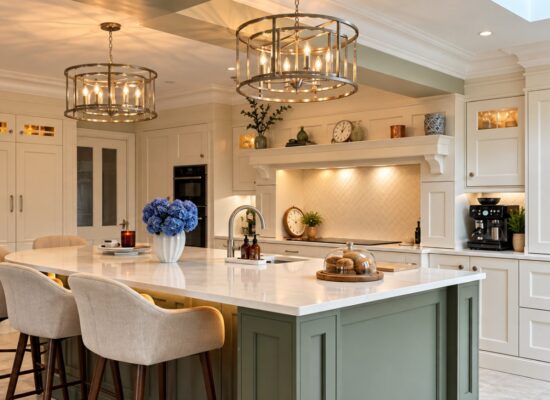
Irish bespoke lights
Irish Bespoke Lights: Where Craftsmanship Meets Architectural Design Irish bespoke lights bring together craftsmanship, design individuality and practical lighting performance.…
30 Sep 2026
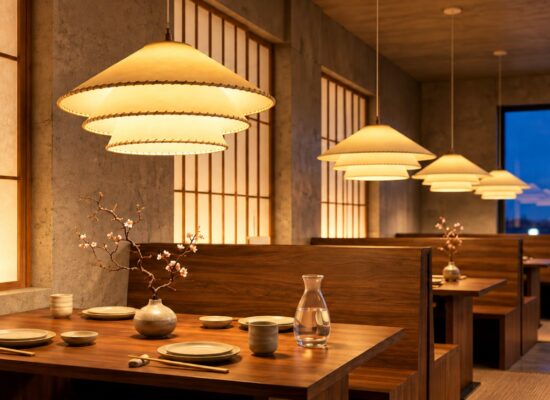
Japanese bespoke lights
Japanese Bespoke Lights: Craftsmanship, Design & Architectural Identity Japanese bespoke lights bring together traditional craftsmanship, refined materiality and contemporary lighting…

30 Sep 2026
Greek bespoke lights
Greek Bespoke Lights for Luxury Architectural Projects Greek bespoke lights combine artistic expression, Mediterranean design influences and project-specific craftsmanship to…
29 Sep 2026
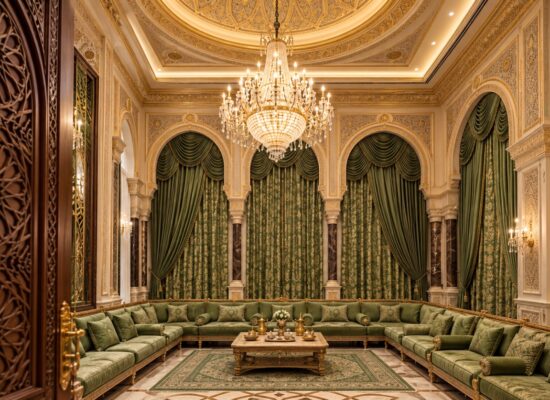
Turkish luxury chandeliers
Turkish Luxury Chandeliers: Heritage, Craftsmanship & Design Turkish luxury chandeliers bring together decorative craftsmanship, architectural scale and contemporary lighting technology…
29 Sep 2026
Polish bespoke chandeliers
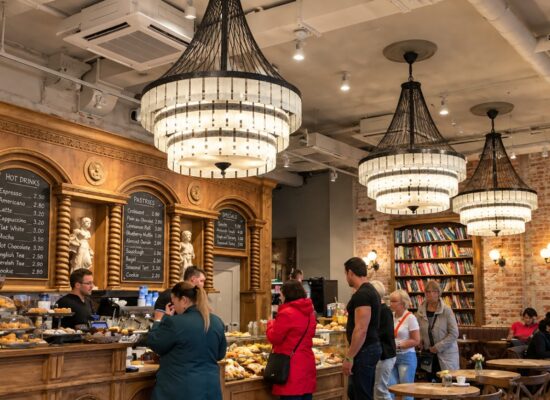
Polish Bespoke Chandeliers: Craftsmanship, Character and Contemporary Design A chandelier can do more than illuminate a room. In a well-designed…
subscribe for newsletter

Luzion is a leading manufacturer and exporter of high-quality LED lighting solutions. With a focus on design, research, and innovation, we offer a wide range of products for commercial, industrial, residential, and outdoor spaces.
