

Search
Category
- Bollard Light
- Commercial Lighting
- Energy-Efficient Lighting
- LAMPS
- LED Lights
- LED Uplighter
- Light and Colour Theory
- Lighting Design and Facade Lighting
- Lighting Design Consultancy UAE
- lighting design principles
- Lighting Fundamentals and Design Principles
- Lighting Solutions
- Nature of Light in Lighting Design
- Panel Lights vs. Spot Lights
- Portable Lights
- Signage Solutions
- Smart Controllers for Streetlights
- Solar Lights
- Tree Lighter
- Uncategorized
Recent Posts




Commercial Signage Solutions UAE & GCC

Canadian Bespoke Lights
Tags
- Architectural Lighting
- Architectural Lighting Design
- Architectural Lighting Design UAE
- automation
- Best Lighting Design Consultancy in UAE
- COB LED Technology
- COB Spotlights
- Color Temperature in Lighting
- Commercial Lighting Design
- Commercial Lighting Fixtures
- Commercial Lighting Innovations
- Commercial Lighting UAE
- Cylinder COB Lights
- Dialux Lighting Design
- Dialux Lighting Design UAE
- Energy Efficient Lighting
- Energy-Efficient Lighting USA
- Exterior Lighting Solutions
- Facade & Exterior Lighting
- Facade Lighting
- Facade Lighting Design
- Facade Lighting Design UAE
- Facade lighting ideas
- Facade Lighting UAE
- Facade Uplighting
- Green Building Design
- Indoor & Exterior Lighting Solutions
- Interior Lighting Design
- Lamps
- LED Lighting Solutions
- LED lights
- LED Panel
- LED Uplighters
- LED vs Halogen
- Light and Color Theory
- Lighting Basics
- Lighting Consultancy UAE
- Lighting Design
- Lighting Design Consultancy in UAE
- Lighting Design Principles
- Lighting Design UAE
- Lighting Fundamentals Guide
- Lighting Layers
- Lumen Output in Lighting
- Modern Building Lighting Ideas
- Modern Lighting Ideas
- Office Lighting Solutions
- Outdoor Lighting Consultants UAE
- Panel Lights vs. Spot Lights
- Portable Lights
- smart light
- Smart Lighting Systems
- Sustainable Architecture
- Sustainable Lighting UAE
- Villa Lighting UAE
27Aug 2026
- Signage Solutions


Bank Signage Solutions Worldwide: Custom Banking Signage for Modern Financial Institutions
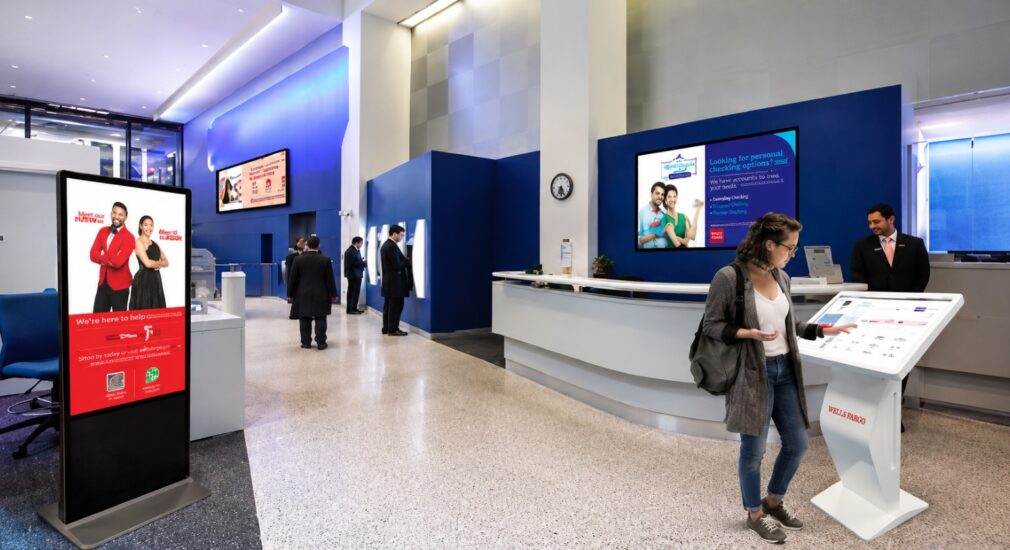
Banks are among the most recognisable businesses in any city, and their physical environment plays an important role in building trust, visibility and brand recognition. Well-designed Bank Signage Solutions help financial institutions communicate their identity clearly while creating a professional and welcoming experience for customers.
From illuminated branch logos and Bank Entrance Signage to ATM identification, 3D lettering and Bank Wayfinding Signage, modern banking environments require signage that combines architectural aesthetics with practical functionality.
Luzion develops and manufactures Custom Bank Signage for banks, financial institutions, corporate offices and branch networks serving projects across India and international markets, including the UAE, GCC, USA, UK, Europe, Asia, Africa and other regions.
What Are Bank Signage Solutions?
Bank Signage Solutions are purpose-designed signage systems developed for banks, financial institutions and banking environments. The complete visual communication system of a branch can be covered, from prominent exterior identification to internal navigation and customer information.
A professional Bank Signage Design may include:
- Exterior bank identification signs
- Illuminated bank logos
- 3D letters and logos
- Channel letter signage
- ATM identification signs
- Branch entrance signs
- Interior wall branding
- Directional and wayfinding signs
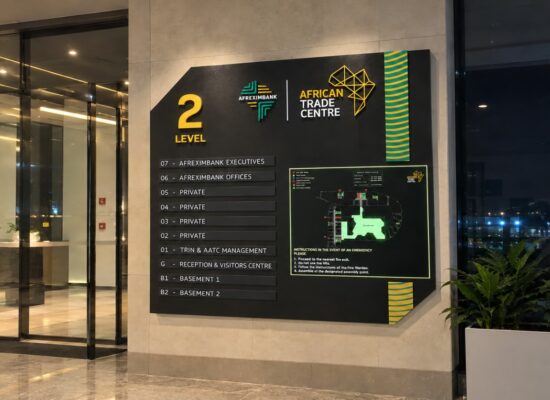
- Directory signage
- Parking and access signs
- Regulatory and information signs
- Reception and department identification
The purpose is not simply to display a bank’s name or logo. With a well-planned signage system, brand identity, architecture, lighting, navigation and customer experience can be connected through one consistent visual language.
For banks operating multiple branches, consistency is particularly important. A standardised signage system allows the institution to be recognised across different buildings, cities and countries, while individual installations can still be adapted to local architectural conditions.
Types of Bank Signage
A complete signage programme can combine multiple formats depending on the size, location and architectural character of the banking facility.
Illuminated Bank Signage
Illuminated Bank Signage is commonly used for exterior branch identification. It can make a bank logo or name visible during both daytime and evening hours.
Depending on the design, illumination may be integrated as:
- Front illumination
- Back illumination
- Halo illumination
- Edge illumination
- Internal LED illumination
The choice depends on the required visual effect, sign construction, viewing distance and surrounding architecture.
For premium banking façades, controlled illumination can provide visibility without creating excessive brightness or visual distraction.
3D Letter Bank Signage
3D Letter Bank Signage gives physical depth to a bank’s name or corporate identity. Individual letters can be fabricated from aluminium, stainless steel, acrylic or other suitable materials.
Three-dimensional lettering is particularly effective when the objective is to create a refined architectural appearance rather than relying on a flat printed sign.
Different finishes can be developed to complement the building, including metallic, painted, powder-coated, brushed or polished surfaces.
Channel Letter Bank Signage
Channel Letter Bank Signage consists of individually fabricated letters or logos, often incorporating internal LED illumination.
Channel letters can be manufactured in different depths and configurations depending on the brand requirements and façade conditions.
They are suitable for:
- Retail bank branches
- Commercial buildings
- Shopping centres
- Financial districts
- Corporate banking facilities
- High-visibility roadside locations
A carefully engineered channel-letter system can combine strong visibility with a clean architectural appearance.
Bank Logo Signage
The corporate logo is usually the most recognisable element of a banking brand. Bank Logo Signage can therefore become the central feature of an exterior or interior installation.
Logo signs may be manufactured as illuminated or non-illuminated elements using materials such as acrylic, aluminium, stainless steel or fabricated metal.
For multi-location banking projects, accurate reproduction of logo proportions, colours, dimensions and illumination characteristics is essential for maintaining corporate identity.
ATM Signage
ATM Signage helps customers identify self-service banking facilities, particularly where ATMs remain accessible outside normal branch operating hours.
ATM branding can include illuminated logos, directional signs, fascia elements and dedicated identification panels.
The signage should remain clear from appropriate pedestrian and vehicle approaches while integrating with the architecture of the ATM zone.
Bank Entrance Signage
Bank Entrance Signage identifies the principal customer access point and can combine branding with directional information.
Depending on the project, entrance signage may incorporate:
- Bank logo
- Branch name
- Illuminated lettering
- Accessibility information
- Directional communication
- Opening information
Entrance signage should be positioned according to the building’s circulation pattern and customer approach rather than treated as an isolated decorative element.
Bank Wayfinding and Interior Signage
Exterior identification is only one part of a complete banking signage system. Once customers enter a facility, they need clear information to understand the internal environment.
Bank Wayfinding Signage can guide customers towards reception, teller services, consultation areas, private banking facilities, ATMs, waiting areas, restrooms, exits and other designated spaces.
Interior Bank Signage Solutions can also include:
- Reception branding
- Department identification
- Room signs
- Directory panels
- Directional signs
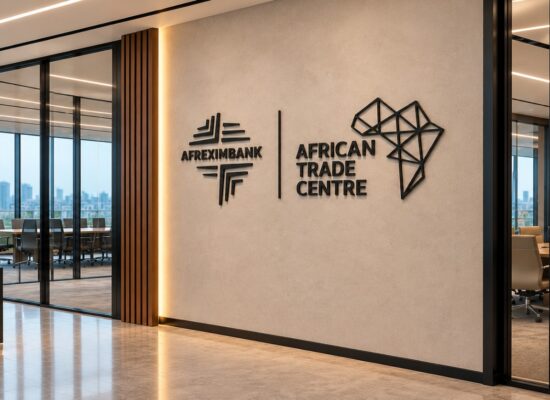
- Wall logos
- Glass graphics
- Service-area identification
- Regulatory information
A consistent hierarchy of typography, symbols, spacing and illumination can make the environment easier to understand while preserving the bank’s visual identity.
For architects and interior designers, this approach allows signage to become part of the overall architectural language rather than an afterthought.
Bank Signage for Different Building Types
Not every banking project requires the same signage strategy.
A high-street branch may prioritise prominent façade branding and Illuminated Bank Signage, while a private banking facility may require understated metal lettering and sophisticated interior branding.
A corporate headquarters can require large-scale architectural identification, lobby logos, directory systems and internal wayfinding. A branch located within a shopping centre may need to follow landlord signage guidelines and specific dimensional restrictions.
This is why Custom Banking Signage should be developed around the building, customer journey and brand requirements rather than using a one-size-fits-all solution.
Bank Signage Design, Materials, Illumination & Manufacturing
The visual quality of banking signage depends on more than the appearance of a logo or lettering. A successful Bank Signage Design must consider the architecture, viewing distance, illumination, material performance, brand guidelines, installation conditions and long-term maintenance requirements.
For architects, developers, contractors and procurement teams, these technical factors are particularly important when signage is being developed for multiple branches or international banking projects.
Key Considerations in Bank Signage Design
Professional Bank Signage Solutions begin with an understanding of how customers experience the building.
The location of the sign, scale of the letters, viewing angle, surrounding architecture and available illumination all influence how effectively the signage communicates the bank’s identity.
Brand Identity and Corporate Guidelines
Banks typically maintain detailed brand standards covering logo proportions, typography, colours, spacing and visual presentation.
A professional Bank Signage Manufacturer should be able to translate these guidelines into accurate physical signage while maintaining consistency between branches.
For large banking networks, this can involve standardising:
- Logo dimensions
- Letter depth
- Material finishes
- Illumination characteristics
- Colour specifications
- Mounting systems
- Sign positioning
- Internal branding elements
This approach creates a recognisable identity across different locations without preventing the signage from being adapted to individual architectural conditions.
Exterior Bank Signage
Exterior Bank Signage is normally the first visual communication customers encounter.
Depending on the building, exterior signage may include façade-mounted logos, channel letters, entrance signs, projecting signs, monument signs, pylon signs and ATM identification.
The design should consider the distance from which customers will view the signage.
For example, a branch positioned on a busy road may require larger illuminated lettering, while a bank located inside a premium commercial development may require a more restrained architectural solution.
Exterior signage should also be evaluated against:
- Building façade material
- Mounting location
- Wind exposure
- Weather conditions
- Viewing distance
- Daytime visibility
- Night-time visibility
- Access for maintenance
- Local signage regulations
Interior Bank Signage
The customer experience continues after entering the branch. Interior Bank Signage helps establish a coherent relationship between the exterior identity and the internal environment.
Interior signage can include reception logos, department identification, consultation-room signs, service-area information, directories and directional systems.
For premium banking environments, fabricated metal letters, acrylic graphics, integrated illumination and architectural finishes can be combined to create a sophisticated visual experience.
The objective should be clarity without overwhelming the interior design.
Material Selection for Bank Signage
Material selection directly influences appearance, durability and maintenance.
Common materials used in Custom Bank Signage include:
Aluminium
Aluminium is widely used for fabricated letters, logos, panels and illuminated signage because it is lightweight and suitable for many exterior applications.
Stainless Steel
Stainless steel can provide a premium architectural appearance and is suitable for applications where a durable metallic finish is required.
Brushed, polished and coated finishes can produce different visual effects.
Acrylic
Acrylic is frequently used for illuminated faces, logos, letters and interior signage. Its light-transmitting properties make it useful for LED-illuminated applications.
Fabricated Metal
Custom-fabricated metal signage allows designers to achieve specific letter depths, profiles and finishes while maintaining a strong architectural presence.
Powder-Coated Finishes
Powder coating can provide a consistent surface finish and allows signage to be matched with specified corporate or architectural colours.
The appropriate material depends on the location, environmental exposure, design intent and expected service life.
LED Illumination for Bank Signage
LED technology has become an important component of modern Illuminated Bank Signage.
When properly engineered, LED illumination can provide consistent light distribution while allowing signage to remain visually prominent after dark.
The lighting design should consider:
- LED module selection
- Colour temperature
- Brightness
- Light distribution
- Letter depth
- Diffuser characteristics
- Power supply
- Heat management
- Service accessibility
Different illumination techniques create different architectural effects.
Front-lit signage provides direct visibility of the letter face, while halo-lit signage creates a softer glow behind raised letters. Edge-lit and internally illuminated systems can provide alternative visual treatments depending on the design.
For a premium banking environment, illumination should be controlled carefully. Excessive brightness can reduce visual refinement and create unnecessary glare.
Durability and Weather Resistance
Outdoor banking signage is exposed to environmental conditions that vary considerably between markets.
A Bank Signage Supplier should therefore consider the expected operating environment before selecting materials and construction methods.
In hot and sunny regions such as the UAE and Saudi Arabia, UV exposure and elevated temperatures can influence material performance.
In coastal environments, humidity and salt exposure may increase corrosion concerns.
In colder or wet climates, temperature fluctuations, rain and moisture ingress can become important considerations.
Appropriate construction may involve:
- Weather-resistant materials
- Proper sealing
- Drainage provisions
- Protected electrical components
- Corrosion-resistant hardware
- UV-resistant finishes
- Suitable LED systems
- Accessible maintenance components
The exact specification should be determined according to the project environment and applicable local requirements.
Bank Signage Manufacturing Process
A professional Bank Signage Manufacturer should manage signage as an engineered product rather than simply a decorative item.
A typical manufacturing workflow can include:
1. Project Brief
The signage requirements, brand guidelines, architectural information and project scope are reviewed.
2. Design Development
Concepts are translated into practical signage formats considering dimensions, materials, illumination and mounting.
3. Technical Drawings
Production drawings can define dimensions, sections, fixing details, materials, finishes and electrical requirements.
4. Material Preparation
Metal, acrylic and other specified materials are cut, formed, machined or fabricated according to the approved design.
5. Surface Finishing
Finishing may include painting, powder coating, brushing, polishing or other specified treatments.
6. LED Integration
For illuminated signage, LEDs, wiring, power supplies and internal components are installed and tested.
7. Assembly
Individual components are assembled into complete logos, letters, panels or signage structures.
8. Quality Inspection
Dimensions, finish quality, illumination, construction and overall appearance should be checked before dispatch.
9. Packaging and Delivery
Protective packaging is particularly important for international projects where signage may travel considerable distances before installation.
Quality Control for Banking Signage
Quality control becomes increasingly important when signage is being produced for a large branch network.
A Bank Signage Company should maintain consistency across production batches so that signage manufactured for different locations maintains the same visual characteristics.
Quality checks can include:
- Dimensional accuracy
- Logo proportions
- Colour consistency
- Surface finish
- Letter depth
- LED illumination
- Electrical connections
- Fixing points
- Packaging
- Final visual inspection
For international procurement teams, clear documentation and approval procedures can also reduce project coordination issues.
Installation and Project Coordination
Manufacturing is only one stage of a successful signage project.
Installation may require coordination between the signage manufacturer, architect, contractor, electrical team, façade contractor, building management and local authorities.
Before installation, the team may need to confirm:
- Final mounting locations
- Site dimensions
- Electrical provisions
- Structural fixing points
- Access equipment
- Installation sequence
- Sign orientation
- Local approvals
- Maintenance access
For international projects, remote coordination, detailed drawings, installation instructions and carefully prepared packaging can help simplify execution.
Custom Banking Signage for Multi-Branch Projects
Large banking groups often need signage for multiple branches with different building conditions.
This is where Custom Banking Signage becomes valuable.
A standard signage family can be developed around the bank’s corporate identity, while individual signs can be adapted according to:
- Building dimensions
- Façade materials
- Entrance configuration
- Signage regulations
- Viewing distance
- Local climate
- Available mounting structure
This approach balances brand consistency with architectural flexibility.
The result is a signage system capable of supporting a bank’s identity across different branches, cities and international markets.
Why Choose an Experienced Bank Signage Manufacturer?
Choosing the right Bank Signage Manufacturer is important when the project involves premium finishes, illuminated branding, multiple locations or international delivery.
Architects and procurement teams should evaluate the manufacturer’s ability to manage design development, material selection, fabrication, illumination, quality control, packaging and project coordination as one integrated process.
For global banking projects, experience with international specifications and communication requirements can be equally important.
Bank Signage Solutions Worldwide: Major Countries, Regions, States & Cities
Banking is a global industry, but every market presents different architectural, climatic, regulatory and commercial conditions. A professional Bank Signage Manufacturer must therefore understand how signage can be adapted to different building types, urban environments and project requirements while maintaining consistent corporate identity.
Luzion supports Bank Signage Solutions Worldwide for financial institutions, branch networks, corporate banking facilities and commercial developments across major international markets.
Bank Signage Solutions in India
India represents a significant market for banking infrastructure, with financial institutions operating across metropolitan cities, state capitals, commercial centres and developing urban areas.
Major markets include Mumbai, Delhi, Bengaluru, Hyderabad, Chennai, Ahmedabad, Pune and Kolkata.
Important state-level markets include Maharashtra, Gujarat, Karnataka, Telangana, Tamil Nadu, Kerala, Rajasthan, Uttar Pradesh, West Bengal and Madhya Pradesh.
A Bank Signage Manufacturer in India may support branch façades, illuminated logos, ATM branding, interior identification, wayfinding and corporate headquarters.
In metropolitan locations, signage often needs to integrate with modern commercial architecture, while regional branches may require practical and highly visible identification systems.
Bank Signage Solutions in the UAE
The UAE is an important market for premium architectural and corporate signage. Banking facilities across Dubai, Abu Dhabi and Sharjah often operate in highly developed commercial environments where signage must combine strong visibility with sophisticated design.
Bank Signage Solutions in the UAE may include illuminated corporate logos, 3D metal lettering, channel letters, ATM identification and interior branding.
Dubai projects can involve high-rise commercial buildings, shopping centres, financial districts and premium retail locations. Abu Dhabi and Sharjah also offer diverse architectural environments requiring customised signage solutions.
Material selection, illumination performance, façade coordination and environmental exposure should be evaluated during the design stage.
Bank Signage Solutions in Saudi Arabia
Saudi Arabia has a broad banking network extending from major metropolitan centres to regional commercial markets.
Important locations include Riyadh, Jeddah, Dammam, Mecca and Medina, alongside other growing cities.
Bank Signage Solutions in Saudi Arabia may involve large exterior identification signs, illuminated logos, ATM branding, branch entrance signage and internal wayfinding.
The country’s climate makes material selection, UV exposure, heat management and exterior durability important considerations for long-term signage performance.
Bank Signage Solutions in Qatar
Qatar is another important GCC market, with Doha serving as the country’s primary commercial and financial centre.
Bank branches, financial institutions and corporate offices may require façade identification, illuminated signage, ATM branding and interior wayfinding.
For Bank Signage Qatar projects, signage can be developed to complement contemporary commercial architecture while providing strong visibility in both daytime and evening conditions.
Bank Signage Solutions in Kuwait
Kuwait’s financial and commercial infrastructure creates opportunities for high-quality branch and corporate signage.
The principal market is Kuwait City, with additional demand across surrounding commercial districts.
Bank Signage Kuwait projects can include illuminated channel letters, 3D logos, entrance signs, ATM identification and interior corporate signage.
The signage strategy should consider the building façade, viewing distance, illumination requirements and local project specifications.
Bank Signage Solutions in Bahrain
Bahrain’s banking sector has a strong presence in Manama and other commercial areas.
Bank Signage Bahrain can cover branch identification, corporate offices, ATM areas, interior directories and directional systems.
For exterior installations, material and finish selection should account for the region’s environmental conditions, while illumination should be engineered for clear visibility without unnecessary glare.
Bank Signage Solutions in Oman
Oman provides a diverse architectural environment, from modern commercial developments to buildings influenced by regional architectural character.
The primary market is Muscat, supported by cities and commercial centres such as Salalah and Sohar.
Bank Signage Oman projects can incorporate fabricated metal letters, illuminated logos, entrance signage, ATM branding and internal wayfinding.
Custom fabrication allows the signage to respond to both corporate identity requirements and the architectural character of the building.
Bank Signage Solutions in the USA
The United States is one of the world’s major banking and financial markets, with branch networks and financial institutions distributed across numerous states.
Important state markets include New York, California, Texas, Florida, Illinois, New Jersey, Georgia, Washington and Massachusetts.
Major cities include New York City, Los Angeles, Houston, Chicago, Miami, Dallas, San Francisco, Boston and Seattle.
Bank Signage USA projects can involve retail branches, corporate banking offices, financial centres, drive-through facilities and ATM locations.
Depending on the project, signage may need to coordinate with corporate standards, building ownership requirements, local zoning provisions and installation conditions.
Bank Signage Solutions in the UK
The UK market includes established banking centres such as London, Manchester, Birmingham, Glasgow, Edinburgh, Liverpool and Leeds.
Bank Signage UK projects can range from traditional high-street branches to contemporary financial offices and corporate headquarters.
London projects may require particularly careful architectural coordination because signage can be installed within historic buildings, commercial developments, shopping districts or high-density urban environments.
Interior signage and wayfinding can also play an important role in modern banking environments.
Bank Signage Solutions Across Europe
Europe contains a wide variety of banking environments, architectural styles and local signage requirements.
Major markets include Germany, France, Italy, Spain, the Netherlands, Belgium, Switzerland, Austria, Sweden, Norway, Denmark, Finland, Poland, Portugal, Ireland, Greece, Czech Republic, Romania and Hungary.
Key cities include Berlin, Paris, Milan, Madrid, Amsterdam, Brussels, Zurich, Vienna, Stockholm, Copenhagen, Warsaw, Lisbon, Dublin and Athens.
A Bank Signage Manufacturer Europe project may require close attention to architectural integration, material quality, energy-efficient illumination and local installation requirements.
The diversity of European architecture makes customised fabrication particularly valuable for financial institutions operating across multiple countries.
Bank Signage Solutions in Asia
Asia represents another major banking market, with extensive branch networks and rapidly developing financial districts.
Important countries include Singapore, Malaysia, Indonesia, Thailand, Vietnam, Philippines, Japan, South Korea, China, Hong Kong, India, Bangladesh, Sri Lanka, Nepal and Pakistan.
Major cities include Singapore, Kuala Lumpur, Jakarta, Bangkok, Manila, Tokyo, Seoul, Hong Kong and Dhaka.
Bank Signage Asia projects may include corporate headquarters, retail branches, financial centres, ATM installations and internal wayfinding.
The signage specification can be adapted to tropical, coastal, urban and high-density environments depending on the location.
Bank Signage Solutions in Africa
African banking markets include both established financial centres and rapidly developing commercial cities.
Major markets include South Africa, Nigeria, Kenya, Egypt, Morocco, Ghana, Tanzania, Ethiopia and Uganda.
Important cities include Johannesburg, Cape Town, Lagos, Nairobi, Cairo, Casablanca, Accra and Addis Ababa.
Bank Signage Africa can support branch identification, ATM branding, corporate offices, exterior logos and customer wayfinding.
Durability and practical maintenance can become particularly important for exterior signage depending on the local environment and project location.
Bank Signage Solutions in Australia and New Zealand
Australia and New Zealand provide established banking markets with branches, corporate offices and financial facilities across major cities.
Important Australian markets include Sydney, Melbourne, Brisbane, Perth and Adelaide, while New Zealand includes Auckland, Wellington and Christchurch.
Bank Signage Australia can include illuminated façade signs, 3D letters, branch identification, ATM branding and interior signage.
Signage specifications can be developed around building architecture, brand guidelines and local installation conditions.
Bank Signage Solutions in Canada
Canada’s banking infrastructure includes major commercial centres such as Toronto, Vancouver, Montreal, Calgary, Ottawa and Edmonton.
Important provincial markets include Ontario, British Columbia, Quebec, Alberta and Manitoba.
Bank Signage Canada projects may require exterior identification, illuminated logos, ATM signage, branch entrance systems and interior wayfinding.
Cold weather, snow, moisture and temperature variation can influence the material and construction choices for outdoor signage.
Bank Signage Solutions in Latin America
Latin America also represents an important market for financial institution signage.
Key countries include Mexico, Brazil, Argentina, Chile, Colombia and Peru, with major commercial centres such as Mexico City, São Paulo, Buenos Aires, Santiago, Bogotá and Lima.
Bank Signage Latin America can cover retail branches, corporate offices, ATM networks and financial facilities.
Custom signage allows financial institutions to maintain consistent corporate branding while adapting installations to different architectural and environmental conditions.
A Global Approach to Bank Signage Manufacturing
Although each country presents different requirements, a successful international signage programme should maintain a consistent brand experience.
A global Bank Signage Solutions Provider can coordinate design, fabrication, finishes, illumination and packaging around an approved corporate standard while adapting individual installations to local building conditions.
This is especially valuable for banks expanding branch networks across multiple cities and countries.
Selecting the Right Bank Signage Solutions for Global Banking Projects
A successful banking signage project requires more than an attractive logo or illuminated sign. The right solution must align with the financial institution’s brand identity, architecture, customer journey, technical requirements and long-term operational needs.
For architects, developers, contractors and procurement managers, selecting an experienced Bank Signage Manufacturer can simplify coordination from design development through fabrication, quality control, delivery and installation.
How to Choose a Bank Signage Manufacturer
When evaluating a Bank Signage Company, buyers should consider both creative capability and manufacturing expertise.
Design Capability
The manufacturer should understand how signage interacts with façades, interiors, entrances and customer circulation.
A strong Bank Signage Design process should consider:
- Brand guidelines
- Sign dimensions
- Viewing distance
- Building architecture
- Illumination
- Material finishes
- Mounting conditions
- Maintenance access
Manufacturing Capability
A capable Bank Signage Manufacturer should be able to manage fabrication in-house or through controlled production processes.
This can include metal fabrication, acrylic work, 3D lettering, illuminated logos, LED integration, surface finishing and custom mounting systems.
Material and Finish Quality
Bank signage represents the financial institution in public-facing environments. Consistency in material quality and finishing is therefore important.
The manufacturer should be able to provide suitable options for exterior and interior applications, including aluminium, stainless steel, acrylic, fabricated metal and specialised finishes.
Quality Control
For branch networks, consistency is critical. The same logo installed across different cities should maintain its approved proportions, finish and illumination characteristics.
Quality control should therefore cover dimensions, materials, colours, finishes, illumination and assembly.
Applications of Bank Signage Solutions
Modern Bank Signage Solutions can be used across a wide range of banking environments.
Retail Bank Branches
Retail branches typically require exterior identification, entrance signage, ATM branding, service-area identification and internal wayfinding.
Corporate Banking Headquarters
Large headquarters can require extensive architectural signage, reception branding, lobby logos, directories, floor identification and internal environmental graphics.
Private Banking Facilities
Private banking environments may favour refined materials, understated 3D lettering and carefully integrated illumination.
Financial Centres
Large financial districts and commercial developments can require high-visibility exterior identification alongside sophisticated interior signage systems.
ATM Networks
ATM locations can use dedicated identification and directional signage to help customers locate self-service facilities.
Shopping Centre Branches
Branches located within malls or mixed-use developments often require signage that works within landlord and architectural guidelines.
Custom Bank Signage for Multi-Location Networks
A bank with branches across several cities may need a standardised signage family rather than individually designed signs for every location.
Custom Bank Signage can provide a consistent framework while allowing each installation to respond to its specific building.
For example, the same corporate logo may be manufactured in different dimensions depending on façade size, while maintaining consistent proportions, materials and illumination.
This approach can support:
- Brand consistency
- Faster project coordination
- Standardised specifications
- Easier procurement
- Consistent quality
- Adaptation to different buildings
- Simplified branch rollout
A well-developed signage standard can therefore become a long-term asset for a financial institution.
Bank Signage Procurement Checklist
Before appointing a Bank Signage Supplier, procurement teams should establish the project requirements clearly.
Important points include:
- Number of locations
- Signage types
- Approved brand guidelines
- Required dimensions
- Material specifications
- Surface finishes
- Illumination requirements
- Electrical requirements
- Mounting conditions
- Site information
- Installation responsibilities
- Local approval requirements
- Packaging requirements
- Delivery destinations
- Quality inspection procedures
- Warranty and maintenance expectations
For international projects, it is also useful to establish a clear approval process for drawings, samples, prototypes and final production.
Why Custom Signage Is Valuable for Banks
Standard off-the-shelf signs may not provide the architectural or branding requirements expected by a major financial institution.
Custom Banking Signage allows each component to be developed around the bank’s identity and project conditions.
This is particularly valuable where a project requires:
- Bespoke logo fabrication
- Specific corporate colours
- Unique letter dimensions
- Special metallic finishes
- Integrated LED illumination
- Complex mounting arrangements
- Architectural integration
- Multiple signage formats
Custom manufacturing also allows the signage system to be scaled across different branch formats.
Combining Signage and Architectural Lighting
Modern banking environments increasingly treat signage as part of the overall architectural experience.
Illuminated Bank Signage can be coordinated with façade lighting, entrance lighting and surrounding architectural elements.
The goal is to establish a balanced visual hierarchy.
For example, a halo-lit corporate logo can provide subtle depth against a façade, while a prominent channel-letter system may provide stronger visibility for a roadside branch.
The illumination strategy should always consider the surrounding environment, viewing distance and brand requirements.
Bank Signage and Customer Experience
Good signage should make a banking environment easier to understand.
A customer arriving at a branch should be able to identify:
- The bank
- The main entrance
- ATM facilities
- Reception or service areas
- Relevant departments
- Exits and other required facilities
This makes Bank Wayfinding Signage an important component of the overall customer experience.
Clear typography, appropriate symbols, logical positioning and consistent visual hierarchy can reduce confusion while creating a more professional environment.
EEAT Considerations in Bank Signage
Expertise in banking signage comes from understanding both visual communication and physical manufacturing.
A credible Bank Signage Manufacturer should demonstrate knowledge of:
- Sign fabrication
- Architectural coordination
- LED illumination
- Material selection
- Surface finishing
- Mounting systems
- Quality inspection
- Packaging
- Project management
- International delivery
Experience with architects, developers, contractors and procurement teams is also valuable because signage projects often involve multiple stakeholders.
For international projects, technical drawings, material samples, approvals and production documentation can help maintain consistency from the approved design to the finished installation.
Frequently Asked Questions
What are Bank Signage Solutions?
Bank Signage Solutions comprise customised signage systems designed and manufactured for banks and financial institutions. These solutions can include exterior signs, illuminated logos, 3D lettering, ATM signage, entrance signs, wayfinding, directories and interior branding.
What type of signage is best for a bank?
The building, brand guidelines, viewing distance and intended application determine the most suitable signage. Banks commonly use illuminated logos, channel letters, 3D lettering, entrance signs, ATM signage and interior wayfinding.
Can bank signage be customised to corporate brand guidelines?
Yes. Custom Bank Signage can follow approved logo dimensions, colours, typography, materials, finishes and illumination requirements.
What materials are used for bank signage?
Banks commonly use aluminium, stainless steel, acrylic and fabricated metals for signage. The application, environmental conditions, desired appearance and durability requirements determine the appropriate material.
Can illuminated bank signage be used outdoors?
Yes. Illuminated Bank Signage can serve exterior applications with suitable LED systems, materials, construction methods and electrical components selected for the project.
Does bank signage include ATM and wayfinding signs?
Yes. A complete signage programme can include ATM Signage, Bank Wayfinding Signage, entrance identification, directories, room identification and other customer communication elements.
Can one signage system be used across multiple countries?
Yes. Banks can develop a standard corporate signage system and adapt it to different buildings, dimensions, environmental conditions and local project requirements while maintaining consistent brand identity.
Why should banks work with a specialised signage manufacturer?
A specialised Bank Signage Manufacturer can provide design development, fabrication, illumination, finishing, quality control and project coordination. This integrated approach helps banks maintain consistency across individual branches and international rollouts.
Luzion for Bank Signage Solutions Worldwide
Luzion develops Bank Signage Solutions for financial institutions, commercial buildings and corporate environments with a focus on architectural quality, customised fabrication and coordinated lighting.
From illuminated logos and 3D lettering to entrance identification, ATM branding and internal wayfinding, each signage system can be developed around the project’s architectural and brand requirements.
For architects, developers, contractors and procurement teams looking for a Bank Signage Manufacturer Worldwide, the objective is to combine dependable manufacturing with design flexibility and consistent project execution.
Conclusion
Professional banking signage is a combination of brand communication, architectural design, functional wayfinding and engineered fabrication.
A single branch in India, UAE, Saudi Arabia, Qatar, Kuwait, Bahrain or Oman, or a multi-country banking rollout across the USA, UK, Europe, Asia, Africa and Australia, requires signage that communicates the institution clearly while complementing the architecture and surrounding environment.
A well-planned Bank Signage Solution can strengthen brand recognition, improve customer navigation and create a consistent physical identity across banking locations.
Related posts
21 Oct 2026
Channel Letter Signage in UAE: Types, Materials and Applications
Channel letter signage is widely used by retail stores, hotels, restaurants, shopping malls and commercial buildings to display business names,…

21 Oct 2026
3D Letter Signage in UAE: Materials, Finishes and Applications
In a competitive commercial environment, signage plays an important role in how customers recognise a brand, locate a business and…
21 Oct 2026
Types of Illuminated Signage: A Guide for UAE & GCC Projects
Illuminated signage plays an important role in how commercial buildings, hotels, retail developments and corporate spaces communicate their identity. In…

17 Oct 2026
Commercial Signage Solutions UAE & GCC
How to Choose Commercial Signage Solutions in the UAE & GCC Commercial signage plays an important role in how people…

02 Oct 2026
Canadian Bespoke Lights
Canadian Bespoke Lighting: Where Design Becomes a Signature Luxury architecture is rarely defined by one element alone. The character of…
subscribe for newsletter

Luzion is a leading manufacturer and exporter of high-quality LED lighting solutions. With a focus on design, research, and innovation, we offer a wide range of products for commercial, industrial, residential, and outdoor spaces.
