

Search
Category
- Bollard Light
- Commercial Lighting
- Energy-Efficient Lighting
- LAMPS
- LED Lights
- LED Uplighter
- Light and Colour Theory
- Lighting Design and Facade Lighting
- Lighting Design Consultancy UAE
- lighting design principles
- Lighting Fundamentals and Design Principles
- Lighting Solutions
- Nature of Light in Lighting Design
- Panel Lights vs. Spot Lights
- Portable Lights
- Signage Solutions
- Smart Controllers for Streetlights
- Solar Lights
- Tree Lighter
- Uncategorized
Recent Posts




Commercial Signage Solutions UAE & GCC

Canadian Bespoke Lights
Tags
- Architectural Lighting
- Architectural Lighting Design
- Architectural Lighting Design UAE
- automation
- Best Lighting Design Consultancy in UAE
- COB LED Technology
- COB Spotlights
- Color Temperature in Lighting
- Commercial Lighting Design
- Commercial Lighting Fixtures
- Commercial Lighting Innovations
- Commercial Lighting UAE
- Cylinder COB Lights
- Dialux Lighting Design
- Dialux Lighting Design UAE
- Energy Efficient Lighting
- Energy-Efficient Lighting USA
- Exterior Lighting Solutions
- Facade & Exterior Lighting
- Facade Lighting
- Facade Lighting Design
- Facade Lighting Design UAE
- Facade lighting ideas
- Facade Lighting UAE
- Facade Uplighting
- Green Building Design
- Indoor & Exterior Lighting Solutions
- Interior Lighting Design
- Lamps
- LED Lighting Solutions
- LED lights
- LED Panel
- LED Uplighters
- LED vs Halogen
- Light and Color Theory
- Lighting Basics
- Lighting Consultancy UAE
- Lighting Design
- Lighting Design Consultancy in UAE
- Lighting Design Principles
- Lighting Design UAE
- Lighting Fundamentals Guide
- Lighting Layers
- Lumen Output in Lighting
- Modern Building Lighting Ideas
- Modern Lighting Ideas
- Office Lighting Solutions
- Outdoor Lighting Consultants UAE
- Panel Lights vs. Spot Lights
- Portable Lights
- smart light
- Smart Lighting Systems
- Sustainable Architecture
- Sustainable Lighting UAE
- Villa Lighting UAE
29Aug 2026
- Lighting Solutions


Airport Lighting Solutions Worldwide for Terminals, Aprons & Aviation Infrastructure
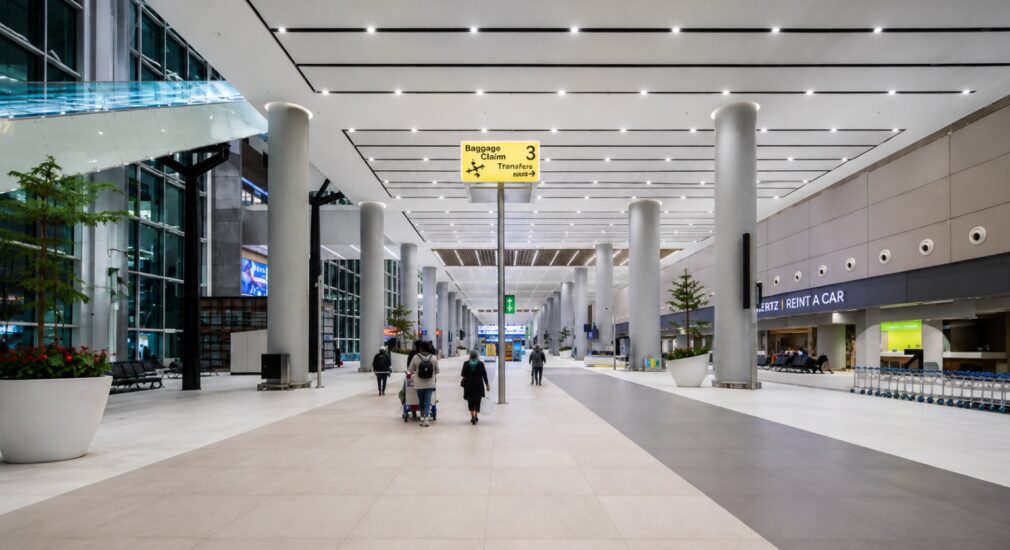
Airport Lighting Solutions are an essential part of modern airport infrastructure, supporting passenger movement, operational visibility, architectural identity, security, wayfinding and efficient use of large terminal and external spaces. Unlike conventional commercial lighting, airport projects require a coordinated approach across terminals, concourses, check-in areas, security zones, boarding gates, baggage areas, roads, parking facilities, façades, landscapes, aircraft stands and other operational zones.
The lighting strategy must balance visual comfort, uniform illumination, glare control, durability, energy efficiency, maintainability and architectural design intent. For airside and airfield applications, additional aviation-specific requirements may apply. For example, the FAA separately identifies standards for airport visual aids, runway and taxiway lighting, airport terminal facilities and apron-related design.
For architects, airport consultants, developers, EPC contractors, MEP consultants, lighting designers and procurement teams, selecting the right Airport Lighting Manufacturer, Supplier and Exporter is therefore not simply a matter of choosing LED fixtures. It involves understanding the airport environment, application requirements, lighting calculations, optical performance, environmental conditions, controls and project specifications.
What Are Airport Lighting Solutions?
Airport Lighting Solutions refer to a coordinated range of lighting systems designed for the different functional, architectural and operational areas of an airport. Depending on the project scope, this can include airport terminal lighting, passenger area lighting, architectural lighting, façade lighting, apron lighting, parking lighting, roadway lighting, landscape lighting, security lighting, signage illumination and specialised airfield lighting.
The exact lighting system depends on the location and purpose of each airport zone. Passenger-facing areas generally require comfortable and visually clear illumination that supports movement and wayfinding, while apron and outdoor operational areas require robust, uniform and carefully controlled lighting. Signify, for example, positions passenger-area lighting around arrival, check-in, security, boarding, lounges and gates, while its apron solutions focus on visibility, durability, energy efficiency and intelligent controls.
It is also important to distinguish architectural and infrastructure airport lighting from specialist airfield ground lighting (AGL). Runway, taxiway, approach and other aviation visual-aid systems can be subject to specific aviation authority requirements and certification processes. In the USA, for example, the FAA maintains specific specifications for runway and taxiway light fixtures and an Airport Lighting Equipment Certification Program.
This distinction allows an airport lighting project to be planned according to the actual application rather than treating every airport luminaire as the same type of lighting equipment.
Why Is Lighting Important for Airports?
An airport operates as a complex combination of transportation infrastructure, commercial space, public building, security environment and architectural landmark. Lighting contributes to each of these functions.
Supporting Passenger Movement and Wayfinding
Large airports can include multiple terminals, concourses, security checkpoints, immigration areas, boarding gates, lounges, baggage collection zones and connecting corridors. A consistent lighting strategy can help passengers understand spatial hierarchy and move intuitively through these environments.
Lighting can be used to visually distinguish entrances, circulation routes, waiting areas, information points and important transition zones. Well-controlled illumination also helps maintain visual comfort in spaces where passengers may spend several hours.
Improving Operational Visibility
Airport ground operations continue during night-time and low-visibility conditions. Aprons, aircraft stands, service areas and associated operational spaces require lighting that supports safe and efficient activity.
FAA guidance for terminal apron areas notes that illumination should support a safe, secure and efficient operating environment during night-time and adverse weather conditions. It also highlights the importance of aiming and shielding floodlights to avoid glare for pilots and air traffic controllers while maintaining illumination in critical areas.
Creating Visual Comfort
Airports contain large open spaces with high ceilings, reflective surfaces, glass façades and extensive circulation routes. Poorly designed lighting can create excessive brightness, shadows, glare or visual discomfort.
A professional Airport Lighting Design should therefore consider:
- Illuminance
- Uniformity
- Glare
- Beam distribution
- Colour temperature
- Colour rendering
- Surface reflectance
- Vertical illumination
- Visual hierarchy
- Daylight interaction
- Maintenance requirements
The objective is not simply to install brighter fixtures, but to deliver the right light in the right location.
Enhancing Architectural Identity
Airport terminals increasingly function as architectural landmarks for cities and regions. Architectural lighting can emphasise façades, entrances, canopies, structural elements, pedestrian zones and landscape features.
Linear LED lights, wall washers, floodlights, uplighters, inground lights, spotlights and customised luminaires can be integrated into the architectural concept without overpowering the building.
This creates opportunities for lighting designers and architects to establish a recognisable nighttime identity while maintaining appropriate control of brightness and light spill.
Improving Energy and Maintenance Performance
Airports operate for extended hours, and many areas require continuous or scheduled illumination. Consequently, energy consumption and maintenance can become significant lifecycle considerations.
Modern LED Airport Lighting can provide long operating life, efficient optical performance and reduced maintenance requirements. Connected controls can further enable scheduling, dimming, remote monitoring and zone-based operation. Current airport lighting solutions in the market increasingly combine LED luminaires with intelligent controls and asset monitoring.
Key Applications of Airport Lighting
A complete airport lighting strategy can extend far beyond the terminal building. Each zone has different functional and technical requirements.
1. Airport Terminal Lighting
Terminal lighting covers the primary passenger building and may include:
- Arrival halls
- Departure halls
- Check-in areas
- Security zones
- Immigration areas
- Customs areas
- Boarding gates
- Baggage claim areas
- Lounges
- Retail areas
- Restaurants
- Corridors
- Escalators
- Staircases
- Waiting areas
The lighting design should provide comfortable illumination while maintaining a coherent visual language throughout the passenger journey.
2. Airport Apron and Aircraft Stand Lighting
Airport Apron Lighting supports aircraft parking, ground handling, baggage operations, servicing and other activities around aircraft stands.
Large-area LED floodlighting is commonly considered for apron environments, but optical control is particularly important. Light must reach the required working areas without creating unnecessary glare or visual interference.
FAA guidance recommends uniform illumination and careful positioning, aiming and shielding of apron lighting.
Modern apron lighting solutions also increasingly incorporate durable construction, weather resistance, energy efficiency and smart controls because these environments can experience demanding operating conditions.
3. Airport Road and Parking Lighting
Airport campuses can include extensive:
- Access roads
- Drop-off zones
- Pick-up areas
- Taxi areas
- Bus zones
- Parking lots
- Multi-level parking structures
- Rental car areas
- Pedestrian routes
These areas require dependable outdoor illumination with suitable optical distribution, glare control and environmental protection.
4. Airport Façade and Architectural Lighting
Airport Façade Lighting can transform the exterior appearance of terminal buildings while reinforcing the architectural identity of the airport.
Typical applications include:
- Building façade illumination
- Entrance feature lighting
- Canopy lighting
- Structural lighting
- Wall washing
- Linear façade accents
- Uplighting
- Inground lighting
- Architectural feature lighting
For international airport projects, façade lighting should be designed with consideration for surrounding roads, aircraft operations, neighbouring buildings and potential unwanted light spill.
5. Airport Landscape Lighting
Landscape lighting can be used around terminal entrances, pedestrian areas, gardens, roads and public spaces.
Suitable products may include LED bollard lights, inground lights, uplighters, landscape spotlights and low-level architectural luminaires.
The objective should be to create a safe and visually coordinated environment rather than excessive decorative brightness.
6. Security and Service Areas
Airport infrastructure also includes maintenance buildings, cargo facilities, service roads, utility areas, emergency access routes and restricted zones.
These locations may require durable, high-performance lighting designed around visibility, security, operational activity and maintenance access.
7. Specialised Airfield Lighting
Runway Lighting, Taxiway Lighting, Approach Lighting, PAPI and other airfield visual aids fall into a more specialised category than general architectural airport lighting.
These systems can be governed by aviation-specific standards and authority requirements. For example, the FAA lists separate guidance for runway/taxiway lighting, visual aids, PAPI and other airport lighting equipment.
Therefore, project specifications should clearly identify whether the requirement concerns terminal/architectural lighting, apron lighting, airside lighting or certified airfield lighting.
A Complete Approach to Airport Lighting Design
A successful airport lighting project begins with understanding the airport masterplan and dividing the site into functional lighting zones. The design team can then determine the appropriate luminaires, optical distributions, mounting arrangements, controls and performance criteria for each application.
A typical design process may include:
Site assessment → Lighting concept → Application zoning → Photometric planning → DIALux simulation → Fixture selection → Technical specification → BOQ → Sample/prototype approval → Manufacturing → Quality inspection → Delivery → Installation and commissioning support
For large airport developments, coordination between the architect, lighting designer, MEP consultant, airport authority, civil consultant, EPC contractor, electrical contractor and lighting manufacturer is particularly important.
The manufacturer should be able to support the project beyond supplying a catalogue product. Technical datasheets, photometric files, mounting details, electrical information, material specifications, IP/IK ratings and project-specific documentation can help consultants and procurement teams evaluate the proposed solution.
This project-oriented approach is increasingly visible across the international airport lighting market, where suppliers combine lighting design, photometric planning, manufacturing, delivery and technical support rather than treating the luminaire as an isolated product.
For Luzion Lighting, this creates an opportunity to provide architectural and infrastructure-oriented Airport Lighting Solutions from its manufacturing base in Ahmedabad, Gujarat, India, supporting architects, lighting designers, MEP consultants, contractors, developers and procurement teams across international airport projects.
Airport Terminal, Passenger, Indoor & Architectural Lighting Solutions
Airport terminal lighting requires a carefully coordinated combination of functional illumination, architectural expression and passenger-focused design. A terminal is not a single space with one lighting requirement. It is a sequence of environments where passengers arrive, orient themselves, check in, pass through security, wait, shop, board, collect baggage and leave the building.
For this reason, Airport Terminal Lighting should establish a consistent visual environment while allowing different areas to have their own lighting character and performance requirements. The lighting system should also work with architectural materials, daylight, signage, digital information displays and interior finishes.
Airport Terminal Lighting Solutions
Modern LED Airport Lighting can be used across a wide range of terminal applications, including departure halls, arrival areas, check-in counters, security zones, immigration, boarding gates, baggage claim, lounges, corridors and circulation spaces.
The most appropriate luminaire depends on ceiling height, mounting method, required illumination, beam distribution, maintenance access and architectural intent.
Common solutions can include:
- Recessed LED downlights
- Surface-mounted LED luminaires
- Suspended linear lighting
- Continuous linear LED systems
- Architectural profile lighting
- LED spotlights
- Adjustable accent lighting
- High-output area luminaires
- Cove and indirect lighting
- Custom architectural luminaires
Rather than applying the same fixture throughout the terminal, lighting designers can establish different layers of illumination for general, accent, architectural and wayfinding purposes.
Check-In and Departure Hall Lighting
The departure hall is often one of the first major interior environments passengers experience. It can be a large open space containing check-in counters, digital displays, signage, retail areas and extensive circulation.
Lighting should provide sufficient illumination on horizontal and vertical surfaces while maintaining visual comfort.
Airport Check-In Lighting can incorporate linear luminaires, downlights, indirect illumination and accent lighting around architectural elements.
Vertical illumination is particularly relevant because passengers interact with information displays, signs, counters and people rather than looking only at the floor. A balanced lighting scheme can therefore improve the visual clarity of the entire environment.
High ceilings also create challenges around maintenance and fixture replacement. For this reason, fixture lifetime, accessibility, optical efficiency and control strategy should be considered during design rather than after installation.
Airport Security and Immigration Lighting
Security screening and immigration areas require clear visual conditions because passengers, staff, documents, equipment and digital displays must remain easily visible.
Lighting should avoid excessive contrast and distracting glare around workstations and screening equipment. Uniformity is also important where passengers move through queues and controlled areas.
For Airport Security Area Lighting, designers may consider:
- Comfortable general illumination
- Controlled glare
- Suitable vertical illumination
- Consistent colour rendering
- Appropriate colour temperature
- Low-maintenance LED fixtures
- Integration with ceiling systems
- Emergency lighting requirements
The final specification should always follow the project brief and applicable local regulations rather than relying on a generic lux value.
Boarding Gate and Concourse Lighting
Boarding gates are transition areas where passengers may sit for extended periods before boarding. These spaces benefit from a comfortable combination of ambient illumination, architectural accents and clear wayfinding.
Airport Boarding Gate Lighting can be designed around seating areas, gate counters, circulation paths, architectural ceilings and signage.
Linear LED systems are particularly useful in long concourses because they can create visual continuity and guide movement through large spaces. Carefully positioned accent lighting can then identify important points such as gate entrances, information desks or architectural features.
The lighting should complement digital screens without producing excessive reflections or reducing their readability.
Baggage Claim and Arrival Areas
Arrival halls and baggage claim zones need a practical combination of ambient and vertical illumination. Passengers need to identify baggage belts, signs, information displays, exits and circulation routes quickly.
Airport Baggage Claim Lighting should therefore support visual orientation while maintaining a comfortable environment.
Ceiling-mounted luminaires, linear systems and architectural lighting can be combined to create a clear visual hierarchy.
At arrival areas, lighting can also contribute to the first impression of the destination. Carefully integrated architectural lighting around walls, ceilings, columns and entrances can make a large functional space feel more welcoming without compromising its operational purpose.
Airport Passenger Area Lighting
Passenger experience has become an important consideration in contemporary airport design. Large airports can involve long walking distances, waiting periods and multiple transitions between different environments.
Airport Passenger Lighting should therefore consider both functional requirements and human experience.
A well-designed lighting scheme can help:
- Establish visual orientation
- Define circulation routes
- Highlight important destinations
- Reduce visual confusion
- Support comfortable waiting
- Improve architectural perception
- Reinforce airport identity
Signify’s airport application guidance similarly considers different passenger stages such as arrival, check-in, security, boarding and lounge environments rather than treating the terminal as one uniform lighting zone.
Airport Wayfinding Lighting
Lighting can work alongside conventional signs and digital information systems to support navigation.
For example, a designer may use:
Brighter architectural emphasis → major destination → secondary circulation → waiting area
This creates a visual hierarchy that helps passengers understand the space.
However, lighting should complement rather than replace mandatory airport signage and wayfinding systems.
Airport Lounge Lighting
Airport lounges have different requirements from check-in halls or security zones. Passengers may spend extended periods reading, working, dining or relaxing.
Airport Lounge Lighting can combine:
- Ambient lighting
- Decorative architectural lighting
- Reading lights
- Task lighting
- Accent lighting
- Indirect illumination
- Cove lighting
- Feature lighting
A layered approach can provide different lighting levels for different activities while creating a more premium environment.
Architectural lighting can also be coordinated with furniture, wall finishes, ceilings, artwork and hospitality elements.
Airport Retail and Commercial Lighting
Many international airports operate as commercial destinations as well as transportation hubs. Retail stores, restaurants, cafés and duty-free areas therefore require their own lighting strategies.
Airport Retail Lighting may use directional LED spotlights, track lighting, linear systems, accent luminaires and decorative fixtures.
The objective is to create sufficient general illumination while allowing merchandise, displays, architectural details and branded environments to receive appropriate visual emphasis.
For airport developers and operators, lighting design can therefore contribute to both passenger experience and commercial presentation.
Airport Interior Architectural Lighting
Beyond functional illumination, Architectural Airport Lighting can become part of the terminal’s design language.
Large terminals often contain distinctive:
- Roof structures
- Columns
- Atriums
- Ceilings
- Bridges
- Curved walls
- Feature staircases
- Glass façades
- Structural elements
These architectural elements can be emphasised using concealed linear LED systems, wall washers, spotlights, uplighters or custom luminaires.
The key is integration. Lighting equipment should ideally work with the architecture rather than appear as an afterthought.
Airport Façade Lighting Solutions
The exterior of an airport terminal is frequently the building’s strongest nighttime visual identity.
Airport Façade Lighting can be used to highlight architectural geometry, entrances, rooflines, structural details and major public-facing features.
Depending on the architecture, solutions can include:
- Linear façade lighting
- LED wall washers
- Architectural floodlights
- LED spotlights
- Inground luminaires
- Uplighters
- Concealed profile lighting
- Custom façade luminaires
A façade lighting design should consider viewing distances from approach roads, parking areas and surrounding public spaces.
Controlled Light Distribution
Airport environments require careful attention to unwanted light. Excessive brightness, poorly aimed luminaires or uncontrolled beams can create glare and unnecessary light spill.
This is particularly important where illuminated façades are close to aircraft movement areas or approach paths.
For this reason, beam angle, optical distribution, aiming, mounting position and shielding should be considered during the design stage.
Architectural airport lighting should create visual impact without compromising the operational environment.
Airport Entrance and Canopy Lighting
The terminal entrance is a key transition between exterior and interior environments.
Airport Entrance Lighting can identify the main access point while improving visibility for pedestrians, passengers, taxis and other vehicles.
Canopy lighting can be integrated into:
- Ceiling recesses
- Linear profiles
- Structural beams
- Columns
- Soffits
- Architectural panels
A carefully integrated system can provide uniform illumination without creating harsh points of brightness.
At vehicle drop-off areas, the lighting design should also consider pedestrian visibility, traffic movement and interaction with airport signage.
Airport Landscape and Public Realm Lighting
The area surrounding a terminal can be as important as the building itself.
Airport Landscape Lighting can be used around:
- Pedestrian approaches
- Gardens
- Water features
- Entry plazas
- Walkways
- Architectural landscaping
- Parking edges
- Public gathering spaces
Products such as LED Bollard Lights, Inground Lights, Uplighters, Landscape Spotlights and Wall Washers can provide different levels of illumination and visual emphasis.
Landscape lighting should remain coordinated with the terminal façade and avoid excessive decorative brightness.
Lighting for Different Airport Zones
A practical way to approach airport lighting is to divide the project into functional zones.
| Airport Zone | Typical Lighting Approach |
|---|---|
| Departure Hall | General + architectural + wayfinding |
| Check-In | Uniform + vertical illumination |
| Security | Comfortable, controlled and consistent |
| Immigration | Clear facial and document visibility |
| Boarding Gate | Ambient + task + wayfinding |
| Concourse | Linear + directional + architectural |
| Baggage Claim | General + vertical + circulation |
| Lounge | Layered ambient + decorative |
| Retail | General + accent lighting |
| Entrance | Architectural + functional |
| Canopy | Uniform exterior illumination |
| Façade | Wall washing + linear + feature lighting |
| Landscape | Low-level + accent illumination |
| Parking | Area + pedestrian lighting |
| Apron | High-output operational lighting |
This zoning approach allows each lighting system to be designed according to its actual purpose rather than selecting a single generic airport fixture.
Why Linear LED Lighting Is Valuable in Airports
Airport Linear Lighting can be particularly effective in long circulation areas, concourses, ceilings, canopies and architectural structures.
Continuous or modular linear systems can create:
- Visual continuity
- Clean architectural lines
- Flexible lengths
- Integrated ceiling designs
- Directional guidance
- Reduced visual clutter
Linear lighting can also be customised in terms of length, mounting method, output, colour temperature and optical distribution where the project requires a bespoke solution.
For architects and lighting designers, this provides greater freedom to integrate illumination into the architecture rather than relying entirely on exposed point-source fixtures.
Custom Airport Lighting for Complex Architecture
Not every airport project can be solved with standard catalogue luminaires. International terminals frequently contain unusual ceiling geometries, large structural spans, curved architectural surfaces and project-specific façade details.
A Custom Airport Lighting Manufacturer can develop solutions around specific dimensions, mounting conditions, output requirements and architectural details.
Customisation may involve:
- Fixture dimensions
- Length
- Housing design
- Mounting system
- Optics
- LED output
- Colour temperature
- Finish
- Dimming
- Control compatibility
- Weather protection
- Special installation requirements
This is particularly valuable when the lighting fixture itself needs to become part of the architectural design.
Designing Airport Lighting Around the Passenger Journey
One of the strongest approaches to terminal lighting is to consider the passenger journey as a connected sequence rather than isolated rooms.
Arrival → Entrance → Check-In → Security → Concourse → Boarding → Flight → Arrival → Baggage → Exit
Each stage can have its own lighting requirements while maintaining a consistent overall design language.
The best Airport Lighting Solutions therefore combine technical performance with architectural consistency and passenger experience.
For architects, lighting designers, MEP consultants and airport developers, this approach allows lighting to become part of the overall building strategy from the earliest design stage.
Luzion can support this process through architectural LED lighting solutions, customised luminaires, photometric planning and project-oriented manufacturing from Ahmedabad, Gujarat, India, with supply and export support for international projects.
Apron, Airside, Outdoor, Façade & Operational Airport Lighting
Airport environments extend far beyond the terminal building. Aircraft stands, aprons, service roads, parking areas, access routes, cargo zones, pedestrian approaches and external architectural spaces all require carefully planned illumination. These areas are exposed to weather, vehicle movement, maintenance activity and demanding operating schedules, making Airport Outdoor Lighting an important part of the overall infrastructure.
Unlike indoor terminal lighting, exterior airport applications often require greater attention to environmental protection, optical control, mounting height, light distribution, glare, maintenance access and resistance to dust, moisture and mechanical impact.
A successful airport project therefore combines Airport Apron Lighting, Airside Lighting, Roadway Lighting, Parking Lighting, Façade Lighting, Landscape Lighting and operational lighting according to the specific requirements of each zone.
Airport Apron Lighting Solutions
Airport Apron Lighting is used around aircraft parking stands and ground-handling areas where aircraft servicing, baggage handling, refuelling support, catering, cleaning and other activities take place.
Apron lighting needs to provide sufficient visibility across large areas while avoiding unnecessary glare and uncontrolled illumination. The location, height and aiming direction of floodlights are therefore important design considerations.
Typical requirements may include:
- High-output LED luminaires
- Wide-area illumination
- Controlled beam distribution
- High uniformity
- Glare management
- Robust outdoor construction
- Long operating life
- Low maintenance
- Suitable IP protection
- Compatible lighting controls
The precise performance requirements should be established from the airport’s project specification and applicable aviation authority requirements.
For example, FAA guidance for airport apron areas addresses illumination, uniformity and the positioning, aiming and shielding of floodlights to reduce glare affecting pilots and air traffic controllers.
LED Apron Lighting
LED Apron Lighting has become an important consideration for airports seeking efficient and reliable outdoor illumination.
Large airport sites can require numerous high-output luminaires operating for long periods. LED technology can offer long service life, efficient optical performance and reduced maintenance compared with older lighting technologies.
However, simply selecting a high-wattage LED floodlight is not sufficient. The photometric distribution must be appropriate for the mounting height, aircraft stand geometry and required illumination area.
A professional design should evaluate the complete installation rather than judging a luminaire only by its lumen output.
Airside Lighting
Airside Lighting covers lighting requirements in areas where aircraft and airport operational vehicles move, including aircraft stands, service routes, operational zones and other restricted areas.
Airside environments demand particular attention to visibility and light control because excessive or poorly directed light can affect personnel, vehicle operators and aircraft operations.
Lighting designers should evaluate:
- Mounting locations
- Pole heights
- Beam angles
- Light distribution
- Glare
- Uniformity
- Environmental exposure
- Maintenance access
- Control systems
- Emergency requirements
The lighting design must also distinguish between general airside illumination and specialised aviation visual aids.
Airport Ramp Lighting
Airport Ramp Lighting supports aircraft ground operations and vehicle movement around the aircraft parking and servicing environment.
LED floodlighting systems can be designed for large ramp areas, while smaller luminaires may be appropriate for service routes, access points and pedestrian areas.
For large projects, photometric modelling can help determine whether the selected fixtures provide appropriate coverage without unnecessary overlap or dark zones.
A combination of mounting height, optical distribution and fixture orientation can often achieve better results than simply increasing fixture wattage.
Aircraft Stand Lighting
Aircraft stand areas require lighting that supports ground personnel while maintaining appropriate visual conditions around parked aircraft.
Aircraft Stand Lighting may involve high-mounted floodlights positioned to illuminate service areas, equipment zones and aircraft surroundings.
The lighting arrangement should be coordinated with:
- Aircraft stand geometry
- Passenger boarding bridges
- Ground support equipment
- Service vehicles
- Terminal structures
- Apron markings
- Aircraft movement paths
- Maintenance access
The final design should always be coordinated with the airport’s operational and aviation requirements.
Airport Roadway Lighting
Airports can have extensive internal road networks connecting terminals, parking facilities, cargo buildings, maintenance zones and operational areas.
Airport Road Lighting should provide reliable visibility for vehicles and pedestrians while maintaining an appropriate visual relationship with surrounding buildings and signage.
Applications can include:
- Terminal access roads
- Service roads
- Emergency routes
- Taxi and pickup areas
- Bus routes
- Cargo access roads
- Staff parking routes
- Internal airport circulation
LED roadway luminaires can be selected according to road geometry, mounting height, spacing, optical distribution and required performance.
For airport campuses, lighting controls can also help manage different operating periods and traffic conditions.
Airport Parking Lighting
Parking facilities are an important part of the passenger experience because they form one of the first and last points of contact with the airport.
Airport Parking Lighting can be applied to:
- Surface parking
- Multi-level parking
- Covered parking
- Employee parking
- Rental-car facilities
- Bus parking
- Motorcycle parking
- Pedestrian connections
The lighting should support visibility, security and navigation while avoiding excessive brightness.
Pole-mounted LED area lighting can be combined with pedestrian-scale luminaires, canopy lighting and architectural lighting to establish a coherent external environment.
Airport Drop-Off and Pick-Up Area Lighting
Terminal drop-off and pick-up areas have a high concentration of pedestrians, vehicles, luggage movement and signage.
Airport Canopy Lighting and entrance lighting can help establish a clear transition between the roadway and terminal.
Linear LED lighting can be integrated into canopy ceilings and architectural soffits to provide continuous illumination with a clean appearance.
The design should also consider:
- Vehicle headlights
- Pedestrian visibility
- Signage
- CCTV coverage
- Traffic circulation
- Weather conditions
- Reflections from glass and polished surfaces
A well-designed system should provide visibility without creating unnecessary glare for drivers or passengers.
Airport Cargo and Service Area Lighting
Cargo terminals, logistics facilities, maintenance buildings and service areas operate differently from passenger-facing spaces.
These environments may require high-output functional illumination for loading, unloading, vehicle movement and material handling.
Airport Cargo Lighting can incorporate:
- LED high bays
- Floodlights
- Area lights
- Canopy luminaires
- Wall-mounted fixtures
- Linear industrial lighting
- Service-road lighting
The correct solution depends on mounting height, working plane, operating hours, environmental exposure and maintenance requirements.
Airport Façade Lighting
The airport terminal is often an important architectural landmark, particularly in major international cities.
Airport Façade Lighting can highlight the building’s form after sunset while supporting the overall identity of the airport.
Possible applications include:
- Terminal façade wall washing
- Architectural linear lighting
- Roofline illumination
- Structural accent lighting
- Entrance feature lighting
- Column illumination
- Canopy accents
- Concealed architectural lighting
- Uplighting
- Inground lighting
The design should be based on the architecture rather than applying uniform illumination to every surface.
Airport Wall Washer Lighting
Airport Wall Washers can create an even layer of illumination across large architectural surfaces.
They may be installed:
- At ground level
- Along façade edges
- Within landscape zones
- Under canopies
- Along structural elements
The optical distribution should be selected according to mounting distance, wall height and desired uniformity.
For façades close to airside areas, light spill and glare require additional consideration.
Airport Linear Façade Lighting
Airport Linear Lighting can be integrated into architectural joints, façade profiles, canopy edges and structural elements.
Linear LED systems can be especially effective where the architectural concept includes long horizontal or vertical lines.
Potential benefits include:
- Clean architectural appearance
- Continuous visual lines
- Flexible installation
- Custom lengths
- Concealed integration
- Multiple output options
- Different colour temperatures
- Dynamic control possibilities
For a complex terminal building, custom linear solutions can be developed around specific architectural dimensions.
Airport Landscape Lighting
The landscape surrounding an airport terminal can influence the first impression of passengers and visitors.
Airport Landscape Lighting can be used for:
- Entrance gardens
- Pedestrian plazas
- Trees and planting
- Water features
- Pathways
- Architectural landscaping
- Public spaces
- Boundary areas
Suitable products may include LED Inground Lights, Bollard Lights, Uplighters, Spotlights and Landscape Luminaires.
The objective should be visual integration rather than simply increasing brightness.
Landscape lighting should also be carefully coordinated with security lighting, CCTV, pedestrian routes and vehicle circulation.
Airport Entrance Lighting
The entrance provides a strong architectural and functional transition between exterior and interior environments.
Airport Entrance Lighting can combine:
- Canopy lighting
- Linear LED systems
- Downlights
- Wall washers
- Architectural spotlights
- Inground lighting
- Feature lighting
The entrance should remain visually identifiable without creating excessive contrast with the surrounding roadway or terminal interior.
For major airports, the entrance lighting can also become part of the airport’s architectural identity.
Airport Signage and Wayfinding Illumination
Lighting and signage should be coordinated from the early design stage.
Airport environments commonly contain:
- Directional signs
- Terminal identification
- Gate information
- Road signs
- Parking signs
- Emergency signs
- Digital information displays
Lighting can support visibility around these elements, but mandatory airport signage should retain its required visual characteristics.
Airport Signage Lighting may involve integrated LED modules, linear illumination or carefully positioned architectural luminaires depending on the sign type.
The goal is to prevent competing brightness levels between signs, façades and surrounding architectural elements.
Outdoor Airport Lighting and Environmental Conditions
Airport exteriors can expose luminaires to challenging environmental conditions.
Depending on geographic location, an airport may experience:
- High temperatures
- Humidity
- Heavy rainfall
- Dust
- Sand
- Salt-laden air
- UV exposure
- Wind
- Temperature fluctuations
This is especially relevant to airports across the UAE, Saudi Arabia, Qatar, Oman, Kuwait and Bahrain, where heat, dust and high solar exposure can influence outdoor lighting specifications.
For coastal airports, corrosion resistance can also become an important consideration.
Therefore, outdoor airport lighting should be evaluated according to:
Housing material + finish + IP rating + IK rating + thermal management + corrosion resistance + optical performance + electrical protection
The exact specification should be based on the project environment rather than selecting a rating solely because it appears higher on a product datasheet.
Glare Control in Airport Outdoor Lighting
Glare is one of the most important considerations in airport exterior lighting.
A high-output luminaire can produce excellent illumination but still be unsuitable if the light is directed toward sensitive viewing areas.
Airport Lighting Glare Control can involve:
- Correct beam angle
- Precise optical distribution
- Appropriate mounting height
- Proper aiming
- Shielding
- Louver systems
- Cut-off control
- Careful pole positioning
- Photometric simulation
This is particularly important for apron, ramp and airside applications.
A professional lighting design should therefore evaluate not only how much light is produced, but where that light goes.
Smart Controls for Airport Outdoor Lighting
Large airport sites can benefit from intelligent lighting controls.
Smart Airport Outdoor Lighting can incorporate:
- Scheduled dimming
- Zone-based control
- Occupancy detection
- Daylight response
- Remote monitoring
- Fault detection
- Centralised control
- Energy management
- Building management integration
For example, parking and access-road lighting may operate at different levels depending on time, traffic conditions or operational schedules.
Similarly, architectural façade lighting can be programmed separately from functional airport lighting.
A connected approach can help operators manage lighting as an active infrastructure system rather than a collection of independent fixtures.
Airport Lighting and Maintenance Planning
Airport lighting should be designed with maintenance in mind from the beginning.
Replacing luminaires in an airport can require:
- Access equipment
- Operational coordination
- Restricted-area permissions
- Temporary traffic management
- Electrical isolation
- Night-time maintenance windows
Therefore, long service life and reliable components can have significant lifecycle value.
When evaluating an Airport Lighting Manufacturer, procurement teams should consider more than initial product price. Important factors include:
- Product reliability
- LED and driver quality
- Thermal management
- Warranty
- Spare-part availability
- Technical documentation
- Photometric data
- Customisation capability
- Manufacturing consistency
- Export experience
- After-sales support
This lifecycle perspective can help airport owners and contractors reduce avoidable maintenance challenges.
Integrating Airport Outdoor Lighting Into the Overall Masterplan
The strongest airport projects do not design terminal, apron, roadway, façade and landscape lighting independently.
Instead, the lighting hierarchy can be developed across the entire airport:
Airside operations → Terminal → Entrance → Passenger circulation → Roadways → Parking → Landscape → Façade → Public realm
Each layer has its own technical requirements, but the overall visual environment should remain coordinated.
For example, the terminal façade should not become so bright that it dominates the passenger drop-off area, while landscape lighting should not compete with essential wayfinding or safety information.
This coordinated approach allows Airport Lighting Solutions to support both airport operations and architectural identity.
For Luzion, this creates an opportunity to combine architectural LED lighting, façade lighting, outdoor lighting, linear systems, wall washers, inground lights, uplighters and customised luminaires into project-specific solutions manufactured in Ahmedabad, Gujarat, India.
Airport Lighting Design, DIALux, Technical Requirements, Smart & Sustainable Lighting
A professional Airport Lighting Design needs to balance architectural intent with measurable lighting performance. Airports contain large and complex spaces where lighting must work alongside architecture, passenger circulation, signage, security systems, daylight, digital displays and operational infrastructure.
For architects, lighting designers, MEP consultants, developers, EPC contractors and procurement teams, the design process should therefore begin with the application’s requirements rather than the luminaire itself.
Airport Lighting Design Approach
A typical airport lighting project can be divided into clearly defined zones before fixture selection begins.
These may include:
- Terminal interiors
- Departure and arrival halls
- Check-in areas
- Security and immigration
- Boarding gates
- Concourses
- Lounges
- Baggage areas
- Retail and hospitality spaces
- Entrances and canopies
- Roads and parking
- Aprons and aircraft stands
- Cargo and service areas
- Façades
- Landscapes
- Pedestrian zones
Each zone can then be assessed according to its required illumination, visual task, mounting height, operating hours, environmental conditions and maintenance strategy.
This zoning approach helps prevent the common mistake of specifying the same luminaire throughout an entire airport simply for procurement convenience.
DIALux Airport Lighting Design
DIALux Lighting Design can be an important part of developing and validating airport lighting schemes.
A photometric model allows the design team to evaluate how selected luminaires distribute light within a space before installation.
Depending on the project, a DIALux Airport Lighting Simulation can help evaluate:
- Illuminance
- Uniformity
- Light distribution
- Mounting arrangements
- Beam angles
- Fixture spacing
- Lighting levels
- Potential dark zones
- Architectural effects
For terminal interiors, the model can include ceilings, walls, floors, furniture and other relevant surfaces. For external areas, it can incorporate roads, parking areas, aircraft stands or landscape zones where appropriate.
The objective is not simply to produce a visually attractive rendering. The photometric model should support engineering decisions and demonstrate that the proposed lighting arrangement is appropriate for the project requirements.
Photometric Files and Technical Data
A professional airport lighting manufacturer should be able to provide reliable technical information for design development.
Typical documentation may include:
- IES or LDT photometric files
- Product datasheets
- Dimensions
- Wattage
- Delivered lumens
- CCT
- CRI
- Beam angle
- IP rating
- IK rating
- Driver information
- Control compatibility
- Mounting details
- Installation instructions
This information allows consultants to assess the product before including it within a project specification or BOQ.
Key Technical Factors in Airport Lighting
Illuminance
Airport Lighting Lux Levels should be established according to the actual application and relevant project standards.
A departure hall, maintenance area, apron, parking facility and façade do not require the same lighting level.
The design should consider the visual task, operating environment, surface characteristics and applicable standards rather than applying a universal lux value.
Uniformity
Uniform illumination can be particularly important in large passenger and operational areas.
Poor uniformity may create areas that appear significantly darker or brighter than their surroundings.
For Airport Lighting Uniformity, the design should consider:
- Fixture spacing
- Mounting height
- Optical distribution
- Surface reflectance
- Room geometry
- Obstructions
- Required working plane
Photometric simulation can help identify potential variations before installation.
Glare Control
Airport Lighting Glare Control is essential in both indoor and outdoor environments.
In terminals, glare can reduce visual comfort and affect the readability of digital displays.
In outdoor operational areas, poorly controlled light can become more critical because of its potential impact on pilots, drivers and airport personnel.
Glare management may involve:
- Appropriate beam angles
- Diffusers
- Louvres
- Optical lenses
- Shielding
- Correct fixture orientation
- Suitable mounting positions
- Controlled luminance
The design should focus on achieving the required illumination while limiting unnecessary high-intensity sources within critical viewing directions.
Colour Temperature
Airport Lighting Colour Temperature should be selected according to the application’s architectural and functional requirements.
Neutral white light is commonly considered for many commercial and transportation environments because it can provide a clean appearance and support colour recognition.
However, the appropriate CCT should be determined according to the project design concept, interior materials, daylight conditions and applicable requirements.
Different areas can potentially use different colour temperatures while maintaining an overall coherent lighting strategy.
Colour Rendering
CRI in Airport Lighting is important where passengers and staff need to distinguish colours accurately.
Good colour rendering can support:
- Signage recognition
- People recognition
- Retail environments
- Interior finishes
- Security observation
- Product presentation
The required CRI should be selected according to the visual task rather than applying an unnecessarily high specification to every location.
IP and IK Protection
Outdoor airport lighting can be exposed to rain, dust, humidity, impact and other environmental conditions.
IP Rating for Airport Lighting should therefore be selected according to the actual installation environment.
For exterior and exposed applications, designers may need to consider:
- Dust ingress
- Water exposure
- Rain
- Cleaning
- Condensation
- High humidity
IK Rating can also be relevant where luminaires may be exposed to mechanical impact, vehicle activity or public access.
However, the correct IP and IK rating should be determined from the project’s actual environmental and mechanical risks.
Thermal Management and Harsh Climate Applications
Airport lighting projects in regions such as the UAE, Saudi Arabia, Qatar, Kuwait, Bahrain and Oman may require particular attention to thermal performance because outdoor luminaires can experience high ambient temperatures and intense solar exposure.
A suitable product should consider:
- Heat dissipation
- LED junction temperature
- Driver operating temperature
- Housing design
- Material selection
- Installation conditions
For coastal airports, corrosion resistance may also become important because of salt-laden air.
This is one reason why an Airport Lighting Manufacturer should understand the environment in which its products will be installed rather than offering identical specifications for every geography.
Emergency and Backup Lighting
Airports are critical transportation facilities, so emergency lighting requirements should be coordinated with the project’s life-safety and electrical design.
Depending on the area, emergency lighting may be required for:
- Escape routes
- Staircases
- Exit paths
- Passenger circulation
- Service areas
- Critical operational spaces
Emergency lighting should be designed and specified according to applicable local building regulations, fire-safety requirements and airport project standards.
It should not simply be treated as an extension of the normal decorative or architectural lighting system.
Smart Airport Lighting Solutions
Modern airports can benefit from connected lighting systems that allow operators to manage large numbers of luminaires centrally.
Smart Airport Lighting can incorporate:
- Dimming
- Scheduling
- Occupancy sensing
- Daylight response
- Zone control
- Remote monitoring
- Fault reporting
- Energy monitoring
- Central management
- BMS integration
This can be especially useful across large terminals, parking facilities, service buildings and public areas.
For example, a lighting management system can allow different operating schedules for passenger zones, back-of-house spaces, parking facilities and architectural façade lighting.
Airport Lighting Controls
Airport Lighting Control Systems can be selected according to the size and complexity of the project.
Possible control approaches include:
- DALI
- 0–10V
- DMX for selected architectural applications
- Sensor-based controls
- Timer-based control
- Centralised lighting management
- Building management integration
The selected protocol should be compatible with the project’s electrical and building automation strategy.
For architectural façades, dynamic lighting may also be considered where colour-changing or programmed scenes form part of the design concept.
Energy-Efficient Airport Lighting
Energy consumption is a major consideration for large airports because lighting systems can operate across extensive areas and for long periods.
Energy Efficient Airport Lighting combines efficient LED luminaires with appropriate optical design and intelligent controls.
Energy performance can be improved through:
Efficient LEDs → correct optical distribution → appropriate fixture spacing → dimming → scheduling → occupancy/daylight response → monitoring
The objective is not to minimise wattage at the expense of lighting quality. An under-lit airport can create operational and passenger-experience problems.
The better strategy is to achieve the required lighting performance using efficient luminaires and controlled operation.
Sustainable Airport Lighting
Sustainable Airport Lighting Solutions should be considered from a lifecycle perspective.
Important factors can include:
- Energy consumption
- Product lifespan
- Driver reliability
- Maintenance frequency
- Material selection
- Replacement requirements
- Lighting controls
- Upgrade potential
- Waste reduction
Long-life LED luminaires can reduce the frequency of replacement, which can be valuable in areas where maintenance access is difficult or operational disruption must be minimised.
Connected controls can further support sustainability by ensuring that lighting operates according to actual occupancy and operational schedules.
Airport Lighting Retrofit
Many airports operate existing terminals and infrastructure for decades. Complete replacement of an existing lighting system may not always be practical.
Airport LED Lighting Retrofit can provide an alternative where the existing infrastructure can be upgraded.
Potential retrofit opportunities include:
- Terminal interiors
- Parking facilities
- Roadways
- Cargo areas
- Service buildings
- Aprons
- Façades
- Landscape areas
A retrofit assessment should evaluate existing wiring, mounting positions, control systems, illumination levels and physical compatibility before selecting replacement luminaires.
The objective should be to improve performance without creating unnecessary modifications to the existing infrastructure.
Airport Lighting Standards and Compliance
Airport lighting projects can involve multiple layers of standards and regulations.
The applicable requirements depend heavily on the specific application.
For example, airfield lighting can be subject to aviation authority requirements, while terminal interiors, emergency lighting, electrical systems and architectural lighting may be governed by different building, electrical and lighting standards.
International airport projects may involve references to organisations and frameworks such as:
- ICAO
- FAA
- EASA
- IES
- IEC
- CIE
- Local aviation authorities
- Local building regulations
- Project-specific airport standards
The important point is that not every airport luminaire is subject to the same aviation certification requirements.
Runway and taxiway visual aids should not be treated in the same way as a terminal downlight, façade wall washer or landscape luminaire.
The project consultant and relevant authority should establish the applicable requirements before final product approval.
Airport Lighting Technical Specification
A detailed Airport Lighting Specification can help architects, consultants and procurement teams compare products consistently.
A project specification may address:
| Parameter | Typical Consideration |
|---|---|
| Luminaire Type | Downlight, linear, floodlight, wall washer etc. |
| Power | Application-specific |
| Lumen Output | Based on photometric requirement |
| CCT | Project-specific |
| CRI | Based on visual task |
| Optics | Beam/distribution requirement |
| UGR/Glare | Relevant indoor applications |
| IP Rating | Environmental exposure |
| IK Rating | Mechanical exposure |
| Driver | Dimming/control compatibility |
| Housing | Aluminium or specified material |
| Finish | Architectural/environmental requirement |
| Mounting | Recessed, surface, suspended, pole etc. |
| Controls | DALI, DMX, 0–10V or project system |
| Photometry | IES/LDT data |
| Warranty | Project requirement |
The final specification should always be based on the actual project and applicable standards rather than a generic checklist.
Airport Lighting Mock-Up and Sample Approval
For major airport projects, physical samples or mock-ups can be valuable before large-scale production.
A mock-up allows the project team to assess:
- Light appearance
- Beam distribution
- Glare
- Colour temperature
- Fixture integration
- Surface finish
- Architectural appearance
- Mounting arrangement
This is particularly useful for custom architectural lighting, façade systems and complex terminal ceilings.
A Custom Airport Lighting Manufacturer capable of producing samples and prototypes can therefore provide valuable support during design development.
From Lighting Design to Manufacturing
A successful airport lighting project requires coordination between design and manufacturing.
A typical workflow can be:
Project brief → Application assessment → Concept design → Luminaire selection → DIALux simulation → Technical approval → Sample/mock-up → BOQ → Manufacturing → Quality inspection → Packaging → Export/logistics → Installation support
For customised products, additional steps may include:
Architectural drawing review → Detail development → Prototype → Testing → Client approval → Production
This process allows the lighting manufacturer to become a technical project partner rather than simply a product vendor.
Why Technical Support Matters in Airport Projects
Airport projects involve multiple stakeholders and extensive documentation.
An experienced Airport Lighting Supplier should be able to coordinate with:
- Architects
- Lighting designers
- MEP consultants
- Electrical consultants
- EPC contractors
- Airport developers
- Procurement teams
- Project managers
- Installation contractors
Technical support can include product selection, photometric files, DIALux assistance, technical datasheets, BOQ development, customisation and project documentation.
For international projects, export packaging, documentation, logistics coordination and communication with overseas project teams can also become important.
Luzion Lighting’s manufacturing base in Ahmedabad, Gujarat, India provides a foundation for developing architectural and project-specific LED lighting solutions for domestic and international requirements.
Related posts
21 Oct 2026
Channel Letter Signage in UAE: Types, Materials and Applications
Channel letter signage is widely used by retail stores, hotels, restaurants, shopping malls and commercial buildings to display business names,…

21 Oct 2026
3D Letter Signage in UAE: Materials, Finishes and Applications
In a competitive commercial environment, signage plays an important role in how customers recognise a brand, locate a business and…
21 Oct 2026
Types of Illuminated Signage: A Guide for UAE & GCC Projects
Illuminated signage plays an important role in how commercial buildings, hotels, retail developments and corporate spaces communicate their identity. In…

17 Oct 2026
Commercial Signage Solutions UAE & GCC
How to Choose Commercial Signage Solutions in the UAE & GCC Commercial signage plays an important role in how people…

02 Oct 2026
Canadian Bespoke Lights
Canadian Bespoke Lighting: Where Design Becomes a Signature Luxury architecture is rarely defined by one element alone. The character of…
subscribe for newsletter

Luzion is a leading manufacturer and exporter of high-quality LED lighting solutions. With a focus on design, research, and innovation, we offer a wide range of products for commercial, industrial, residential, and outdoor spaces.
