

Search
Category
- Bollard Light
- Commercial Lighting
- Energy-Efficient Lighting
- LAMPS
- LED Lights
- LED Uplighter
- Light and Colour Theory
- Lighting Design and Facade Lighting
- Lighting Design Consultancy UAE
- lighting design principles
- Lighting Fundamentals and Design Principles
- Lighting Solutions
- Nature of Light in Lighting Design
- Panel Lights vs. Spot Lights
- Portable Lights
- Signage Solutions
- Smart Controllers for Streetlights
- Solar Lights
- Tree Lighter
- Uncategorized
Recent Posts




Commercial Signage Solutions UAE & GCC

Canadian Bespoke Lights
Tags
- Architectural Lighting
- Architectural Lighting Design
- Architectural Lighting Design UAE
- automation
- Best Lighting Design Consultancy in UAE
- COB LED Technology
- COB Spotlights
- Color Temperature in Lighting
- Commercial Lighting Design
- Commercial Lighting Fixtures
- Commercial Lighting Innovations
- Commercial Lighting UAE
- Cylinder COB Lights
- Dialux Lighting Design
- Dialux Lighting Design UAE
- Energy Efficient Lighting
- Energy-Efficient Lighting USA
- Exterior Lighting Solutions
- Facade & Exterior Lighting
- Facade Lighting
- Facade Lighting Design
- Facade Lighting Design UAE
- Facade lighting ideas
- Facade Lighting UAE
- Facade Uplighting
- Green Building Design
- Indoor & Exterior Lighting Solutions
- Interior Lighting Design
- Lamps
- LED Lighting Solutions
- LED lights
- LED Panel
- LED Uplighters
- LED vs Halogen
- Light and Color Theory
- Lighting Basics
- Lighting Consultancy UAE
- Lighting Design
- Lighting Design Consultancy in UAE
- Lighting Design Principles
- Lighting Design UAE
- Lighting Fundamentals Guide
- Lighting Layers
- Lumen Output in Lighting
- Modern Building Lighting Ideas
- Modern Lighting Ideas
- Office Lighting Solutions
- Outdoor Lighting Consultants UAE
- Panel Lights vs. Spot Lights
- Portable Lights
- smart light
- Smart Lighting Systems
- Sustainable Architecture
- Sustainable Lighting UAE
- Villa Lighting UAE
21Aug 2026
- Signage Solutions


Hospitality Signage Solutions for Hotels, Resorts & Luxury Hospitality Projects
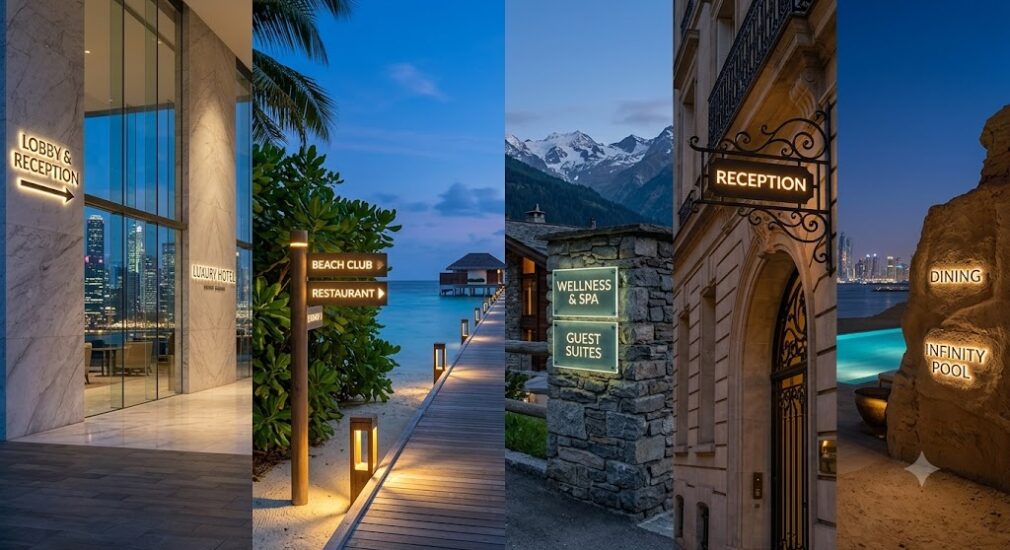
Hospitality signage is more than a way to identify a hotel, resort or hospitality destination. In a well-designed property, signage becomes an integral part of the architecture, interior environment, brand identity and guest experience. From a hotel entrance and illuminated facade logo to reception directories, room identification and directional wayfinding, every sign contributes to how visitors understand and navigate a property.
Hospitality Signage Solutions combine architectural design, visual communication, branding, wayfinding, materials, fabrication and, where required, integrated illumination to create a consistent signage system throughout a hospitality project.
For international hotel developments, signage must balance aesthetics with practical requirements such as visibility, legibility, durability, accessibility, brand standards and environmental conditions. This becomes particularly important for luxury hotels, resorts, serviced residences, mixed-use destinations and large hospitality developments across markets such as India, UAE, Saudi Arabia, Qatar, Kuwait, Bahrain, Oman, USA, UK, Europe, Australia and Asia-Pacific.
What Are Hospitality Signage Solutions?
Hospitality signage solutions are coordinated signage systems designed specifically for hotels, resorts, restaurants, spas, clubs, serviced apartments, convention facilities and other guest-focused environments.
A complete system can include:
- Hotel entrance signage
- Exterior and facade signage
- Illuminated hotel signs
- Lobby and reception signage
- Hotel wayfinding signage
- Directional signs
- Room identification signs
- Floor and elevator signage
- Restaurant and bar signage
- Spa and wellness signage
- Pool and leisure-area signage
- Conference and meeting-room signs
- Parking and arrival signage
- Accessibility and safety signage
- Hotel directories
- Architectural branding elements
Rather than treating each sign as an individual product, professional hospitality signage planning creates a unified visual language across the entire property.
This approach allows architects, interior designers, brand consultants, lighting designers, developers and signage manufacturers to coordinate typography, colours, materials, dimensions, mounting methods and illumination from the early design stage.
Why Is Signage Important in Hotels and Resorts?
1. It Creates the First Impression
The hotel entrance is often the first physical touchpoint between the guest and the property. A carefully designed entrance sign can immediately communicate the hotel’s brand positioning, architectural character and level of quality.
Luxury hospitality projects may use combinations of metal, glass, stone, acrylic, timber, brass finishes or integrated LED illumination to create an entrance identity that complements the building rather than competing with it.
2. It Strengthens Hotel Brand Identity
Hospitality signage should follow the property’s broader brand language.
Typography, proportions, materials, finishes and illumination can be coordinated with:
- Hotel logos
- Interior architecture
- Facade design
- Interior finishes
- Lighting schemes
- Brand guidelines
- Digital and print communication
This creates consistency between the physical property and the wider hotel brand.
3. It Improves Guest Navigation
Even the most luxurious hotel can become difficult to navigate if visitors cannot quickly understand where they need to go.
Hotel wayfinding signage helps guests locate:
- Reception
- Guest rooms
- Elevators
- Restaurants
- Meeting rooms
- Spa facilities
- Swimming pools
- Fitness areas
- Parking
- Emergency exits
- Public amenities
Effective wayfinding reduces confusion and creates a smoother guest journey from arrival to departure.
Hotel Entrance & Facade Signage
Exterior signage plays an important role in establishing the identity of a hospitality property.
The main entrance may incorporate a combination of hotel name signage, illuminated logos, directional elements, monument signs, canopy signage and architectural lighting.
For urban hotels, visibility from surrounding roads and pedestrian areas may be particularly important. For resorts and destination properties, the signage can be designed as part of the arrival sequence, working together with landscape design, entrance architecture and exterior lighting.
Illuminated Hotel Signage
Illuminated signage can provide strong visibility during evening hours while contributing to the property’s architectural appearance.
Common approaches include:
- Backlit letters
- Halo illumination
- Front-lit letters
- LED channel letters
- Internally illuminated boxes
- Edge-lit elements
- Integrated architectural LED lighting
The lighting should be carefully specified to achieve appropriate brightness, uniformity and visual comfort rather than simply maximising output.
For premium hospitality environments, the objective is usually controlled illumination that reinforces the architecture and brand identity.
Hotel Lobby & Reception Signage
Once guests enter the property, signage continues to support orientation and brand recognition.
Reception signage, hotel directories, branded feature walls and directional elements can be integrated into the lobby architecture.
A successful lobby signage system considers:
- Viewing distance
- Typography
- Contrast
- Mounting height
- Material finishes
- Ambient lighting
- Interior architecture
- Guest movement patterns
In luxury hotels, signage can become a design feature itself, using refined materials and detailing rather than appearing as an afterthought.
What Is Hotel Wayfinding Signage?
Hotel wayfinding signage is a coordinated system that helps guests understand where they are, where they need to go and how to reach their destination.
It can include directional arrows, floor directories, room identifiers, elevator information, amenity directions and other navigation elements.
A well-planned wayfinding system generally follows a logical information hierarchy:
Arrival → Orientation → Direction → Identification → Destination
For example, a guest entering a resort may first need to identify the reception area, then locate the appropriate elevator or corridor, and finally identify their room or selected amenity.
This hierarchy makes navigation intuitive without overwhelming the guest with excessive information.
Hospitality Signage as Part of Architectural Design
Modern hospitality developments increasingly consider signage during the architectural and interior design process rather than adding it after construction.
This allows signage specialists to coordinate with:
- Architects
- Interior designers
- Lighting designers
- Landscape architects
- MEP consultants
- Hotel operators
- Brand consultants
- Developers
- Main contractors
Early coordination can help determine sign locations, electrical requirements, mounting details, lighting integration, material interfaces and maintenance access before fabrication begins.
For large international hospitality projects, this integrated approach can also help maintain consistent signage standards across multiple buildings or properties.
Hospitality Signage Across Global Markets
Hospitality projects operate in very different architectural, climatic and regulatory environments. A signage system suitable for an indoor hotel environment may require different material and protection specifications when installed on an exposed coastal resort.
India
India’s rapidly expanding hospitality sector includes luxury hotels, business hotels, resorts, wellness destinations and mixed-use developments. Hospitality signage may need to respond to strong sunlight, monsoon conditions, dust, high-traffic environments and diverse architectural styles.
Major markets include Mumbai, Delhi, Bengaluru, Hyderabad, Chennai, Ahmedabad, Pune, Goa, Jaipur, Kolkata and Kochi.
UAE & GCC
The UAE and wider GCC region represent important markets for luxury hospitality development. Projects in Dubai, Abu Dhabi, Riyadh, Jeddah, Doha, Kuwait City, Manama and Muscat often demand premium architectural finishes, high-quality illuminated signage and strong integration with contemporary building design.
For exterior applications, material selection and environmental protection become particularly important because of high temperatures, intense sunlight, dust and coastal exposure in many locations.
USA, UK & Europe
Hotels and resorts across the USA, UK and Europe often combine strong brand standards with architectural and accessibility requirements.
Major hospitality markets include New York, Miami, Los Angeles, Las Vegas, London, Manchester, Paris, Milan, Rome, Madrid, Barcelona, Berlin, Amsterdam and Zurich.
A well-developed hospitality signage system can therefore support both brand consistency and local architectural character.
The Role of a Professional Hospitality Signage Manufacturer
A professional hospitality signage manufacturer should do more than fabricate individual signs.
The manufacturer should understand how signage interacts with architecture, lighting, branding, materials, guest movement and project specifications.
A complete project may involve:
Concept → Design Development → Material Selection → Technical Drawings → Prototyping → Fabrication → Illumination Integration → Quality Control → Installation
For architects, developers and procurement teams, working with an experienced signage partner can simplify coordination and improve consistency across the project.
A manufacturer with architectural lighting expertise can also help coordinate illuminated signage and architectural lighting, particularly where hotel branding, facade lighting and entrance identity need to function as one cohesive design element.
What Makes Good Hospitality Signage?
Effective hospitality signage should be:
- Visible without being visually intrusive
- Legible from the intended viewing distance
- Consistent with the hotel’s brand identity
- Durable for the installation environment
- Accessible for different users
- Architecturally integrated
- Appropriately illuminated
- Easy to maintain
- Scalable across different areas of the property
The best hospitality signage is rarely the most complicated. It is signage where design, information and architecture work together naturally.
Types of Hospitality Signage for Hotels, Resorts & Luxury Properties
A successful hospitality signage system is rarely based on one type of sign. Hotels, resorts and other guest-focused properties require a coordinated combination of exterior identification, interior wayfinding, room identification, amenity signage, safety communication and architectural branding.
The objective is to make information easy to understand while maintaining the visual character of the property. In premium hospitality environments, signage should feel like an extension of the architecture rather than an independent graphic element.
Hotel Entrance Signage
Hotel entrance signage establishes the property’s identity at the point of arrival.
Depending on the architecture and location, it can include:
- Main hotel name signage
- Illuminated logo signage
- Entrance canopy signage
- Monument signage
- Driveway identification signs
- Valet parking signs
- Directional arrival signage
- Branded architectural features
For luxury properties, materials such as brass, stainless steel, aluminium, acrylic, glass, stone and premium coated finishes can be combined to create a refined entrance identity.
The sign’s scale, mounting position, viewing distance and illumination should be considered together with the surrounding facade and landscape.
Hotel Facade & Architectural Signage
Facade signage connects the hotel brand with the building’s architecture.
A hotel logo or name may be positioned on a tower, entrance facade, podium, rooftop or other prominent architectural feature. The design must consider the building’s proportions, sightlines and surrounding environment.
Architectural hotel signage can be:
- Front illuminated
- Back illuminated
- Halo illuminated
- Non-illuminated
- 3D dimensional
- Integrated into architectural panels
- Mounted directly onto facade systems
For projects in cities such as Dubai, Abu Dhabi, Riyadh, Doha, Mumbai, London, New York and Singapore, facade visibility can be particularly important because hotels often compete for recognition within dense urban environments.
Hotel Lobby & Reception Signage
The lobby is one of the most important areas for establishing the property’s visual language.
Reception signage can be integrated with feature walls, reception desks, architectural panels or illuminated design elements.
Other lobby applications include:
- Hotel directories
- Concierge signage
- Reception identification
- Guest service information
- Lounge identification
- Elevator directions
- Floor directories
- Brand statements
Premium lobby signage should maintain a clear visual hierarchy while complementing interior materials, decorative lighting and furniture.
Hotel Wayfinding Signage
Hotel wayfinding signage helps guests navigate the property efficiently and confidently.
A comprehensive hotel wayfinding system can guide visitors from the entrance to reception, elevators, guest rooms, restaurants, meeting spaces, wellness areas and other destinations.
Typical wayfinding elements include:
- Directional signs
- Arrow signs
- Floor directories
- Corridor signs
- Elevator directories
- Building identification
- Parking directions
- Amenity directions
- Emergency route information
The system should be planned around the actual movement patterns of guests rather than simply placing signs wherever wall space is available.
Wayfinding Information Hierarchy
An effective system generally answers four questions:
Where am I?
Where do I need to go?
Which direction should I take?
How do I know I have arrived?
This simple hierarchy can make even large hotels and resorts significantly easier to navigate.
Hotel Room Identification Signs
Room identification signage provides an essential combination of functionality and design.
Room signs may include:
- Room numbers
- Suite identification
- Floor numbers
- Guest information
- Do-not-disturb indicators
- Accessibility identification
- Braille and tactile information
In luxury hotels, room signage can be customised to match the interior design through carefully selected metals, finishes, typography and mounting details.
The sign should remain immediately identifiable without disturbing the visual simplicity of the corridor.
Restaurant, Bar & Dining Signage
Hospitality properties often contain multiple restaurants, cafés, bars and dining destinations.
Each venue may require its own identity while remaining consistent with the hotel’s overall brand system.
Applications include:
- Restaurant name signage
- Bar signage
- Café identification
- Private dining signage
- Menu boards
- Directional signage
- Entrance identification
- Reservation signage
For premium restaurants, bespoke metalwork, illuminated letters and architectural signage can help establish a distinctive identity.
Spa, Wellness & Pool Signage
Wellness areas require a different signage approach from high-traffic commercial zones.
Spa signage and wellness signage often benefit from understated typography, natural materials and subtle illumination.
Applications may include:
- Spa reception
- Treatment rooms
- Sauna
- Steam room
- Changing rooms
- Fitness centre
- Yoga studio
- Pool identification
- Locker areas
- Wellness amenities
The design should support the calm atmosphere expected from luxury wellness environments.
Conference & Event Signage
Large hotels frequently contain meeting rooms, ballrooms, conference halls and event spaces.
A professional signage system can help visitors locate:
- Conference rooms
- Meeting rooms
- Ballrooms
- Banquet areas
- Business centres
- Exhibition spaces
- Registration areas
- Breakout rooms
- Restrooms
Temporary event signage may also need to work alongside permanent architectural signage without creating visual clutter.
Parking & Arrival Signage
The guest experience begins before entering the hotel.
Parking and arrival signage should make it easy to identify:
- Hotel parking
- Valet parking
- Guest drop-off
- Loading areas
- Taxi areas
- Service entrances
- Accessible parking
- Basement parking
- Exit routes
Clear arrival signage is particularly important for large resorts, airport hotels, convention properties and mixed-use developments.
Illuminated Hospitality Signage
Illumination can transform signage after sunset and improve visibility from longer viewing distances.
Common Illuminated Signage Technologies
LED Backlit Signage
Creates a refined halo effect around dimensional letters or logos.
Front-Lit Signage
Provides direct illumination across the face of letters or panels.
Halo-Lit Letters
Often used for premium architectural applications where subtle illumination is preferred.
LED Channel Letters
Suitable for prominent hotel identities and commercial hospitality environments.
Edge-Lit Signage
Can create a contemporary and lightweight visual appearance.
The choice depends on the architecture, desired visual effect, viewing distance, sign dimensions and environmental conditions.
For luxury hospitality projects, lighting should generally be controlled and uniform, avoiding excessive brightness or visible hotspots.
Materials Used for Hotel Signage
Material selection affects appearance, durability, maintenance and overall project positioning.
Stainless Steel
Suitable for contemporary architectural environments and exterior applications where durability is important.
Aluminium
Lightweight and versatile, aluminium can be finished in various colours, textures and coatings.
Brass
Frequently associated with premium and luxury interiors. It can provide warmth and a refined architectural character.
Acrylic
Useful for illuminated signage, dimensional lettering and contemporary interior applications.
Glass
Can be used for elegant interior directories, feature signage and premium wayfinding systems.
Wood & Veneer
Natural finishes can complement resorts, wellness properties and hospitality interiors where a warmer visual language is desired.
Stone
Stone-backed or stone-integrated signage can create a strong connection between signage and architecture.
Accessibility in Hospitality Signage
Accessibility should be incorporated into signage planning rather than treated as an afterthought.
Depending on the project location and applicable regulations, accessibility requirements may include:
- Tactile lettering
- Braille
- Appropriate contrast
- Accessible room identification
- Clear directional information
- Accessible restroom identification
- Elevator identification
- Emergency information
International hospitality projects may need to comply with local accessibility standards as well as hotel brand requirements.
The exact specification should therefore be confirmed during the design and technical approval stage.
Hotel Signage Design Principles
A professional hospitality signage system should balance functionality, aesthetics and brand consistency.
Legibility
Typography should remain readable from the intended viewing distance.
Consistency
Fonts, symbols, colours, materials and mounting details should follow a coherent system.
Visibility
Signs should be positioned where visitors naturally look for information.
Contrast
Sufficient contrast improves readability and helps important information stand out.
Scale
A sign should be appropriately sized for its environment and viewing distance.
Simplicity
Too much information can reduce the effectiveness of wayfinding.
Architectural Integration
Signage should complement the building rather than visually compete with it.
Sustainable Hospitality Signage
Sustainability is becoming increasingly relevant to hospitality developments.
Signage strategies can consider:
- Energy-efficient LED illumination
- Durable materials
- Long-life components
- Repairable lighting systems
- Efficient power consumption
- Recyclable materials
- Reduced replacement cycles
- Modular signage components
For large hotel portfolios, durable signage can also reduce long-term maintenance and replacement requirements.
Smart & Digital Hospitality Signage
Technology is also expanding the possibilities for hospitality communication.
Modern properties may combine traditional architectural signage with:
- Digital directories
- Interactive wayfinding
- Digital displays
- QR-enabled information
- Smart room identification
- Digital guest communication
- Dynamic event information
However, digital technology should complement the architectural signage system rather than replace every physical sign.
A strong hospitality environment often combines permanent architectural signage with flexible digital communication.
Hospitality Signage for Different Property Types
The signage requirements of a five-star city hotel can differ significantly from those of a large beach resort.
Luxury Hotels
Focus on refined materials, brand identity, architectural integration and premium detailing.
Resorts
Require extensive exterior wayfinding, landscape integration, amenity identification and destination signage.
Boutique Hotels
Often benefit from highly customised signage that reflects the property’s unique personality.
Business Hotels
Typically require highly efficient wayfinding for rooms, meeting facilities, restaurants and business services.
Wellness Resorts
Usually favour subtle, calming signage integrated with natural materials and interior architecture.
Serviced Residences
Require a combination of residential identification, building wayfinding, amenity signage and hospitality branding.
Global Hospitality Signage Considerations
Hospitality signage design can vary according to location, architecture, climate, regulations and cultural expectations.
For example, a luxury resort in Maldives or Bali may require different material and environmental considerations from a city hotel in London or New York. Similarly, exterior signage in Dubai, Riyadh or Doha needs to consider heat, sunlight and dust, while coastal properties may require enhanced resistance to moisture and corrosion.
This is why international hospitality signage projects benefit from a project-specific specification rather than a one-size-fits-all signage package.
Global Hospitality Signage Solutions for Hotels, Resorts & International Projects
Hospitality projects around the world have different architectural styles, environmental conditions, development standards and guest expectations. A successful hospitality signage solution therefore needs to be adaptable to the location while maintaining the identity and quality standards of the hotel or resort brand.
From luxury resorts in the Middle East and Asia to international hotel chains in Europe and North America, signage must combine architectural integration, brand consistency, intuitive wayfinding, durability and visual impact.
For international projects, working with a signage manufacturer capable of coordinating design, materials, illumination, fabrication and installation requirements can help create a consistent result across different locations.
Hospitality Signage Solutions in India
India has a diverse hospitality landscape covering luxury city hotels, business hotels, destination resorts, wellness retreats, boutique properties and large integrated developments.
Hospitality signage in India often needs to combine contemporary architectural design with practical considerations such as high foot traffic, strong sunlight, monsoon conditions, dust and varied site environments.
Major hospitality markets include:
- Mumbai
- Delhi
- Bengaluru
- Hyderabad
- Chennai
- Ahmedabad
- Pune
- Kolkata
- Jaipur
- Goa
- Kochi
- Gurugram
- Noida
- Surat
Hotel entrance signage, facade identification, illuminated hotel signs, interior wayfinding and amenity signage can all be developed as part of one coordinated system.
Hospitality Signage Solutions in UAE
The UAE is one of the world’s prominent luxury hospitality markets, with extensive hotel and resort development across Dubai, Abu Dhabi, Sharjah, Ras Al Khaimah, Ajman and Fujairah.
Hotel signage in Dubai and Abu Dhabi often needs to complement highly contemporary architecture while providing excellent visibility within busy urban environments.
Common applications include:
- Luxury hotel entrance signage
- Illuminated facade signage
- Resort wayfinding
- Lobby branding
- Architectural hotel logos
- Restaurant signage
- Spa and wellness signage
- Parking and arrival signage
Exterior signage specifications should account for strong sunlight, high temperatures, dust and, in coastal areas, moisture and salt exposure.
Hospitality Signage Solutions in Saudi Arabia
Saudi Arabia is experiencing significant hospitality and destination development, creating opportunities for premium architectural signage across hotels, resorts and large tourism developments.
Important markets include:
- Riyadh
- Jeddah
- Mecca
- Medina
- Dammam
- Al Khobar
- Diriyah
- NEOM
- Red Sea destinations
Hospitality signage in Saudi Arabia may range from large-scale destination signage and hotel facade identities to detailed interior wayfinding systems.
For major developments, signage can be coordinated with architectural lighting, landscape design, interior design and hotel brand standards.
Hospitality Signage Solutions in Qatar
Qatar’s hospitality market includes luxury hotels, business properties, resorts, entertainment destinations and large event-oriented developments.
Hotel signage in Doha can incorporate:
- Entrance signage
- Illuminated logos
- Interior directories
- Wayfinding systems
- Room identification
- Restaurant signage
- Conference signage
- Parking directions
Projects should consider the architectural language of the property as well as local environmental conditions and applicable project requirements.
Hospitality Signage Solutions in Kuwait
Kuwait’s hotel and hospitality sector includes luxury hotels, business hotels, restaurants and mixed-use developments.
Hospitality signage in Kuwait City often requires a combination of strong brand visibility and premium architectural detailing.
Exterior applications can include illuminated hotel signage and entrance identification, while interior systems can include directional, room and amenity signage.
Hospitality Signage Solutions in Bahrain
Bahrain offers a range of hotels, resorts, restaurants and leisure destinations, particularly around Manama and major tourism areas.
Hotel signage in Bahrain can include custom architectural signage, illuminated branding, wayfinding, room identification and resort amenity signs.
For coastal hospitality projects, material selection and corrosion resistance should be considered during specification.
Hospitality Signage Solutions in Oman
Oman’s hospitality market includes luxury resorts, mountain destinations, coastal properties, urban hotels and tourism developments.
Major markets include:
- Muscat
- Salalah
- Sohar
- Nizwa
- Al Mouj
- Other emerging tourism destinations
Resort signage in Oman often benefits from a strong connection between architecture, landscape and natural materials.
Signage systems can incorporate metal, stone, timber-inspired finishes and controlled architectural illumination to complement the local environment.
Hospitality Signage Solutions in the USA
The United States has one of the world’s most diverse hospitality markets, ranging from luxury urban hotels and boutique properties to major resorts, casinos and destination developments.
Important markets include:
- New York
- Los Angeles
- Miami
- Las Vegas
- Chicago
- San Francisco
- Houston
- Orlando
- Boston
- Washington, D.C.
Hotel signage in the USA can involve extensive wayfinding systems, accessibility requirements, exterior branding, room identification and large-scale destination signage.
For international hotel brands, signage often needs to follow detailed corporate standards while adapting to the specific architecture and site.
Hospitality Signage Solutions in the UK
The UK combines historic properties, luxury hotels, contemporary urban developments, resorts and boutique hospitality destinations.
Major markets include:
- London
- Manchester
- Birmingham
- Edinburgh
- Glasgow
- Liverpool
- Bristol
Hospitality signage in the UK can range from discreet heritage-inspired signage to contemporary illuminated architectural identities.
For luxury hotels, the choice of typography, metal finishes, illumination and mounting details can be particularly important in preserving the character of the property.
Hospitality Signage Solutions Across Europe
Europe contains some of the world’s most established luxury hospitality markets.
Important markets include:
France
Paris, Nice, Cannes and other destinations feature luxury hotels, boutique properties and resorts where architectural identity plays a major role.
Italy
Milan, Rome, Florence, Venice and major resort destinations often combine hospitality branding with sophisticated architectural and interior design.
Spain
Madrid, Barcelona, Marbella, Ibiza and other destinations offer extensive hotel and resort applications.
Germany
Berlin, Munich, Frankfurt and other cities require signage systems that balance contemporary architecture, clear navigation and functional communication.
Switzerland
Zurich, Geneva and alpine resort destinations create opportunities for premium hotel signage, wellness signage and destination wayfinding.
Netherlands
Amsterdam and other hospitality markets increasingly combine contemporary architecture with sophisticated wayfinding and environmental graphics.
Across Europe, hotel signage can range from heritage-inspired brass and metalwork to minimalist illuminated architectural systems.
Hospitality Signage Solutions in Australia
Australia has a strong market for hotels, coastal resorts, lifestyle destinations and urban hospitality developments.
Major markets include:
- Sydney
- Melbourne
- Brisbane
- Perth
- Gold Coast
- Adelaide
Hotel signage in Australia may need to address strong sunlight, outdoor exposure, coastal conditions and large resort environments.
Wayfinding and landscape-integrated signage are particularly relevant for expansive resort developments.
Hospitality Signage Solutions in Singapore
Singapore’s hospitality environment is highly developed, with luxury hotels, business hotels, integrated resorts and high-end dining destinations.
Hotel signage in Singapore often requires a refined approach that works within dense urban architecture.
Applications include:
- Architectural hotel signage
- Interior wayfinding
- Illuminated entrance branding
- Room identification
- Restaurant signage
- Spa and wellness signage
- Integrated resort signage
Hospitality Signage Solutions in Japan
Japan’s hospitality market includes luxury hotels, business hotels, traditional ryokan, resorts and contemporary urban properties.
Hotel signage in Japan can benefit from a balance between simplicity, precision, functionality and architectural sensitivity.
Typography, proportion, material quality and visual restraint can be particularly important for premium properties.
Hospitality Signage Solutions in South Korea
South Korea’s major hospitality markets include Seoul, Busan, Jeju and other tourism destinations.
Hotel signage in South Korea can incorporate contemporary illuminated signage, architectural branding, digital communication and sophisticated interior wayfinding.
Large hotels and mixed-use developments may require extensive signage systems covering multiple entrances, retail areas, restaurants, amenities and guest facilities.
Hospitality Signage for Luxury Resorts Worldwide
Resort signage requires a different approach from a conventional city hotel.
A large resort may include:
- Multiple accommodation buildings
- Restaurants
- Spa facilities
- Pools
- Beaches
- Sports facilities
- Event spaces
- Villas
- Parking areas
- Landscape zones
- Recreation facilities
As a result, resort wayfinding signage must be planned across a much larger geographical area.
Signs should remain visible without disrupting the natural or architectural environment.
For luxury resorts, materials and finishes can be selected to complement the destination—for example, refined metals in contemporary resorts or natural finishes in wellness and eco-focused properties.
Hospitality Signage for Boutique Hotels
Boutique hotels often have a distinctive personality that should be reflected in their signage.
Instead of using generic signage systems, boutique properties may benefit from:
- Custom typography
- Bespoke metal signs
- Decorative lettering
- Artistic wall signage
- Unique room numbers
- Custom directional signs
- Integrated lighting
- Locally inspired materials
The objective is to create signage that supports the hotel’s individual identity.
Hospitality Signage for Mixed-Use Developments
Modern developments increasingly combine hotels with:
- Retail
- Restaurants
- Offices
- Residences
- Entertainment
- Convention facilities
- Wellness destinations
These developments require carefully coordinated architectural wayfinding systems.
Visitors may need to navigate between multiple buildings, entrances and functions. A clear hierarchy between hotel signage, retail signage, residential identification and public wayfinding is therefore essential.
Regional Factors That Influence Hotel Signage
Although the principles of good signage remain consistent, the technical specification can change significantly from one market to another.
Climate
Hot, humid, dry, coastal and cold environments can require different materials and protective finishes.
Architecture
A minimalist contemporary hotel may require a different signage language from a heritage property or traditional resort.
Brand Standards
International hotel groups often have strict requirements covering logo proportions, colours, typography, placement and illumination.
Accessibility
Local regulations and project requirements may influence tactile, Braille, contrast and identification signage.
Visibility
Urban properties may require long-distance facade visibility, while a secluded resort may prioritise close-range wayfinding.
Maintenance
Signage should be designed with access to LEDs, power supplies, fixings and replaceable components in mind.
Global Hotel Signage Design: Local Identity Meets International Standards
International hospitality projects often need to achieve two goals simultaneously:
Global brand consistency and local architectural identity.
A hotel brand may have established signage guidelines that apply across multiple countries. However, the physical building, climate, materials and cultural environment differ from one destination to another.
A professional signage solution therefore adapts the technical and architectural implementation while maintaining the essential brand language.
This is particularly important for hotel groups operating across India, GCC, Europe, North America and Asia-Pacific.
Why Choose a Global Hospitality Signage Partner?
International hotel developments often involve multiple stakeholders, suppliers and consultants. A capable signage partner can simplify coordination by supporting the project through several stages.
A comprehensive partner may assist with:
Concept Development → Design Coordination → Material Selection → Technical Drawings → Prototyping → Fabrication → LED Integration → Quality Control → Installation Support
For architects, developers, hotel operators, contractors and procurement teams, this integrated approach can help maintain consistency from the first design concept through to the completed installation.
For projects requiring both architectural lighting and illuminated signage, combining the two disciplines can also create a more cohesive entrance and facade identity.
Hospitality Signage Manufacturing, Specification & Project Solutions
A successful hospitality signage project requires more than attractive sign designs. Hotels, resorts and luxury hospitality developments need a coordinated process covering design development, material selection, technical detailing, illumination, fabrication, quality control and installation.
For architects, developers, hotel operators, contractors, MEP consultants, lighting designers and procurement teams, selecting the right hospitality signage manufacturer can have a direct impact on the quality, consistency and long-term performance of the completed project.
Custom Hospitality Signage Manufacturing
Every hospitality project has its own architectural language, brand requirements and operational needs. Custom manufacturing allows signage to be developed around the specific requirements of the property.
A bespoke hospitality signage package can include:
- Hotel entrance signage
- Facade branding
- Illuminated hotel logos
- Lobby signage
- Reception signage
- Wayfinding systems
- Room identification
- Restaurant signage
- Spa signage
- Pool signage
- Conference signage
- Parking signage
- Accessibility signage
- Architectural feature signage
Instead of relying on standardised products, custom fabrication allows the dimensions, materials, finishes, typography, illumination and mounting systems to be coordinated with the architecture.
Hospitality Signage Design & Technical Development
The design stage establishes how the signage will function within the property.
A professional process can include:
Concept Design
Initial concepts establish the visual direction, materials, typography and relationship between signage and architecture.
Design Development
The selected concept is refined according to actual site conditions, brand standards, dimensions and viewing distances.
Technical Drawings
Detailed drawings can define:
- Overall dimensions
- Letter depths
- Material thickness
- Fixing details
- Mounting systems
- Electrical requirements
- LED positioning
- Cable routing
- Access requirements
Prototype Development
For high-value hospitality projects, prototypes or sample panels can help stakeholders evaluate the actual material, finish, colour, illumination and detailing before full production.
Material Selection for Hospitality Signage
Material selection should consider both visual quality and environmental performance.
For exterior hotel signage, manufacturers may specify materials and finishes based on:
- UV exposure
- Temperature
- Humidity
- Salt exposure
- Dust
- Rain
- Wind
- Cleaning requirements
- Expected service life
Interior signage may place greater emphasis on:
- Touch and finish quality
- Interior colour palette
- Brand aesthetics
- Typography
- Material consistency
- Guest interaction
Premium hospitality projects can combine stainless steel, aluminium, brass, acrylic, glass, stone, timber finishes and specialist coatings to create distinctive architectural signage.
Illuminated Hotel Signage & LED Integration
Lighting is an important part of contemporary hospitality signage.
A carefully engineered illuminated hotel sign should provide consistent visual output while remaining appropriate for the architectural environment.
LED systems may be integrated into:
- Dimensional letters
- Hotel logos
- Channel letters
- Backlit panels
- Wayfinding signs
- Lobby feature signage
- Facade signage
- Entrance structures
Important considerations include:
- LED efficiency
- Light uniformity
- Colour temperature
- Brightness
- Heat management
- Power supply accessibility
- Maintenance access
- Weather protection
For premium projects, illumination should enhance the signage rather than overpower the architecture.
Architectural Integration
One of the most important considerations in hospitality signage is how the sign interacts with the building.
A hotel sign may be installed on:
- Stone
- Glass
- Metal cladding
- Concrete
- Timber
- Feature walls
- Facade panels
- Canopies
- Landscape structures
The mounting system must therefore be considered during architectural coordination.
Early involvement allows the project team to establish fixing points, cable routes, access panels and structural requirements before construction is completed.
This can reduce the risk of visible cables, improvised mounting solutions and difficult maintenance access.
Hospitality Signage Installation
Installation is the final stage where design and fabrication become part of the physical property.
Professional installation may involve:
Site Survey → Setting Out → Mounting Preparation → Sign Installation → Electrical Connection → Illumination Testing → Alignment Check → Final Inspection
For large hotel projects, installation can involve multiple zones and buildings, making coordination particularly important.
Exterior signs may require specialist access equipment, while interior signage requires accurate positioning according to architectural drawings and approved wayfinding plans.
Quality Control for Hotel Signage
Quality control should take place throughout the manufacturing process rather than only after production is complete.
Key checks may include:
- Material quality
- Surface finish
- Dimensions
- Letter alignment
- Logo proportions
- Colour consistency
- Illumination uniformity
- LED performance
- Electrical connections
- Fixing quality
- Packaging
- Installation accuracy
For international hotel projects, sample approvals and documented quality checks can help maintain consistency across large signage packages.
How to Choose a Hospitality Signage Manufacturer
Choosing a signage manufacturer should not be based only on price.
Architects, developers and procurement teams should evaluate several factors.
Manufacturing Capability
Does the manufacturer have the facilities and technical capability to produce the required signage types and finishes?
Customisation
Can the supplier create bespoke dimensions, materials, finishes and illumination?
Architectural Understanding
Does the manufacturer understand how signage integrates with architecture and interior design?
Lighting Expertise
For illuminated signs, does the company understand LED systems, light distribution, power requirements and maintenance?
Project Coordination
Can the supplier coordinate with architects, consultants, contractors and hotel brand representatives?
Quality Control
Is there a structured process for prototype approval, fabrication inspection and final quality verification?
International Capability
For global hospitality projects, can the manufacturer support export packaging, documentation and international project coordination?
Hospitality Signage for Hotel Brand Standards
International hotel brands often operate with detailed brand guidelines.
These may define:
- Logo proportions
- Typography
- Colour specifications
- Sign dimensions
- Placement
- Illumination
- Materials
- Clear space
- Wayfinding conventions
A signage manufacturer must be able to translate these guidelines into physical products without compromising the architectural design.
For multi-property hotel groups, maintaining consistency across locations can be especially important.
Sustainable Hospitality Signage Solutions
Sustainability is increasingly influencing architectural and hospitality specifications.
A sustainable signage strategy can focus on:
- Energy-efficient LED systems
- Long-life components
- Durable materials
- Repairable construction
- Replaceable LED modules
- Efficient power consumption
- Recyclable materials
- Reduced material waste
- Modular components
Long-lasting signage can also reduce the frequency of replacement and minimise lifecycle costs.
For large hotel portfolios, these considerations can become significant over the operational life of the property.
Maintenance & Long-Term Performance
Hospitality signage remains exposed to guests, staff and environmental conditions throughout the property’s operational life.
A maintenance-friendly signage system should provide reasonable access to:
- LED modules
- Drivers
- Power supplies
- Fixings
- Electrical connections
- Replaceable components
Exterior signage should also be specified according to its installation environment.
For example, coastal resorts may require greater attention to corrosion resistance, while properties in hot and dusty regions may require careful selection of materials, coatings, seals and electrical components.
Hospitality Signage for New Hotel Developments
Signage should ideally be considered during the early stages of hotel development.
A coordinated project can follow this sequence:
1. Project Brief
Understand the hotel type, brand, architecture, guest profile and signage requirements.
2. Site & Architectural Review
Study entrances, circulation routes, facade areas, interior zones and visibility.
3. Signage Strategy
Create a hierarchy covering identification, wayfinding, room signage, amenities, safety and branding.
4. Design Development
Develop materials, typography, dimensions, finishes and illumination.
5. Technical Coordination
Coordinate fixing, structure, electrical supply and installation requirements.
6. Prototype Approval
Produce samples where required for client, architect or brand approval.
7. Manufacturing
Fabricate the approved signage under controlled quality processes.
8. Installation
Install and test the signage according to approved drawings.
9. Final Inspection
Verify positioning, finishes, illumination, functionality and overall appearance.
Hospitality Signage for Renovation & Hotel Rebranding
Existing hotels often require signage upgrades during refurbishment or rebranding.
A renovation project may involve:
- Replacing outdated entrance signage
- Updating hotel logos
- Upgrading LED illumination
- Refreshing room numbers
- Redesigning wayfinding
- Introducing new materials
- Updating accessibility signage
- Replacing damaged exterior signs
The advantage of a coordinated upgrade is that the property can receive a new visual identity without necessarily replacing every architectural element.
The Future of Hospitality Signage
The future of hospitality signage is moving toward a combination of architectural design, intelligent wayfinding, energy-efficient illumination and digital communication.
Emerging approaches may include:
- Smart wayfinding
- Digital directories
- Interactive guest information
- QR-enabled signage
- Dynamic event signage
- Energy-efficient LED systems
- Modular signage
- Sustainable materials
- Integrated architectural lighting
However, physical signage will remain important because guests still require clear, immediate and reliable information throughout a physical environment.
The strongest future hospitality projects are likely to combine physical architectural signage with digital technology, rather than relying exclusively on either approach.
Why Luzion for Hospitality Signage Solutions?
Luzion can approach hospitality signage as part of a broader architectural lighting and environmental design solution.
With experience across architectural lighting applications, signage can be developed with consideration for:
- Architectural integration
- LED illumination
- Material finishes
- Exterior and interior applications
- Hotel branding
- Wayfinding
- Custom fabrication
- Project-specific requirements
- International project coordination
This integrated approach is particularly valuable when hotel signage, facade lighting, entrance lighting and architectural identity need to work together as one cohesive design.
For architects, developers, lighting designers, MEP consultants, contractors and procurement teams, the objective is not simply to manufacture a sign—it is to create a signage system that supports the architecture, brand and guest experience of the property.
Hospitality Signage Solutions Worldwide
From India and the GCC to the USA, UK, Europe, Australia and Asia-Pacific, hospitality developments increasingly require signage that combines functionality with architectural quality.
Whether the project is a luxury hotel in Dubai, a resort in Goa, a destination property in Saudi Arabia, a business hotel in London, a luxury development in New York, a resort in Australia or a contemporary hotel in Singapore, the principles remain consistent:
Clear information. Strong identity. Intelligent wayfinding. Durable materials. Appropriate illumination. Architectural integration.
A professionally planned hospitality signage system can therefore become an important part of the overall guest journey—from the first arrival at the entrance to navigation throughout the property.
Frequently Asked Questions
What is hospitality signage?
Hospitality signage is a coordinated signage system created for hotels, resorts, restaurants, spas, serviced residences and other hospitality environments. It can include entrance signage, facade branding, wayfinding, room identification, amenity signage, accessibility signs and illuminated architectural signage.
What types of signage are used in hotels?
Hotels commonly use entrance signs, facade signs, lobby signs, directional and wayfinding signs, room identification signs, restaurant and spa signage, elevator signs, parking signs, safety signage and accessibility signage.
Why is hotel wayfinding signage important?
Hotel wayfinding signage helps guests navigate complex properties efficiently. It provides clear information about directions, destinations, floors, rooms and amenities while reducing confusion and improving the overall guest experience.
What materials are used for luxury hotel signage?
Luxury hotel signage can use stainless steel, aluminium, brass, acrylic, glass, stone, timber finishes and specialist coatings. The material should be selected according to the architectural design, location, environmental exposure, durability and desired appearance.
What is illuminated hotel signage?
Illuminated hotel signage incorporates LED or other lighting systems into signs, letters or logos to improve visibility and create an architectural identity after dark. Common approaches include backlit, halo-lit, front-lit and internally illuminated signage.
How should hotel signage be designed?
Hotel signage should balance brand identity, readability, visibility, accessibility, architecture, material quality and guest navigation. A consistent signage hierarchy helps guests understand information quickly without creating visual clutter.
How do I choose a hospitality signage manufacturer?
Consider manufacturing capability, customisation, material expertise, illumination engineering, quality control, architectural coordination, installation support and experience with international hospitality projects.
Can hospitality signage be customised?
Yes. Hospitality signage can be customised in terms of dimensions, typography, materials, finishes, colours, illumination, mounting systems and architectural integration to suit individual hotel or resort requirements.
Can hotel signage integrate with architectural lighting?
Yes. Illuminated signage can be coordinated with facade lighting, entrance lighting, landscape lighting and other architectural lighting systems to create a unified visual identity.
Can a signage manufacturer support international hotel projects?
An experienced manufacturer can support international projects through design coordination, technical documentation, fabrication, quality control, export packaging and project-specific coordination, depending on the project scope and destination.
Final Perspective
Hospitality Signage Solutions should be viewed as an integral part of hotel architecture rather than a collection of individual signs.
When branding, wayfinding, materials, illumination, accessibility and architecture are considered together, signage can improve navigation while strengthening the identity and perceived quality of the entire property.
For global hospitality projects, the ideal signage partner combines design understanding, manufacturing capability, architectural lighting expertise and project coordination to deliver solutions that are visually refined, technically reliable and appropriate for the environment.
From luxury hotels and resorts to restaurants, wellness destinations, serviced residences and mixed-use hospitality developments, Luzion can support architectural teams and project stakeholders with bespoke signage and lighting solutions designed around the requirements of each project.
Discuss Your Hospitality Signage Project with Luzion
Share your architectural drawings, signage schedule or project requirements with the Luzion team to explore a customised hospitality signage and architectural lighting solution.
Related posts
21 Oct 2026
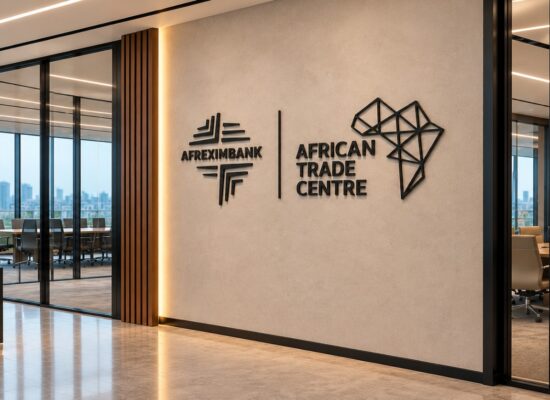
Channel Letter Signage in UAE: Types, Materials and Applications
Channel letter signage is widely used by retail stores, hotels, restaurants, shopping malls and commercial buildings to display business names,…
21 Oct 2026
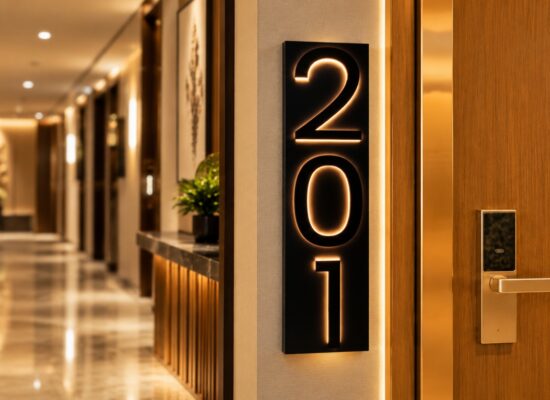
3D Letter Signage in UAE: Materials, Finishes and Applications
In a competitive commercial environment, signage plays an important role in how customers recognise a brand, locate a business and…
21 Oct 2026
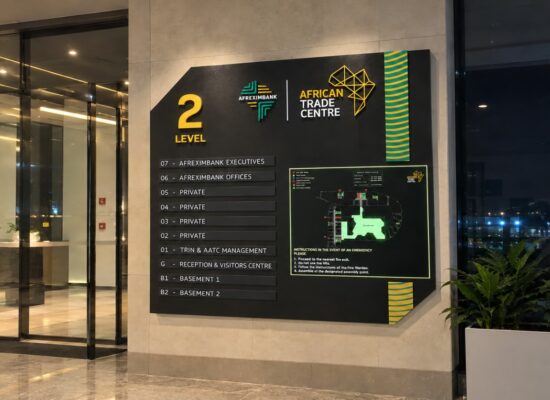
Types of Illuminated Signage: A Guide for UAE & GCC Projects
Illuminated signage plays an important role in how commercial buildings, hotels, retail developments and corporate spaces communicate their identity. In…
17 Oct 2026
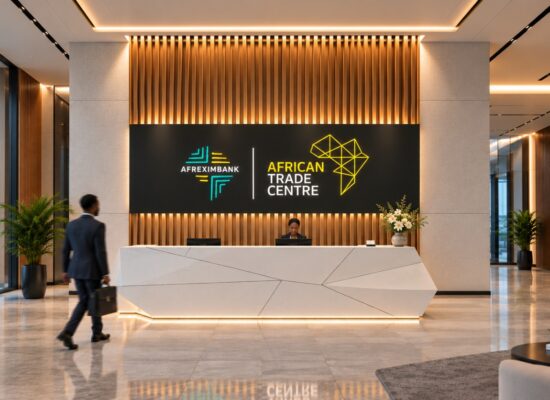
Commercial Signage Solutions UAE & GCC
How to Choose Commercial Signage Solutions in the UAE & GCC Commercial signage plays an important role in how people…
02 Oct 2026
Canadian Bespoke Lights
Canadian Bespoke Lighting: Where Design Becomes a Signature Luxury architecture is rarely defined by one element alone. The character of…
subscribe for newsletter

Luzion is a leading manufacturer and exporter of high-quality LED lighting solutions. With a focus on design, research, and innovation, we offer a wide range of products for commercial, industrial, residential, and outdoor spaces.
