
Search
Category
- Bollard Light
- Commercial Lighting
- Energy-Efficient Lighting
- LAMPS
- LED Lights
- LED Uplighter
- Light and Colour Theory
- Lighting Design and Facade Lighting
- Lighting Design Consultancy UAE
- lighting design principles
- Lighting Fundamentals and Design Principles
- Lighting Solutions
- Nature of Light in Lighting Design
- Panel Lights vs. Spot Lights
- Portable Lights
- Signage Solutions
- Smart Controllers for Streetlights
- Solar Lights
- Tree Lighter
- Uncategorized
Recent Posts


Commercial Signage Solutions UAE & GCC

Canadian Bespoke Lights
Tags
- Architectural Lighting
- Architectural Lighting Design
- Architectural Lighting Design UAE
- automation
- Best Lighting Design Consultancy in UAE
- COB LED Technology
- COB Spotlights
- Color Temperature in Lighting
- Commercial Lighting Design
- Commercial Lighting Fixtures
- Commercial Lighting Innovations
- Commercial Lighting UAE
- Cylinder COB Lights
- Dialux Lighting Design
- Dialux Lighting Design UAE
- Energy Efficient Lighting
- Energy-Efficient Lighting USA
- Exterior Lighting Solutions
- Facade & Exterior Lighting
- Facade Lighting
- Facade Lighting Design
- Facade Lighting Design UAE
- Facade lighting ideas
- Facade Lighting UAE
- Facade Uplighting
- Green Building Design
- Indoor & Exterior Lighting Solutions
- Interior Lighting Design
- Lamps
- LED Lighting Solutions
- LED lights
- LED Panel
- LED Uplighters
- LED vs Halogen
- Light and Color Theory
- Lighting Basics
- Lighting Consultancy UAE
- Lighting Design
- Lighting Design Consultancy in UAE
- Lighting Design Principles
- Lighting Design UAE
- Lighting Fundamentals Guide
- Lighting Layers
- Lumen Output in Lighting
- Modern Building Lighting Ideas
- Modern Lighting Ideas
- Office Lighting Solutions
- Outdoor Lighting Consultants UAE
- Panel Lights vs. Spot Lights
- Portable Lights
- smart light
- Smart Lighting Systems
- Sustainable Architecture
- Sustainable Lighting UAE
- Villa Lighting UAE
24Aug 2026
- Lighting Solutions


Mall Lights & Lighting Solutions Worldwide for Shopping Centres
Introduction to Mall Lighting Solutions
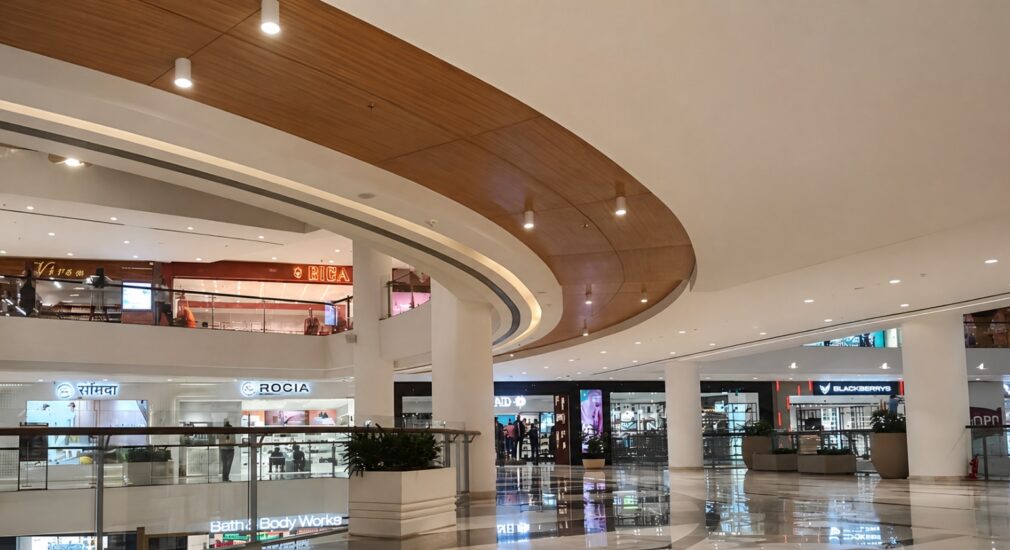
Modern shopping malls are no longer designed simply as places where people visit stores and make purchases. They have evolved into sophisticated destinations combining retail, dining, entertainment, hospitality, leisure, social spaces and architectural experiences. Within this environment, Mall Lighting Solutions play an important role in defining how visitors perceive the building, navigate through its spaces and experience individual retail environments.
Modern shopping centres require more than basic illumination. Well-designed mall lights help define architectural spaces, improve visual comfort, guide visitors and create the right atmosphere for retail, dining and entertainment environments. From high-performance LED mall lights and recessed downlights to linear systems, accent fixtures and architectural luminaires, every lighting element needs to work in harmony with the design and function of the space.
Luzion provides customised shopping mall lights and mall lighting solutions for retail centres, luxury shopping destinations, mixed-use developments and large commercial projects across India and international markets. Our approach combines optical performance, energy efficiency, glare control, colour quality and architectural integration to create lighting environments that support both the visitor experience and the commercial objectives of the development.
For architects, developers, lighting consultants, MEP consultants and contractors, the right Mall Lighting Design must balance aesthetics with photometric performance, energy efficiency, maintenance requirements, visual comfort and operational flexibility.
A successful lighting strategy can combine ambient, accent, architectural, decorative and functional illumination across different zones of a shopping centre. High-performance LED luminaires, linear lighting, downlights, track lights, wall washers, façade projectors and intelligent lighting controls can then be coordinated according to the architecture and purpose of each area.
This approach is particularly important for large international retail developments where the lighting system must respond to different architectural styles, climatic conditions, operating schedules and local project requirements.
Why Mall Lighting Is Important in Modern Shopping Centres
Lighting has a direct relationship with the way people experience a commercial environment. In a mall, visitors move through entrances, atriums, corridors, retail storefronts, restaurants, food courts, entertainment zones and outdoor areas. Each location requires a different visual environment.
A single lighting solution throughout the entire building can make a shopping centre feel flat and visually monotonous. Instead, layered mall lighting creates contrast and hierarchy while helping visitors understand where to move and where attention should be directed.
Retail lighting specialists often use lighting to establish a visual journey from the building façade and entrance through the circulation areas and towards focal retail displays.
Creating a Strong First Impression
The entrance is one of the most important visual elements of a shopping mall. Architectural façade lighting, canopy illumination, landscape lighting and entrance lighting can work together to make the development recognisable during evening hours.
A carefully designed entrance can:
- Create a welcoming arrival experience
- Emphasise architectural geometry
- Establish the mall’s visual identity
- Improve visibility and orientation
- Highlight entrances and key circulation routes
- Create a premium appearance after dark
For luxury retail developments, the lighting should complement rather than overpower the architectural materials.
Enhancing Architecture Through Light
Architectural lighting allows designers to reveal the form, texture and proportions of a building. Instead of illuminating every surface equally, carefully positioned luminaires can establish visual hierarchy.
For example, linear LED systems can follow architectural edges, recessed luminaires can provide clean ceiling illumination, while wall washers and narrow-beam projectors can emphasise columns, textured walls and façade details.
This principle is particularly effective in large atriums where architectural volumes can otherwise appear visually empty.
A notable example is the lighting concept used for Orion Mall in Bengaluru, where the lighting design established focal points and visual hierarchy rather than relying solely on uniform illumination levels.
Lighting as Part of the Architecture
A premium architectural mall lighting system should ideally be considered during the design development stage.
Architects and lighting consultants can coordinate:
- Ceiling layouts
- Structural elements
- Façade details
- Retail storefronts
- Escalators
- Staircases
- Atrium features
- Signage
- Landscape elements
- Decorative installations
This integrated approach helps prevent visible clashes between lighting equipment and architectural elements.
Major Types of Mall Lighting Solutions
A comprehensive Shopping Mall Lighting Solution usually consists of several complementary lighting layers rather than one type of fixture.
1. Ambient Lighting
Ambient lighting provides the general illumination required for circulation and public areas.
Typical applications include:
- Mall corridors
- Common areas
- Atriums
- Waiting areas
- Food courts
- Lobby spaces
- Connecting walkways
LED downlights, recessed fixtures, linear luminaires and indirect lighting systems can be used depending on the ceiling architecture.
The objective is to provide comfortable, consistent illumination without creating excessive glare or unnecessary visual brightness.
2. Accent Lighting
Accent lighting introduces emphasis and visual contrast.
It can be used to highlight:
- Retail displays
- Storefronts
- Architectural features
- Artwork
- Columns
- Product zones
- Promotional displays
- Feature walls
Adjustable LED track lights and directional spotlights are particularly useful because their beam direction can be changed as retail layouts evolve.
High colour-rendering lighting can also help merchandise appear more accurately and attractively, which is an important consideration in retail environments.
3. Architectural Lighting
Architectural lighting focuses on the relationship between light and the building itself.
Common solutions include:
- Concealed linear LEDs
- Recessed luminaires
- Cove lighting
- Wall washers
- Grazing lights
- Inground fixtures
- Uplighters
- Linear façade lighting
- Architectural projectors
The objective is not simply to make the building brighter. Instead, the lighting should reveal architectural form and create a controlled visual experience.
4. Retail Lighting
Retail areas require a more precise approach because products, displays and brand environments must remain visually attractive.
Retail Mall Lighting Solutions may incorporate:
- Track spotlights
- Adjustable downlights
- COB spotlights
- Linear lighting
- Display lighting
- Wall washers
- Pendant luminaires
- Magnetic track systems
Different retail categories may require different colour temperatures, beam angles and colour-rendering characteristics.
Fashion, jewellery, cosmetics, electronics, furniture and food retailers can all have different lighting requirements.
5. Decorative Lighting
Decorative lighting can introduce identity and emotion into a mall environment.
Custom pendant systems, sculptural fixtures, illuminated installations and bespoke lighting features can become architectural focal points within atriums, restaurants, lounges and premium retail areas.
For luxury shopping centres, bespoke lighting can also be developed around the project’s interior design language rather than relying entirely on standard catalogue fixtures.
Layered Lighting for a More Refined Mall Environment
One of the most important principles in professional mall lighting design is layering.
Instead of using the same intensity and fixture type throughout the development, lighting can be divided into different layers:
Ambient + Accent + Architectural + Decorative + Functional
Ambient lighting establishes the base illumination.
Accent lighting directs attention.
Architectural lighting reveals the building.
Decorative lighting creates identity.
Functional lighting supports safety, circulation and operational requirements.
This layered strategy creates depth and helps different zones of a shopping centre develop their own character while remaining visually connected.
The Illuminating Engineering Society has highlighted the complexity of mall lighting projects where different areas such as boutiques and food courts require different lighting approaches while still maintaining a cohesive overall experience.
Mall Lighting Fixtures for Different Applications
Choosing the right mall lights is essential for creating a visually comfortable, commercially effective and architecturally cohesive shopping environment. Modern malls require a combination of general illumination, accent lighting, decorative fixtures and architectural lighting to serve different spaces and customer experiences.
As an experienced Mall Lighting Manufacturer, Luzion develops LED lighting solutions for retail floors, corridors, atriums, entrances, food courts, entertainment zones, escalators, parking areas and other commercial spaces.
LED Mall Ceiling Lights
LED mall ceiling lights provide efficient general illumination across retail areas, circulation spaces, corridors and common zones. Recessed, surface-mounted and modular ceiling fixtures can be selected according to ceiling construction, mounting height and required illumination levels.
Mall Downlights
Mall downlights are widely used where clean architectural integration and controlled illumination are required. They can provide comfortable ambient lighting while maintaining a minimal visual appearance, making them suitable for retail stores, corridors, reception areas and common spaces.
Mall Spotlights and Track Lights
Mall spotlights and track-mounted fixtures allow lighting designers to direct light precisely towards merchandise, storefronts, architectural features and promotional displays. Adjustable beam angles make them particularly effective for retail environments where displays and layouts change regularly.
Mall Linear Lights
Mall linear lights provide continuous and visually consistent illumination for corridors, retail spaces, ceiling features and architectural elements. Custom linear LED systems can be integrated into suspended ceilings, recessed details, coves and other architectural applications.
Mall Accent and Display Lighting
Retail environments often require focused illumination to attract attention towards products, brands and feature displays. Mall accent lighting can use directional spotlights, narrow-beam fixtures and integrated LED systems to create visual hierarchy without excessive brightness.
Mall Wall Washers
Mall wall washers are used to illuminate vertical surfaces, feature walls, columns, façades and architectural details. Properly positioned wall washing can enhance the perception of space while creating a refined visual backdrop for retail and public areas.
Mall Entrance and Facade Lighting
The entrance is one of the most important visual touchpoints of a shopping centre. Mall entrance lighting and architectural facade lighting can highlight building geometry, signage zones, entrances and prominent architectural elements while creating a strong identity after dark.
Decorative Mall Lighting
Decorative fixtures can complement the architectural character of premium shopping centres, luxury retail destinations and entertainment areas. Bespoke pendants, feature luminaires and custom lighting installations can be developed to support a distinctive interior concept.
Outdoor and Parking Area Mall Lights
Shopping malls also require reliable exterior illumination for driveways, pedestrian approaches, parking areas, loading zones and landscape spaces. Outdoor mall lights should be selected according to mounting conditions, environmental exposure, optical performance and required ingress protection.
Selecting the Right Mall Lighting Fixtures
The selection of mall lighting fixtures should consider more than wattage. Optical distribution, lumen output, colour temperature, CRI, glare control, mounting method, operating hours, maintenance access and energy performance should be evaluated according to each application.
For architects, lighting designers, developers, MEP consultants and procurement teams, a coordinated lighting strategy helps create a consistent experience across retail, circulation and architectural spaces.
Luzion provides customised LED mall lighting solutions for commercial and architectural projects, with product configurations developed according to project requirements, ceiling conditions, illumination objectives and design intent.
LED Mall Lights for Better Performance and Energy Efficiency
LED technology has become a central component of contemporary commercial and retail lighting because it offers designers flexibility in optical performance, form factor, controls and application.
For shopping centres, LED systems can be designed around:
- High luminous efficacy
- Long service life
- Precise beam control
- High colour rendering
- Dimming capability
- Compact fixture dimensions
- Linear and continuous profiles
- Smart lighting controls
- Reduced maintenance requirements
However, simply replacing conventional lamps with LED fixtures does not automatically create a successful mall lighting design.
The lighting layout, optics, mounting height, beam angle, colour temperature, glare control and control strategy must all be considered together.
For large retail developments, intelligent control can further allow lighting levels and operating schedules to respond to different zones and operational requirements.
Visual Comfort and Glare Control
Shopping malls can contain large numbers of luminaires installed at different mounting heights. Without proper optical planning, excessive glare can reduce visual comfort.
A professional lighting design should therefore consider:
- Luminaire position
- Beam angle
- Viewing direction
- Mounting height
- Reflective surfaces
- Ceiling materials
- Display orientation
- Glare control
- Light distribution
The objective is to provide sufficient illumination while maintaining a comfortable visual environment for visitors and staff.
This becomes particularly important in spaces where visitors may spend several hours, such as shopping galleries, restaurants, food courts and entertainment areas.
Colour Temperature and Colour Rendering
Colour temperature can significantly influence the atmosphere of a mall.
Warmer light can create a sophisticated and intimate environment, while neutral white lighting can provide a clean and contemporary appearance.
The appropriate specification depends on:
- Architectural concept
- Retail category
- Interior finishes
- Brand identity
- Daylight availability
- Desired atmosphere
- Product presentation
Colour rendering is equally important, particularly in retail applications where accurate product appearance matters.
A well-designed lighting system should therefore select CCT and CRI according to the specific application rather than applying one specification throughout the entire shopping centre.
The Role of Smart Lighting Controls
Large shopping malls can benefit from lighting control systems that allow different zones to be managed independently.
Depending on the project requirements, systems can incorporate:
- DALI controls
- DMX controls
- Dimming
- Occupancy sensors
- Daylight-responsive controls
- Time scheduling
- Scene control
- Centralised monitoring
- Automated façade lighting
- Event and seasonal lighting scenes
Smart control can be particularly valuable for façades and architectural installations where lighting scenes may need to change for seasonal events, campaigns or special occasions.
International retail lighting projects demonstrate how façade lighting, interior lighting and control systems can be integrated to create dynamic yet controlled environments.
Designing Mall Lighting Around the Visitor Journey
The best Mall Lighting Design considers how visitors move through the building.
A typical visual journey may begin with:
Façade → Entrance → Atrium → Main Corridor → Storefront → Retail Display → Food & Leisure → Exit
Each transition provides an opportunity to establish a lighting hierarchy.
For example, the entrance can provide a strong architectural statement, while the interior circulation area can use comfortable ambient illumination. Storefronts can then introduce stronger accent lighting to create visual destinations.
This approach helps transform lighting from a basic building service into an important part of the overall retail experience.
From India to Global Markets
India has developed a strong architectural and commercial lighting ecosystem, with lighting manufacturers and specialists serving retail, hospitality, commercial and architectural projects.
For an India-based manufacturer and exporter, Mall Lighting Solutions can be developed for diverse project environments across India, the UAE, GCC, Europe, USA, UK, Asia, Africa and other international markets.
Ahmedabad and Gujarat are particularly relevant manufacturing and business hubs for architectural lighting solutions, with the wider Indian market supporting retail and commercial developments across cities such as Mumbai, Delhi, Bengaluru, Hyderabad, Chennai, Pune and Ahmedabad.
International retail projects also demonstrate the scale and diversity of mall lighting requirements across India and the GCC, including projects in Ahmedabad, Bengaluru, Chennai, Dubai, Qatar, Kuwait, Bahrain and Saudi Arabia.
For global projects, however, geographical reach should always be supported by project-specific engineering, photometric calculations, product specifications, documentation and coordination with the local project team.
What Makes a Premium Mall Lighting Solution?
A premium mall lighting solution should combine design, engineering and performance.
The most effective systems consider:
- Architectural character
- Retail requirements
- Visitor experience
- Visual hierarchy
- Colour rendering
- Glare control
- Energy efficiency
- Lighting controls
- Maintenance accessibility
- Long-term reliability
- Project-specific photometric calculations
- Integration with architectural and MEP services
The result should feel effortless to the visitor while being technically controlled behind the scenes.
A successful shopping mall does not necessarily make visitors notice the luminaires. Instead, visitors notice the architecture, products, atmosphere and experience that the lighting helps create.
Designing Mall Lighting for Different Areas
A shopping mall is made up of multiple environments, and each one has a different functional and visual purpose. A successful Mall Lighting Solution therefore cannot rely on a single luminaire type or uniform lighting level throughout the development.
The lighting strategy should respond to the architecture, ceiling height, visitor movement, merchandise, interior finishes, branding, safety requirements and operating conditions of every zone.
A professional Shopping Mall Lighting Design typically divides the project into several lighting environments, including entrances, atriums, circulation areas, retail stores, food courts, entertainment spaces, façades, outdoor plazas and parking facilities.
The following area-wise approach helps architects, lighting designers, developers and contractors create a cohesive yet visually dynamic shopping environment.
Mall Entrance Lighting
Mall entrance lighting creates the first visual impression of a shopping centre, combining architectural illumination with carefully positioned LED mall lights to highlight entrances, canopies, signage zones and key architectural details.
Suitable solutions can include:
- Recessed LED downlights
- Linear LED lighting
- Canopy lighting
- Wall washers
- Architectural spotlights
- Inground uplighters
- Façade projectors
- Decorative pendant fixtures
Architectural elements around the entrance can be highlighted selectively rather than illuminated uniformly. Columns, canopies, signage zones, portals and textured materials can each receive different levels of illumination.
Entrance Lighting Objectives
A well-designed entrance lighting system should:
- Clearly identify the main entrance
- Improve pedestrian orientation
- Highlight architectural features
- Create a premium arrival experience
- Provide comfortable illumination
- Integrate with signage and branding
- Maintain visual continuity between exterior and interior areas
For luxury shopping centres, the entrance can also incorporate bespoke lighting features that create a distinctive identity after sunset.
Grand Atrium Lighting
Large atriums require carefully coordinated mall lights to illuminate multiple levels while maintaining visual comfort and highlighting architectural features.
Atrium Lighting Solutions may include:
- High-performance downlights
- Suspended linear luminaires
- Decorative chandeliers
- Pendant lighting
- Wall washers
- Adjustable projectors
- Indirect architectural lighting
- Feature lighting
- Skylight-integrated lighting strategies
Because atriums are often viewed from multiple levels, luminaires should be carefully positioned to minimise glare and unwanted direct views of the light source.
Highlighting Atrium Architecture
Large architectural elements can be illuminated with narrow or medium beam projectors, while concealed linear systems can provide continuous illumination along architectural edges.
Decorative installations can become visual focal points when combined with controlled accent lighting.
The objective is to create a sense of scale without making the space visually overwhelming.
Shopping Mall Corridor Lighting
Well-positioned shopping mall lights provide consistent illumination throughout corridors while supporting comfortable movement and clear visual orientation.
Mall Corridor Lighting can incorporate:
- Recessed downlights
- Continuous linear LED systems
- Surface-mounted luminaires
- Cove lighting
- Indirect lighting
- Track lighting
- Architectural wall washers
Linear lighting is particularly useful where designers want to establish a continuous visual rhythm along long circulation paths.
Creating Visual Direction
Lighting can also assist with wayfinding.
Higher visual emphasis can be placed around:
- Major intersections
- Escalators
- Lift lobbies
- Store entrances
- Atrium openings
- Food court entrances
- Entertainment zones
This creates a subtle hierarchy that helps visitors understand the spatial organisation of the mall.
Retail Storefront Lighting
Carefully selected mall lighting fixtures can enhance storefront visibility and create a clear transition between common circulation areas and individual retail environments.
Retail Storefront Lighting can use:
- Adjustable spotlights
- Track lights
- Linear LED systems
- Recessed downlights
- Wall washers
- Display lighting
- Decorative fixtures
Retail brands may require different lighting specifications depending on their products.
Fashion stores may benefit from high-colour-rendering accent lighting, while jewellery stores may require precise beam control and carefully managed sparkle.
Furniture, cosmetics, electronics and lifestyle retailers can also require different lighting strategies.
Merchandise Display Lighting
Directional mall lights can be used to focus attention on merchandise, promotional displays and premium product zones without creating excessive glare.
Common solutions include:
- Adjustable spotlights
- Narrow-beam projectors
- Track-mounted LED fixtures
- Recessed display lights
- Linear shelf lighting
- Vertical illumination
- Wall washers
The beam angle should be selected according to the display size and viewing distance.
Narrow beams can create strong focal points, while wider distributions can illuminate larger merchandise areas more evenly.
High-quality colour rendering is especially important when accurate product appearance is essential.
Food Court Lighting
A combination of ambient and decorative LED mall lights can create a comfortable dining environment while maintaining consistent illumination across seating and circulation areas.
Food Court Lighting Solutions may combine:
- Decorative pendant lights
- Linear LED lighting
- Recessed downlights
- Cove lighting
- Accent lighting
- Feature wall lighting
- Architectural ceiling lighting
Different zones can use different lighting layers.
Dining areas may use warmer and more intimate lighting, while circulation areas can maintain a cleaner and more functional illumination level.
The combination of decorative and architectural lighting can help a food court feel more like a hospitality destination rather than a purely commercial area.
Restaurant and Café Lighting
Carefully selected mall lighting solutions help restaurants and cafés establish their own visual identity while remaining integrated with the wider architectural environment.
Lighting can be layered across:
Ambient + Decorative + Accent + Task Lighting
Pendant luminaires can define individual tables, while concealed linear lighting can provide architectural background illumination.
Wall washers can highlight textured finishes, artwork or feature walls.
For premium restaurants, bespoke lighting fixtures can become part of the interior design itself.
Escalator and Staircase Lighting
Appropriate mall lighting fixtures can improve visibility around escalators, staircases and transition zones while supporting safe and comfortable movement.
Lighting can be integrated into:
- Handrails
- Stair nosings
- Side walls
- Ceiling structures
- Escalator shafts
- Adjacent architectural features
Linear LED systems can provide continuous visual guidance without creating excessive brightness.
The lighting design should also avoid glare from directly visible light sources, particularly along vertical circulation routes.
Vertical Circulation as Architecture
Escalators often connect multiple levels and can become major visual elements within a mall.
Accent lighting can emphasise their movement and geometry, while architectural lighting around the surrounding walls can help integrate them into the overall design.
Mall Lift Lobby Lighting
Recessed downlights, linear systems and accent mall lights can create a refined lift-lobby environment while providing appropriate illumination around entrances and circulation areas.
They can be enhanced through:
- Recessed downlights
- Linear lighting
- Wall washers
- Cove lighting
- Decorative fixtures
- Feature ceiling illumination
Lighting around lift entrances should provide clear visual recognition while coordinating with the surrounding architectural finishes.
Feature Wall Lighting
Feature walls are increasingly used in premium malls to introduce texture, branding and visual identity.
Wall Lighting Solutions can include:
- Wall washers
- Grazing lights
- Recessed linear LEDs
- Adjustable spotlights
- Inground uplighters
- Vertical linear lighting
Wall grazing is particularly effective for textured stone, architectural panels, brick, concrete and sculptural surfaces because light can reveal surface depth and material character.
Mall Façade Lighting
The exterior façade is one of the strongest opportunities for establishing a shopping centre’s identity after dark.
Mall Façade Lighting Solutions may include:
- Linear façade LEDs
- Wall washers
- Floodlights
- Grazing luminaires
- Inground uplighters
- Pixel-controlled lighting
- Architectural projectors
- DMX-controlled systems
The façade should not simply be made bright. The lighting should respond to the building’s architectural form.
Architectural Façade Lighting
Different façade materials require different approaches.
Glass façades may benefit from carefully controlled internal or external illumination.
Stone façades can be enhanced with grazing or wall-washing techniques.
Metal panels may require precise linear or grazing systems.
Architectural projections and recesses can be highlighted selectively to establish depth.
Mall Signage and Wayfinding Lighting
Signage is another important element of a shopping centre’s visitor experience.
Lighting can support:
- Entrance identification
- Retail directories
- Parking directions
- Emergency routes
- Floor identification
- Storefront branding
- Building identification
Illuminated signage should remain visually clear without competing unnecessarily with surrounding architectural lighting.
For major commercial developments, coordination between lighting designers, architects and signage specialists can help maintain a consistent visual language.
Outdoor Plaza Lighting
Modern shopping centres frequently include outdoor plazas, pedestrian streets, terraces and gathering areas.
These spaces require a combination of functional and architectural illumination.
Suitable solutions include:
- Bollard lights
- Inground lights
- Uplighters
- Linear lighting
- Pole-mounted luminaires
- Wall-mounted fixtures
- Landscape spotlights
- Decorative outdoor luminaires
The objective is to create safe, comfortable pedestrian movement while preserving the architectural character of the development.
Landscape Lighting for Shopping Malls
Landscape areas can significantly improve the appearance of a shopping centre after dark.
Mall Landscape Lighting may highlight:
- Trees
- Planting beds
- Sculptures
- Water features
- Pathways
- Planters
- Architectural boundaries
- Outdoor seating
Inground lights can provide discreet illumination, while adjustable landscape projectors can highlight trees and feature planting.
Bollard lighting can provide pedestrian-level illumination along pathways.
The lighting should be carefully controlled to avoid excessive upward light and unnecessary glare.
Parking Area Lighting
Parking facilities require a more functional lighting strategy, with emphasis on visibility, safety, orientation and reliability.
Solutions can include:
- LED parking luminaires
- LED street lights
- Canopy lighting
- Linear LED systems
- Wall-mounted fixtures
- Emergency lighting
- Smart lighting controls
Parking lighting should provide clear visibility around:
- Vehicle lanes
- Pedestrian routes
- Entry and exit points
- Payment areas
- Lift lobbies
- Staircases
- Parking bays
Energy-efficient LED systems combined with occupancy or scheduling controls can help reduce unnecessary operating hours.
Basement Mall Lighting
Basement areas often have limited daylight and can therefore feel visually enclosed.
A carefully designed lighting system can improve the perceived quality of these environments.
Suitable applications include:
- Continuous linear lighting
- LED battens
- Recessed fixtures
- Parking luminaires
- Emergency lighting
- Wayfinding illumination
Consistent lighting across ramps, parking areas and pedestrian routes helps visitors move comfortably between the parking facility and the main mall.
Entertainment and Leisure Areas
Contemporary shopping centres frequently include cinemas, gaming zones, family entertainment centres, indoor attractions and experiential spaces.
These areas may require more dynamic lighting than conventional retail circulation zones.
Solutions can include:
- RGBW lighting
- DMX-controlled luminaires
- Programmable linear LEDs
- Pixel lighting
- Dynamic architectural lighting
- Decorative lighting
- Feature projections
Dynamic lighting should still be carefully coordinated with the architectural environment so that visual effects remain purposeful rather than excessive.
Smart Lighting for Different Mall Zones
Large shopping centres benefit from zone-based lighting controls.
For example:
Retail Corridors: scheduled ambient lighting
Retail Stores: independently controlled accent lighting
Atriums: scene-based architectural lighting
Façades: programmable evening scenes
Parking: sensor-based or scheduled lighting
Outdoor Areas: dusk-to-dawn controls
This allows the lighting system to respond to different operational requirements throughout the day.
Smart controls can also support maintenance and energy-management strategies by allowing lighting zones to be monitored and adjusted centrally.
Energy Efficiency in Mall Lighting
Shopping centres operate for long hours and can contain thousands of luminaires. Energy efficiency is therefore an important part of the lighting design process.
A well-engineered Energy-Efficient Mall Lighting Solution can combine:
- High-efficiency LED luminaires
- Appropriate optical distribution
- Dimming
- Occupancy sensing
- Daylight harvesting
- Time scheduling
- Intelligent controls
- Proper zoning
- Preventive maintenance
Energy performance should be considered alongside visual quality. Reducing fixture count without maintaining appropriate illumination and visual comfort can compromise the visitor experience.
The objective is to achieve the right balance between performance, efficiency, aesthetics and operational cost.
Why Custom Mall Lighting Matters
Every shopping centre has a different architectural identity.
A standardised lighting package may not always provide the required visual result.
Custom lighting can be developed for:
- Unique ceiling structures
- Large atriums
- Curved architectural elements
- Feature façades
- Bespoke retail environments
- Decorative installations
- Special dimensions
- Specific beam requirements
- Custom mounting systems
For major architectural developments, bespoke luminaires can be designed to integrate almost invisibly into the building.
This approach is particularly valuable for luxury malls, flagship retail developments and destination shopping centres where architectural identity is a major part of the project concept.
Integrating Lighting with Architecture, MEP and Interior Design
A successful mall lighting project requires collaboration between multiple disciplines.
The lighting design should be coordinated with:
- Architecture
- Interior design
- Structural engineering
- MEP services
- Electrical systems
- HVAC
- Fire and life safety
- Signage
- Landscape design
- Retail design
- Building management systems
Early coordination helps determine fixture locations, access requirements, power requirements, ceiling details and control infrastructure before construction begins.
This integrated process reduces clashes and helps ensure that the final lighting installation delivers the intended architectural result.
Professional Lighting Design and Photometric Planning
Large shopping centres should not be designed only from visual references.
Professional lighting planning can involve:
- Lighting calculations
- Lux analysis
- Uniformity assessment
- Glare evaluation
- Beam-angle selection
- Mounting-height analysis
- Power-density evaluation
- Emergency-lighting coordination
- Control zoning
- 3D visualisation
Tools such as DIALux can be used to simulate lighting performance before installation, helping project teams understand how different luminaires and layouts will perform.
For international projects, photometric files, technical datasheets, installation details and performance documentation can also support coordination between the manufacturer, consultant and contractor.
Creating One Cohesive Lighting Language
Although each mall zone has different requirements, the entire development should still feel like one architectural environment.
This can be achieved through consistent decisions regarding:
- Colour temperature
- Fixture finishes
- Lighting geometry
- Beam control
- Linear lighting details
- Accent hierarchy
- Façade illumination
- Landscape lighting
- Control scenes
The result is a shopping centre where individual spaces have their own identity without becoming visually disconnected.
Global Applications for Mall Lighting Solutions
The same design principles can be adapted to shopping centres across different markets, but the final solution should always respond to local architecture, climate, regulations, operating patterns and project specifications.
This includes commercial developments in India, UAE, Saudi Arabia, Qatar, Kuwait, Bahrain, Oman, the UK, Europe, USA, Asia, Africa, Australia and New Zealand.
Global Mall Lighting Solutions for International Retail Projects
Shopping malls are among the most complex commercial environments to illuminate because every project combines architecture, retail, hospitality, entertainment, public circulation and outdoor spaces.
The requirements can also vary significantly from one country to another. A luxury shopping destination in Dubai may require a very different architectural lighting approach from a retail centre in London, Mumbai, Riyadh or Singapore.
For this reason, an international Mall Lighting Manufacturer should be capable of adapting product specifications, optical performance, mounting systems, control requirements and project documentation to different markets.
Luzion Lighting provides architectural and commercial lighting solutions from India for projects requiring a combination of design flexibility, technical performance and project-specific manufacturing.
Mall Lighting Solutions in India
India has a rapidly evolving retail and commercial landscape, with shopping malls ranging from large metropolitan destinations to premium mixed-use developments.
Modern Mall Lighting Solutions in India need to respond to diverse architectural styles, operating hours, climate conditions and project budgets.
Major applications include:
- Shopping mall interior lighting
- Retail store lighting
- Atrium lighting
- Architectural lighting
- Façade lighting
- Landscape lighting
- Parking lighting
- Food court lighting
- Entrance lighting
- Decorative lighting
- Smart LED lighting
Indian shopping centres increasingly combine retail with restaurants, entertainment, cinemas, hospitality and lifestyle experiences. This creates demand for lighting systems that can transition between functional illumination and experiential architectural lighting.
Mall Lighting Manufacturer in India
For developers and contractors, sourcing from an experienced Mall Lighting Manufacturer in India can provide advantages in terms of product customisation, technical coordination and project-specific manufacturing.
A manufacturer can develop solutions according to:
- Required wattage
- Lumen output
- Beam angle
- Colour temperature
- CRI
- IP rating
- IK rating
- Mounting method
- Housing finish
- Dimensions
- Control protocol
- Project-specific optical requirements
This is particularly useful when a project includes architectural details that cannot be accommodated effectively by standard off-the-shelf luminaires.
Mall Lighting Solutions in Gujarat
Gujarat is an important manufacturing and commercial region in India, with major business centres and expanding retail infrastructure.
Mall Lighting Solutions in Gujarat can support shopping centres, commercial developments, mixed-use projects, retail streets and lifestyle destinations.
Key locations include:
- Ahmedabad
- Gandhinagar
- Surat
- Vadodara
- Rajkot
Mall Lighting Solutions in Ahmedabad
Ahmedabad has developed into one of Gujarat’s major commercial and architectural centres, creating opportunities for modern retail and commercial lighting.
Mall Lighting Solutions in Ahmedabad can include complete lighting packages covering:
- Interior architectural lighting
- Retail lighting
- Façade illumination
- Entrance lighting
- Atrium lighting
- Landscape lighting
- Outdoor lighting
- Parking lighting
- Custom lighting fixtures
For projects in Ahmedabad and Gujarat, local manufacturing capabilities can also support faster technical communication, product development and customisation.
Mall Lighting Solutions Across Major Indian Cities
A nationwide mall lighting strategy can support retail developments across India’s major commercial centres.
Mumbai
Mall Lighting Solutions in Mumbai often require premium architectural, retail and façade lighting suited to large commercial developments and high-density urban environments.
Delhi NCR
Projects in New Delhi, Delhi, Gurugram, Noida and Ghaziabad can require integrated retail, commercial, façade and landscape lighting.
Bengaluru
Shopping centres in Bengaluru can benefit from energy-efficient LED systems, architectural lighting and smart control solutions.
Hyderabad
Large retail and mixed-use developments can use integrated mall lighting for atriums, circulation areas, storefronts and exterior architecture.
Chennai
Lighting solutions for Chennai malls may combine indoor retail lighting with exterior and landscape applications suited to the local environment.
Pune
Retail developments in Pune can incorporate architectural LED lighting, retail accent lighting, façade lighting and smart controls.
Kolkata, Jaipur, Kochi, Lucknow, Surat and Vadodara
These growing commercial markets also offer opportunities for architectural and retail lighting systems designed around local project requirements.
The objective should not be to use identical lighting across every Indian city, but to provide a flexible product and engineering platform that can be adapted to each development.
Mall Lighting Solutions in the UAE
The UAE is one of the most important markets for premium retail architecture and large-scale shopping destinations.
Mall Lighting Solutions in UAE frequently need to combine architectural sophistication with high-performance LED technology.
Major applications include:
- Luxury retail lighting
- Atrium illumination
- Façade lighting
- Entrance lighting
- Landscape lighting
- Outdoor plaza lighting
- Retail display lighting
- Decorative lighting
- Smart lighting controls
Mall Lighting Solutions in Dubai
Dubai’s retail architecture often incorporates dramatic façades, expansive atriums, luxury interiors and large outdoor public spaces.
Mall Lighting Solutions in Dubai can therefore include highly controlled architectural illumination, linear façade lighting, wall washing, feature lighting and programmable systems.
Premium shopping destinations can also benefit from bespoke luminaires designed specifically around architectural elements.
Mall Lighting Solutions in Abu Dhabi
Abu Dhabi projects may require sophisticated architectural lighting combined with efficient commercial illumination.
Lighting systems can be developed for:
- Shopping centres
- Mixed-use developments
- Retail destinations
- Luxury commercial projects
- Hospitality-integrated malls
Sharjah, Ajman, Ras Al Khaimah and Fujairah
Growing commercial developments across the other UAE emirates can also benefit from integrated retail, architectural, landscape and exterior lighting solutions.
Mall Lighting Solutions Across the GCC
Beyond the UAE, the GCC represents an important market for large-scale retail and mixed-use developments.
Saudi Arabia
Mall Lighting Solutions in Saudi Arabia can be designed for retail destinations in:
- Riyadh
- Jeddah
- Dammam
- Khobar
- Mecca
- Medina
Saudi retail developments increasingly combine shopping with dining, entertainment, hospitality and experiential architecture.
This creates demand for flexible lighting systems capable of supporting both functional and architectural applications.
Qatar
Mall Lighting Solutions in Qatar can support projects in Doha, Lusail and surrounding commercial developments.
Applications can include:
- Retail interiors
- Atriums
- Architectural façades
- Outdoor plazas
- Landscape lighting
- Parking areas
- Feature installations
Kuwait
For shopping centres in Kuwait City and other commercial areas, lighting systems can combine energy-efficient LED technology with architectural and retail applications.
Oman
Mall Lighting Solutions in Oman can serve developments in Muscat, Salalah and Sohar, including interior, exterior, landscape and façade applications.
Bahrain
In Bahrain, projects around Manama, Riffa and Muharraq can use integrated retail and architectural lighting solutions for shopping centres and mixed-use developments.
GCC-Wide Lighting Approach
Although the GCC markets share some regional characteristics, each project still requires independent engineering and specification.
A suitable GCC mall lighting package should consider:
- High ambient temperatures
- Outdoor exposure
- Dust
- Humidity
- IP protection
- Material durability
- Long operating hours
- Energy consumption
- Maintenance accessibility
- Lighting control requirements
For exterior applications, appropriate IP-rated luminaires and durable finishes are particularly important.
Mall Lighting Solutions in Europe
European retail architecture often places strong emphasis on design quality, energy performance, visual comfort and integration with historic or contemporary buildings.
Mall Lighting Solutions in Europe may therefore require a balance between architectural aesthetics, technical efficiency and sustainability objectives.
Major markets include:
- United Kingdom
- Germany
- France
- Italy
- Spain
- Netherlands
- Switzerland
- Austria
- Belgium
- Portugal
- Sweden
- Norway
- Denmark
- Finland
- Poland
United Kingdom
Mall Lighting Solutions in the UK can support shopping centres and retail developments in:
- London
- Manchester
- Birmingham
- Liverpool
- Glasgow
- Edinburgh
UK projects may require detailed coordination between lighting, architecture, interior design, building services and operational requirements.
Germany
Cities such as Berlin, Munich, Frankfurt, Hamburg, Düsseldorf and Cologne offer opportunities for high-performance architectural and retail lighting.
France
Paris, Lyon, Marseille, Nice and other major cities can require refined lighting systems for contemporary shopping centres and premium retail developments.
Italy
In Milan, Rome, Turin and Florence, lighting can play an important role in enhancing architectural materials and luxury retail environments.
Spain and the Netherlands
Madrid, Barcelona, Valencia, Amsterdam, Rotterdam and other commercial centres can benefit from integrated mall lighting solutions covering interiors, façades, retail displays and outdoor environments.
Mall Lighting Solutions in the USA
The United States has a diverse retail environment ranging from traditional enclosed malls to open-air lifestyle centres and large mixed-use developments.
Mall Lighting Solutions in USA can include:
- Retail lighting
- Architectural lighting
- Façade illumination
- Parking lighting
- Landscape lighting
- Outdoor plaza lighting
- Storefront lighting
- Feature lighting
- Smart lighting controls
Major markets include:
- New York
- Los Angeles
- Chicago
- Houston
- Miami
- Dallas
- San Francisco
- Washington, DC
- Boston
- Atlanta
- Seattle
- Las Vegas
- Phoenix
- Orlando
- San Diego
Retail Lighting for American Shopping Centres
Large US developments often contain multiple lighting environments within one project.
A lighting manufacturer may therefore need to provide coordinated solutions for common areas, retail stores, restaurants, entertainment spaces, parking structures, pedestrian areas and architectural façades.
The ability to customise luminaires and provide detailed technical documentation can be particularly valuable for large commercial projects.
Mall Lighting Solutions in the UK
The UK deserves separate consideration because its retail architecture includes contemporary shopping centres, historic urban developments, department stores, lifestyle destinations and mixed-use projects.
Mall Lighting Solutions UK can combine:
- Architectural LED lighting
- Retail spotlights
- Linear LED systems
- Decorative lighting
- Façade lighting
- Landscape lighting
- Smart controls
- Emergency and functional lighting
London, Manchester, Birmingham, Liverpool, Glasgow and Edinburgh remain important commercial centres for retail and architectural projects.
For heritage or architecturally sensitive environments, lighting should be designed to reveal existing architectural details without overwhelming the building.
Mall Lighting Solutions Across Asia
Asia contains some of the world’s most sophisticated retail environments, ranging from luxury shopping destinations to large mixed-use developments.
Important markets include:
- China
- Japan
- South Korea
- Singapore
- Malaysia
- Thailand
- Indonesia
- Vietnam
- Philippines
- Bangladesh
- Sri Lanka
China
Major cities such as Shanghai, Beijing, Shenzhen and Guangzhou contain large retail and mixed-use developments where architectural lighting can become an important part of the visitor experience.
Japan
Tokyo, Osaka, Kyoto and Nagoya offer opportunities for refined retail lighting with emphasis on precision, visual comfort and architectural integration.
South Korea
Seoul, Busan and Incheon can require modern retail and commercial lighting systems for high-density urban environments.
Singapore
Singapore’s shopping centres often integrate retail, hospitality and commercial functions. Efficient LED lighting, façade illumination, landscape lighting and smart controls can support these mixed-use environments.
Malaysia, Thailand and Indonesia
Kuala Lumpur, Bangkok, Jakarta, Bali and other major destinations can benefit from flexible architectural lighting systems suitable for retail, hospitality and entertainment environments.
Climate-resistant exterior luminaires can be particularly important for tropical locations.
Mall Lighting Solutions in Africa
Africa’s major commercial centres are also developing modern retail and mixed-use environments.
Key markets include:
- South Africa
- Egypt
- Morocco
- Nigeria
- Kenya
- Ghana
- Tanzania
- Ethiopia
- Mauritius
South Africa
Johannesburg, Cape Town, Durban and Pretoria represent important commercial markets.
Egypt
Cairo and Alexandria have large-scale retail and mixed-use development opportunities where architectural and commercial lighting can be integrated.
Morocco
Casablanca, Marrakech and Rabat can require lighting solutions for contemporary shopping centres, hospitality developments and mixed-use projects.
Nigeria and Kenya
Lagos, Abuja and Nairobi are important commercial centres where durable and energy-efficient lighting systems can support retail infrastructure.
For African markets, project-specific consideration should be given to environmental conditions, maintenance access, energy infrastructure and long operating cycles.
Mall Lighting Solutions in Australia and New Zealand
Australia and New Zealand combine modern retail architecture with strong outdoor and lifestyle-oriented commercial environments.
Australia
Major markets include:
- Sydney
- Melbourne
- Brisbane
- Perth
- Adelaide
- Canberra
- Gold Coast
Mall Lighting Solutions in Australia can cover retail interiors, architectural façades, landscape areas, pedestrian zones and parking facilities.
New Zealand
Auckland, Wellington, Christchurch and Hamilton offer opportunities for contemporary retail and commercial lighting.
Outdoor lighting systems should be selected according to local environmental exposure and project requirements.
One Global Lighting Partner for Multiple Markets
For international shopping mall projects, the value of a lighting manufacturer extends beyond the physical luminaire.
Developers and contractors often require:
- Product technical datasheets
- Photometric files
- Lighting calculations
- Installation details
- Mounting options
- Custom dimensions
- Sample development
- Finish selections
- Control compatibility
- Project coordination
- Export documentation
- Consistent product quality
An experienced architectural lighting manufacturer should therefore function as a technical project partner rather than simply a product supplier.
Custom Manufacturing for International Mall Projects
Large shopping centres frequently contain architectural details that require customised lighting.
Custom manufacturing can address:
- Non-standard dimensions
- Special mounting brackets
- Curved profiles
- Custom finishes
- Specific beam distributions
- High-output requirements
- Concealed installation
- Bespoke decorative fixtures
- Linear architectural details
- Project-specific housings
This flexibility can be particularly valuable when lighting needs to integrate into ceilings, façades, columns, handrails, retail displays or bespoke architectural structures.
Why India-Based Manufacturing Can Support Global Mall Projects
An India-based architectural lighting manufacturer can combine product engineering and manufacturing with international project support.
For global mall developments, the important consideration is not simply where a luminaire is manufactured. The manufacturer should demonstrate the ability to understand the architectural brief, develop suitable products, provide technical information and coordinate with project stakeholders.
This includes supporting architects, lighting designers, MEP consultants, contractors, developers and procurement teams.
For Luzion Lighting, this creates an opportunity to position architectural LED manufacturing from Ahmedabad, Gujarat, India alongside international project support for markets including the UAE, GCC, USA, UK, Europe, Asia, Africa and Oceania.
Global Mall Lighting Requires Localised Thinking
A successful international lighting strategy does not mean using one identical specification everywhere.
Instead, the foundation can remain consistent:
Design Quality + Optical Performance + Energy Efficiency + Reliability + Customisation
while the final specification adapts to:
- Climate
- Architecture
- Regulations
- Electrical requirements
- Installation conditions
- Operating hours
- Maintenance strategy
- Local project standards
- Client expectations
This approach allows a lighting manufacturer to support diverse retail environments without compromising project-specific requirements.
From Lighting Products to Complete Mall Lighting Solutions
A complete Mall Lighting Solution should bring together products, design thinking and technical coordination.
Instead of selecting individual fixtures independently, the project team should consider the complete lighting ecosystem:
Exterior → Entrance → Atrium → Circulation → Retail → Dining → Entertainment → Landscape → Parking → Façade
Each zone contributes to the overall visitor experience.
When these elements are designed as one coordinated system, the shopping centre can achieve a stronger architectural identity, improved visual comfort and a more consistent brand experience.
How to Choose the Right Mall Lighting Manufacturer
Selecting a Mall Lighting Manufacturer is an important decision for developers, architects, lighting designers, MEP consultants, contractors and procurement teams.
A shopping mall can contain thousands of lighting points across retail spaces, atriums, façades, corridors, restaurants, parking areas and landscapes. The selected lighting partner therefore needs to provide more than attractive luminaires.
The right manufacturer should understand the relationship between architecture, lighting performance, visual comfort, energy efficiency, controls, installation and long-term maintenance.
Before finalising a supplier, project teams should evaluate:
- Manufacturing capabilities
- Product quality
- Optical performance
- Customisation capabilities
- Technical documentation
- Photometric data
- Project support
- Lighting calculations
- Control compatibility
- Warranty and after-sales support
- Export experience
- Production capacity
- Quality-control procedures
For large international projects, these factors can be just as important as the appearance of the luminaire.
Technical Factors to Consider in Mall Lighting
A premium Shopping Mall Lighting Solution should be specified according to the application rather than simply selecting fixtures based on wattage.
Important technical parameters include:
Lumen Output
Lumen output determines the amount of visible light produced by a luminaire.
The required output depends on:
- Mounting height
- Space dimensions
- Surface reflectance
- Beam angle
- Required illumination
- Application
- Lighting layout
A higher-wattage fixture is not automatically a better solution. Optical efficiency and correct distribution are equally important.
Beam Angle
Beam angle determines how light is distributed across a surface or object.
Typical applications include:
Narrow Beam:
Retail displays, sculptures, feature objects and focused architectural details.
Medium Beam:
Storefronts, merchandise displays, columns and medium-sized architectural elements.
Wide Beam:
General areas, corridors, large walls and broad architectural surfaces.
Selecting the correct beam angle helps reduce wasted light and improves visual hierarchy.
Colour Temperature
Colour temperature influences the atmosphere of the shopping environment.
Depending on the architecture and application, mall lighting can use different CCT ranges for:
- General circulation
- Retail stores
- Restaurants
- Luxury boutiques
- Façades
- Outdoor areas
- Hospitality zones
Rather than specifying one colour temperature throughout the entire development, lighting designers can create controlled variation between different environments while maintaining overall visual consistency.
Colour Rendering
Colour rendering is particularly important for retail applications.
High-quality lighting can help merchandise appear closer to its intended colour and material character.
This can be particularly relevant for:
- Fashion
- Jewellery
- Cosmetics
- Furniture
- Artwork
- Food
- Lifestyle products
The appropriate CRI specification should therefore be determined according to the retail category and project brief.
Glare Control
Glare can reduce visual comfort and negatively affect the visitor experience.
A professional lighting design should consider:
- Luminaire position
- Beam distribution
- Mounting height
- Viewing angles
- Ceiling reflectance
- Wall reflectance
- Display orientation
- Direct visibility of LEDs
- Optical shielding
For large atriums and high ceilings, glare control becomes even more important because visitors may view luminaires from multiple levels.
IP and IK Ratings
For outdoor mall lighting, the environmental protection of the luminaire should match the application.
IP Rating can be important for protection against dust and moisture.
IK Rating can be relevant where luminaires may be exposed to mechanical impact.
These considerations can be especially important for:
- Outdoor plazas
- Landscapes
- Parking areas
- Building façades
- Walkways
- Inground lighting
- Public circulation areas
The appropriate rating should always be selected according to actual installation conditions and project specifications.
Energy-Efficient Mall Lighting Solutions
Shopping centres can operate for extended hours, making energy efficiency an important consideration.
A well-designed Energy-Efficient Mall Lighting Solution can combine high-efficiency LED luminaires with intelligent control strategies.
Key approaches include:
- Efficient LED sources
- Correct optical distribution
- Zonal lighting
- Dimming
- Occupancy detection
- Daylight harvesting
- Scheduling
- Automatic scene control
- Centralised monitoring
The goal is not simply to reduce the number of luminaires. Instead, the system should deliver the required visual performance with efficient use of electrical energy.
Smart Lighting Controls for Shopping Malls
Smart controls can transform a large lighting installation from a static system into an adaptable environment.
Depending on the project, lighting systems can incorporate:
DALI
DALI-based systems can provide individual or grouped luminaire control, dimming and scene management.
DMX
DMX can be useful for dynamic architectural and entertainment lighting where colour or intensity needs to be controlled in programmed sequences.
Sensors
Occupancy and daylight sensors can help adjust lighting according to actual usage conditions.
Time-Based Control
Different lighting scenes can be programmed for:
- Opening hours
- Peak hours
- Evening operation
- Closing
- Cleaning
- Maintenance
- Special events
Façade Scene Control
Exterior architectural lighting can be programmed with different scenes for ordinary evenings, weekends, celebrations or promotional events.
DIALux Lighting Design for Mall Projects
For complex shopping centres, visual judgement alone is not sufficient to verify lighting performance.
DIALux Lighting Design and other professional lighting calculation platforms can help project teams evaluate the proposed lighting system before installation.
Lighting calculations can assess:
- Illuminance
- Uniformity
- Light distribution
- Fixture positioning
- Beam angles
- Mounting heights
- Lighting levels
- Energy-related parameters
A lighting manufacturer can support the design team by providing accurate photometric files and technical information for simulation.
This allows architects, lighting consultants and MEP teams to make better-informed decisions before procurement and installation.
Custom and Bespoke Mall Lighting
Some shopping centres require lighting fixtures that cannot be achieved with standard products.
Bespoke manufacturing can be used for:
- Decorative atrium fixtures
- Custom pendant systems
- Curved linear lighting
- Special-length profiles
- Architectural recessed fixtures
- Custom façade luminaires
- Feature wall lighting
- Bespoke retail lighting
- Custom mounting systems
A manufacturer with in-house engineering and production capabilities can develop prototypes and adapt the product to the architectural requirements.
This is particularly useful for premium malls where lighting is expected to become part of the architecture itself.
Lighting for Luxury Shopping Malls
Luxury retail environments require a more refined lighting strategy.
The objective is generally not maximum brightness. Instead, the lighting should create contrast, elegance, precision and visual hierarchy.
Luxury mall lighting may combine:
- High-CRI LED lighting
- Precise accent lighting
- Concealed linear systems
- Architectural wall washing
- Decorative luminaires
- Bespoke fixtures
- Controlled façade lighting
- Integrated smart controls
Premium materials such as marble, stone, glass, brass, wood and metal can each respond differently to light.
A skilled lighting designer can use these differences to create depth and visual sophistication.
Lighting for Sustainable Shopping Centres
Sustainability is increasingly becoming an important consideration in commercial architecture.
Lighting contributes to the overall environmental performance of a shopping centre through:
- Energy consumption
- Product lifespan
- Maintenance frequency
- Control systems
- Material selection
- Replacement requirements
A sustainable Mall Lighting Solution should therefore consider the entire lifecycle rather than only initial purchase cost.
Long-lasting LED luminaires, efficient drivers, appropriate controls and accessible maintenance can help reduce operational demands over time.
Lighting Maintenance and Long-Term Reliability
A shopping mall cannot afford frequent lighting failures in highly visible areas.
Maintenance planning should therefore begin during the design stage.
Important considerations include:
- Luminaire lifespan
- Driver quality
- Heat management
- Accessibility
- Replacement strategy
- Spare parts
- Warranty
- Cleaning requirements
- Control-system support
For high ceilings and large atriums, maintenance can be particularly expensive. Selecting reliable luminaires and designing accessible maintenance strategies can reduce long-term operational challenges.
Project Coordination with Architects and Consultants
A professional mall lighting manufacturer should be able to coordinate with the complete project team.
This may include:
Architects
For integration with architectural elements.
Lighting Designers
For photometric performance, optics and visual intent.
MEP Consultants
For electrical loads, controls and service coordination.
Interior Designers
For ceiling layouts, finishes and decorative fixtures.
Contractors
For installation, wiring and site execution.
Developers
For project quality, energy efficiency and lifecycle considerations.
Procurement Teams
For commercial specifications, delivery schedules and documentation.
This multidisciplinary approach can help reduce installation conflicts and ensure that the final lighting installation reflects the original design intent.
Why Choose Luzion Lighting for Mall Lighting Solutions?
Luzion Lighting is an India-based architectural LED lighting manufacturer focused on developing lighting solutions for architectural, commercial and international projects.
For shopping mall developments, the product portfolio can be adapted across multiple applications, including:
- Architectural lighting
- Linear lighting
- Retail lighting
- Façade lighting
- Wall washers
- Inground lights
- Uplighters
- Commercial lighting
- Outdoor lighting
- Landscape lighting
- Smart lighting
- Bespoke lighting
The ability to approach a mall as a complete lighting environment rather than as a collection of individual fixtures allows different lighting categories to work together as one system.
Architectural Lighting Manufacturing from Ahmedabad, Gujarat, India
Luzion Lighting’s India-based manufacturing approach provides a foundation for serving domestic and international architectural lighting requirements.
For projects in Ahmedabad, Gujarat and across India, lighting solutions can be developed for retail, commercial, hospitality and architectural environments.
Internationally, the same manufacturing and project-support approach can be adapted for clients and projects across:
- UAE
- Saudi Arabia
- Qatar
- Kuwait
- Bahrain
- Oman
- GCC
- UK
- Europe
- USA
- Asia
- Africa
- Australia
- New Zealand
The exact product specification should always be developed according to the project’s architectural, technical, environmental and regulatory requirements.
Mall Lighting Solutions for Architects, Developers & Contractors
Different project stakeholders have different priorities.
For Architects
The focus may be:
- Architectural integration
- Minimal visual clutter
- Custom dimensions
- Façade appearance
- Material enhancement
- Design consistency
For Lighting Designers
Important factors include:
- Photometric performance
- Beam angles
- CRI
- CCT
- Glare control
- Dimming
- Control compatibility
- DIALux files
For MEP Consultants
Key considerations include:
- Electrical loads
- Driver specifications
- Control protocols
- Installation requirements
- Wiring
- Maintenance
- Protection ratings
For Contractors
Practical requirements include:
- Mounting systems
- Installation details
- Product availability
- Delivery schedules
- Site coordination
- Technical support
For Procurement Teams
Commercial considerations may include:
- Product consistency
- Manufacturing capacity
- Customisation
- Quality control
- Documentation
- Warranty
- Export support
A capable manufacturer should be able to address these requirements within one coordinated project process.
From Concept to Installation
A complete mall lighting project can follow a structured workflow:
1. Architectural Brief
Understand the project concept and lighting objectives.
2. Area Analysis
Divide the mall into entrances, atriums, retail areas, circulation, dining, façade, landscape and parking zones.
3. Luminaire Selection
Choose appropriate fixture types, optics, output and finishes.
4. Lighting Calculation
Develop photometric calculations and evaluate the proposed solution.
5. Design Coordination
Coordinate with architecture, interiors and MEP services.
6. Product Customisation
Modify dimensions, finishes, mounting systems or optical characteristics where required.
7. Sampling
Provide samples or prototypes for approval.
8. Manufacturing
Produce approved luminaires according to the project specification.
9. Quality Control
Verify product performance and construction before dispatch.
10. Delivery & Technical Support
Coordinate shipment and installation requirements with the project team.
This process helps turn an architectural lighting concept into a reliable commercial installation.
Common Mistakes in Mall Lighting Design
Several mistakes can reduce the quality of a shopping centre lighting scheme.
Using the Same Lighting Everywhere
Uniform lighting can make a large mall feel flat. Different areas need different lighting layers.
Excessive Brightness
More light does not necessarily mean better lighting. Excessive brightness can reduce comfort and destroy visual hierarchy.
Ignoring Glare
Poorly positioned high-output fixtures can create uncomfortable viewing conditions.
Selecting Fixtures Only by Wattage
Wattage alone does not determine lighting quality. Optics, lumen output, efficiency, CRI and beam distribution must also be evaluated.
Poor Coordination
Lighting that is not coordinated with ceilings, HVAC, sprinklers and architecture can create installation problems.
Ignoring Maintenance
Difficult-to-access fixtures can increase operational costs, especially in high atriums.
Treating Façade Lighting as an Afterthought
The exterior appearance of a mall contributes significantly to its identity after dark and should be considered early in the architectural lighting strategy.
Frequently Asked Questions
What are the best mall lights for shopping centres?
The best mall lights depend on the application, ceiling height, architectural design and required illumination level. A professional shopping centre may use LED downlights for general lighting, track lights and spotlights for retail displays, linear lights for continuous illumination, and wall washers or architectural fixtures for feature surfaces and design elements.
What types of LED mall lights are used in shopping malls?
Common LED mall lights include recessed downlights, surface-mounted fixtures, track lights, spotlights, linear lights, wall washers, accent lights, architectural luminaires and decorative fixtures. Different lighting fixtures are selected for retail stores, corridors, atriums, food courts, entrances, lift lobbies and merchandise displays according to the specific application.
Why is LED lighting suitable for shopping malls?
LED technology offers high efficiency, long service life, compact fixture designs, precise optical control, dimming capabilities and flexibility for architectural and retail applications.
Can mall lighting be customised?
Yes. Custom mall lighting can be developed for specific dimensions, mounting requirements, finishes, beam distributions, architectural details and decorative applications.
Can lighting manufacturers provide DIALux files?
Many professional architectural lighting manufacturers provide photometric files and technical data that can be used for lighting calculations. Project teams should confirm the availability and format of the required files before specification.
What lighting is suitable for mall façades?
Depending on the architectural design, façade lighting may include linear LEDs, wall washers, grazers, projectors, floodlights, inground fixtures and programmable systems.
How can mall lighting reduce energy consumption?
Energy performance can be improved through efficient LED luminaires, correct optical distribution, zoning, dimming, daylight response, occupancy sensors, scheduling and intelligent lighting controls.
Does Luzion Lighting manufacture mall lighting solutions?
Luzion Lighting manufactures architectural and commercial LED lighting solutions that can be applied across shopping malls, retail environments, façades, landscapes, outdoor areas and other commercial developments.
Does Luzion Lighting export architectural lighting?
Luzion Lighting is positioned to serve architectural lighting requirements from India for domestic and international markets, including the UAE, GCC, USA, UK, Europe, Asia, Africa and other global markets.
Can Luzion develop bespoke lighting for a mall project?
Project-specific and bespoke lighting requirements can be evaluated according to architectural dimensions, performance requirements, mounting conditions, finishes and technical specifications.
Build a Distinctive Mall Lighting Experience with Luzion
A successful shopping centre is remembered not only for its architecture and retail brands, but also for the atmosphere created throughout the visitor journey.
From a dramatic illuminated façade to a welcoming entrance, a visually powerful atrium, comfortable circulation areas, precisely illuminated retail displays and carefully controlled landscape lighting, every layer contributes to the overall experience.
The right Mall Lighting Solutions bring these elements together through a balance of architectural design, optical performance, energy efficiency, technology and manufacturing expertise.
For architects, developers, lighting consultants, MEP consultants, contractors and procurement teams looking for architectural LED lighting for shopping malls and commercial retail projects, Luzion Lighting can support projects from product selection and customisation through technical coordination and manufacturing.
Related posts
21 Oct 2026
Channel Letter Signage in UAE: Types, Materials and Applications
Channel letter signage is widely used by retail stores, hotels, restaurants, shopping malls and commercial buildings to display business names,…
21 Oct 2026
3D Letter Signage in UAE: Materials, Finishes and Applications
In a competitive commercial environment, signage plays an important role in how customers recognise a brand, locate a business and…
21 Oct 2026
Types of Illuminated Signage: A Guide for UAE & GCC Projects
Illuminated signage plays an important role in how commercial buildings, hotels, retail developments and corporate spaces communicate their identity. In…
17 Oct 2026
Commercial Signage Solutions UAE & GCC
How to Choose Commercial Signage Solutions in the UAE & GCC Commercial signage plays an important role in how people…
02 Oct 2026
Canadian Bespoke Lights
Canadian Bespoke Lighting: Where Design Becomes a Signature Luxury architecture is rarely defined by one element alone. The character of…
subscribe for newsletter

Luzion is a leading manufacturer and exporter of high-quality LED lighting solutions. With a focus on design, research, and innovation, we offer a wide range of products for commercial, industrial, residential, and outdoor spaces.
