
Search
Category
- Bollard Light
- Commercial Lighting
- Energy-Efficient Lighting
- LAMPS
- LED Lights
- LED Uplighter
- Light and Colour Theory
- Lighting Design and Facade Lighting
- Lighting Design Consultancy UAE
- lighting design principles
- Lighting Fundamentals and Design Principles
- Lighting Solutions
- Nature of Light in Lighting Design
- Panel Lights vs. Spot Lights
- Portable Lights
- Signage Solutions
- Smart Controllers for Streetlights
- Solar Lights
- Tree Lighter
- Uncategorized
Recent Posts


Commercial Signage Solutions UAE & GCC

Canadian Bespoke Lights
Tags
- Architectural Lighting
- Architectural Lighting Design
- Architectural Lighting Design UAE
- automation
- Best Lighting Design Consultancy in UAE
- COB LED Technology
- COB Spotlights
- Color Temperature in Lighting
- Commercial Lighting Design
- Commercial Lighting Fixtures
- Commercial Lighting Innovations
- Commercial Lighting UAE
- Cylinder COB Lights
- Dialux Lighting Design
- Dialux Lighting Design UAE
- Energy Efficient Lighting
- Energy-Efficient Lighting USA
- Exterior Lighting Solutions
- Facade & Exterior Lighting
- Facade Lighting
- Facade Lighting Design
- Facade Lighting Design UAE
- Facade lighting ideas
- Facade Lighting UAE
- Facade Uplighting
- Green Building Design
- Indoor & Exterior Lighting Solutions
- Interior Lighting Design
- Lamps
- LED Lighting Solutions
- LED lights
- LED Panel
- LED Uplighters
- LED vs Halogen
- Light and Color Theory
- Lighting Basics
- Lighting Consultancy UAE
- Lighting Design
- Lighting Design Consultancy in UAE
- Lighting Design Principles
- Lighting Design UAE
- Lighting Fundamentals Guide
- Lighting Layers
- Lumen Output in Lighting
- Modern Building Lighting Ideas
- Modern Lighting Ideas
- Office Lighting Solutions
- Outdoor Lighting Consultants UAE
- Panel Lights vs. Spot Lights
- Portable Lights
- smart light
- Smart Lighting Systems
- Sustainable Architecture
- Sustainable Lighting UAE
- Villa Lighting UAE
25Aug 2026
- Signage Solutions


Mall Signage Solutions Worldwide for Shopping Centres, Retail & Commercial Projects
Modern shopping destinations are no longer defined only by architecture, retail brands and interiors. The way visitors enter, navigate and interact with a commercial environment is equally important. Well-planned Mall Signage Solutions create a clear visual language that helps customers find stores, entrances, parking areas, food courts, entertainment zones and essential facilities while reinforcing the identity of the property.
Luzion develops and manufactures Shopping Mall Signage Solutions, Architectural Mall Signage, Retail Signage Solutions, Mall Wayfinding Signage and illuminated signage systems for commercial and retail environments. With manufacturing capabilities in Ahmedabad, Gujarat, India, the company supports customized signage requirements for projects across India and international markets including the UAE, GCC, Saudi Arabia, Qatar, Kuwait, Oman, Bahrain, UK, USA, Europe, Asia, Australia and New Zealand.
What Are Mall Signage Solutions?
Mall Signage Solutions cover the planning, design, manufacturing, and installation of visual communication systems throughout shopping malls, shopping centres, and large retail developments. These systems help visitors navigate the property while reinforcing its brand identity, improving safety, and supporting a cohesive architectural environment.
A complete signage strategy can include Shopping Mall Signage, entrance identification signs, tenant branding, directory systems, directional signs, parking signage, floor identification, restroom signs, emergency signage, digital directories, and illuminated architectural elements.
Unlike standalone commercial signs, a professionally planned mall signage system integrates directly with the architecture. Designers carefully select typography, colour, scale, mounting positions, illumination, viewing distances, and materials to ensure visitors can quickly understand and interact with the environment.
For architects, developers, mall operators, signage consultants, and contractors, effective signage does more than display information. It guides movement, strengthens the shopping experience, supports tenant visibility, and contributes to the overall identity of the development. A well-executed Shopping Mall Signage system therefore becomes an essential part of the visitor experience rather than simply a branding element.
Why Is Mall Signage Important?
Large shopping environments can contain multiple floors, hundreds of retail units, restaurants, cinemas, entertainment facilities, parking levels and service areas. As a result, visitors can easily become disoriented without a clear and organised signage system.
Shopping Mall Signage creates a logical navigation system from the moment visitors approach the property. Entrance signs identify the destination, while directories explain the layout and directional signs guide movement. At the same time, tenant signage helps customers recognise individual retail brands.
An effective signage system can deliver several important benefits:
- Help visitors navigate the property faster and more easily
- Improve the visibility of retail brands
- Strengthen the architectural identity of the development
- Enhance the overall customer experience
- Clearly separate public and service areas
- Improve parking and pedestrian guidance
- Maintain consistent visual communication
- Support accessibility and clear information hierarchy
- Strengthen brand recognition throughout the development
For premium retail destinations, Luxury Mall Signage can become an integral part of the architectural expression. Moreover, high-quality metalwork, precision fabrication, integrated LED illumination, refined finishes and carefully controlled proportions can complement sophisticated interiors and façades.
Types of Mall Signage
A modern mall may require several signage categories that work together as one coordinated system. Each category serves a specific communication purpose, while designers position every sign according to visitor movement, viewing distance and architectural conditions.
1. Mall Entrance Signage
Mall Entrance Signage establishes the identity of the shopping destination. Project teams can position these signs on building façades, entrance portals, forecourts or prominent architectural features.
Depending on the project requirements, manufacturers can produce entrance identification using fabricated metal letters, acrylic, aluminium, stainless steel, illuminated logos, backlit letters or custom architectural structures.
For high-visibility developments, Illuminated Mall Signage provides strong day-and-night brand recognition. In addition, designers can integrate the signage with the overall architectural lighting concept to create a cohesive visual experience.
2. Mall Wayfinding Signage
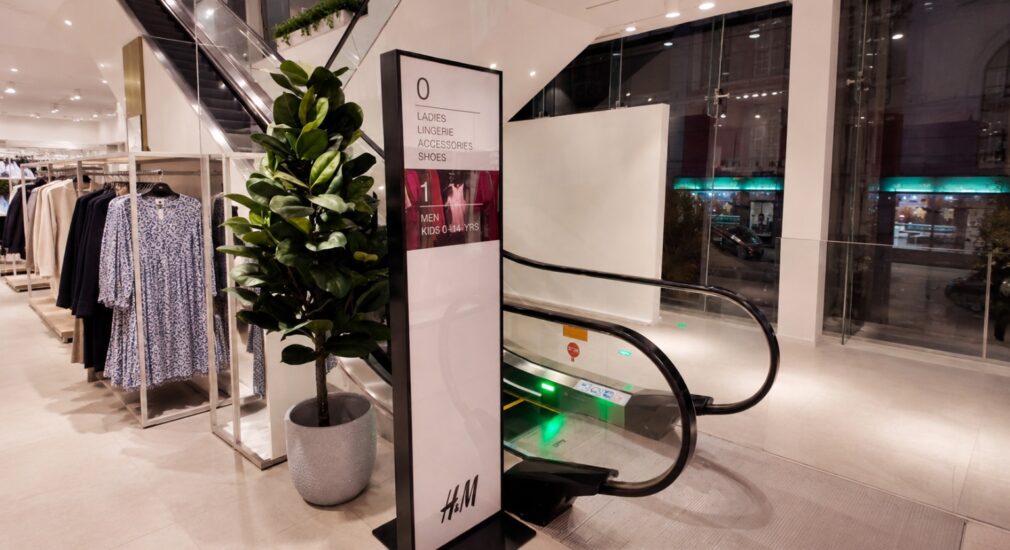
Mall Wayfinding Signage helps visitors understand their location and identify their destination. It can guide customers towards retail zones, restaurants, cinemas, lifts, escalators, parking areas and other facilities.
To achieve consistent navigation, a successful Shopping Mall Wayfinding system follows a clear information hierarchy. Key information should remain easy to identify from an appropriate distance, while arrows, symbols, typography and colour coding should remain consistent throughout the property.
Wayfinding systems can include wall-mounted signs, suspended signs, blade signs, directional panels, freestanding signs and digital navigation systems. Consequently, visitors can move between different areas with greater confidence.
3. Mall Directory Signage
Mall Directory Signage gives visitors an organised overview of stores, facilities and destinations. Traditional directories can use printed or fabricated panels, whereas larger developments can incorporate digital displays.
Ideally, project teams should position directories where visitors naturally pause, including entrances, lift lobbies, escalator zones and major circulation nodes.
Clear categorisation and consistent typography make Shopping Mall Directory Signs easier to understand. Furthermore, well-structured information allows visitors to locate stores and facilities without unnecessary confusion.
4. Retail Store & Tenant Signage
Every retail tenant needs strong brand identification without disrupting the visual character of the overall shopping centre.
Retail Store Signage, Tenant Signage and Shop Front Signage can incorporate illuminated letters, fabricated metal, acrylic, aluminium, channel letters or custom brand elements.
For multi-brand shopping centres, operators can establish signage guidelines that control sign dimensions, mounting positions, illumination and materials. At the same time, these guidelines can give individual tenants enough flexibility to maintain their distinctive brand identity.
5. Parking & Traffic Signage
Large commercial developments require clear guidance before visitors enter the retail environment.
Parking Signage for Malls and Parking Wayfinding Signage can identify entrances, exits, parking zones, accessible parking, electric vehicle areas, loading areas and pedestrian connections.
When designing outdoor parking signs, project teams must consider visibility, environmental exposure, mounting height, structural stability and illumination requirements. Additionally, large developments can use colour coding and zone identification to help visitors remember where they parked.
6. Illuminated & LED Mall Signage
Illumination can significantly improve signage visibility while creating a stronger connection between signage and architectural lighting.
LED Mall Signage, Backlit Mall Signage, Frontlit Mall Signage, illuminated 3D letters and custom lightbox systems can serve both indoor and outdoor applications.
To achieve the desired visual effect, designers should consider the sign’s dimensions, viewing distance, ambient light, material, surface finish and illumination requirements. For premium projects, manufacturers can integrate LED technology discreetly so the illumination enhances the typography without overpowering the architectural environment.
7. Digital & Smart Mall Signage
Technology continues to shape modern retail environments. Digital Mall Signage, interactive directories and smart wayfinding systems allow operators to provide dynamic information that static signage cannot easily deliver.
Digital systems can display store directories, promotional content, event information, navigation assistance and real-time updates. As a result, mall operators can respond more efficiently to changing information and visitor requirements.
In larger shopping destinations, Interactive Wayfinding Signage can complement conventional directional signage. Furthermore, combining digital navigation with physical signage can create a more responsive and convenient visitor experience.
Architectural Approach to Mall Signage
The most effective Architectural Mall Signage is designed as part of the building rather than added as an afterthought.
Signage designers, architects and lighting consultants need to consider the relationship between signs and surrounding materials, façade geometry, interior finishes, ceiling heights, pedestrian circulation and existing lighting.
Material selection is equally important. Aluminium, stainless steel, acrylic, fabricated metal, glass and composite materials can be combined according to the application. Finishes may include powder coating, anodising, brushed metal effects or project-specific custom finishes.
For outdoor applications, the design must also consider environmental exposure, corrosion resistance, structural support, water protection and maintenance access.
This integrated approach allows Custom Mall Signage to support both practical navigation and the architectural character of the development.
Mall Signage for Different Commercial Environments
Not every shopping destination requires the same signage strategy. A luxury retail centre may prioritise discreet, refined materials and minimal visual clutter, while a large family-oriented shopping mall may require highly visible directional information, colourful zoning and extensive facility identification.
Typical environments include:
- Shopping malls
- Shopping centres
- Retail parks
- Lifestyle destinations
- Mixed-use developments
- Department stores
- Luxury retail destinations
- Entertainment centres
- Food and beverage zones
- Cinema and leisure complexes
- Commercial developments
- Hospitality-retail integrated projects
A professional Mall Signage Design therefore begins with understanding the building, visitor profile, tenant mix, circulation pattern and architectural language before defining the signage system.
Mall Signage Manufacturing in India
India has become an important manufacturing base for architectural products and customized commercial solutions. Luzion’s manufacturing operations in Ahmedabad, Gujarat support customized signage and lighting requirements for architectural and commercial projects.
As a Mall Signage Manufacturer India, Luzion can develop signage solutions around project-specific dimensions, materials, finishes, illumination requirements, branding guidelines and installation conditions.
The manufacturing approach can include design coordination, material selection, fabrication, LED integration, finishing, quality checks and project-specific packaging for domestic or international delivery.
For international projects, the ability to coordinate customized manufacturing from India can provide architects, developers, contractors and procurement teams with a practical route to source bespoke signage solutions for different markets.
The same manufacturing foundation supports Luzion’s role as a Mall Signage Exporter India, serving projects and professional clients across the GCC, Middle East, USA, UK, Europe, Asia and other international markets.
Mall Signage Applications Across Retail Environments
A comprehensive Mall Signage Solutions strategy needs to work across every stage of the visitor journey. From the first approach to the building through parking, entrances, retail floors, food courts and entertainment areas, each sign should provide information at the right location and viewing distance.
For architects, developers, mall operators and contractors, signage planning should therefore consider both the functional requirement and the architectural character of the development.
| Application | Signage Type | Typical Materials | Illumination | Key Considerations |
|---|---|---|---|---|
| Main Entrance | Mall Entrance Signage | Aluminium, acrylic, stainless steel, fabricated metal | LED / backlit / frontlit | Brand visibility, scale, architectural integration |
| Retail Floors | Mall Wayfinding Signage | Aluminium, acrylic, metal | LED / non-illuminated | Legibility, viewing distance, navigation |
| Lift & Escalator Zones | Floor Directory Signage | Aluminium, acrylic, glass | LED / non-illuminated | Information hierarchy and accessibility |
| Storefronts | Retail Store Signage | Acrylic, aluminium, stainless steel | LED / backlit | Tenant branding and design guidelines |
| Parking Areas | Parking Wayfinding Signage | Aluminium, steel, ACP | LED / reflective | Visibility, durability, traffic flow |
| Food Court | Food Court Signage | Aluminium, acrylic, fabricated metal | LED / digital | Brand visibility and customer movement |
| Outdoor Plaza | Pylon Signage / Totem Signage | Aluminium, steel, acrylic | LED | Structural stability and weather exposure |
| Emergency Areas | Emergency Signage | Aluminium, acrylic, approved materials | LED / non-illuminated | Visibility and applicable regulations |
| Digital Zones | Digital Mall Signage | Metal enclosure + display system | Digital display | Brightness, viewing angle, connectivity |
| Building Exterior | Architectural Signage | Aluminium, stainless steel, metal, acrylic | LED / backlit | Façade integration and environmental exposure |
Mall Wayfinding and Visitor Navigation
Wayfinding is one of the most important functions within a large shopping environment. A visitor should be able to understand their location, identify available destinations and determine the correct direction without unnecessary confusion.
A professionally planned Mall Wayfinding Signage system normally combines several layers of information:
- Identification – communicates where the visitor is.
- Direction – indicates where the visitor needs to go.
- Confirmation – reassures the visitor that they are moving in the correct direction.
- Destination identification – identifies the final location.
- Information – provides additional details such as facilities, services or tenant locations.
This hierarchy becomes particularly important in multi-level shopping centres where lifts, escalators, corridors, atriums and multiple entrances can create complex circulation patterns.
Wayfinding Design Considerations
An effective Shopping Mall Wayfinding system should consider:
- Viewing distance
- Typography and letter height
- Arrow design
- Symbol and iconography
- Colour coding
- Contrast
- Sign location
- Mounting height
- Directional hierarchy
- Lighting conditions
- Accessibility
- Architectural surroundings
The goal is not to fill the environment with signs. The objective is to provide the right information at the right decision point.
Mall Directory and Information Systems
A mall directory acts as a central information point where customers can identify stores, restaurants, entertainment facilities and other destinations.
Traditional Shopping Mall Directory Signs can use static tenant listings, floor plans and category information. However, larger developments may benefit from digital directory systems that can be updated as tenants change.
A well-designed directory should maintain a clear visual hierarchy between:
- Shopping categories
- Individual brands
- Floor information
- Facilities
- Restrooms
- Lifts
- Escalators
- Parking
- Food and beverage
- Entertainment
- Emergency facilities
For premium retail environments, the directory itself can become an architectural feature through carefully selected materials, integrated illumination and refined detailing.
Illuminated Mall Signage
Lighting plays a significant role in how signage is perceived, particularly in entrances, façades, atriums and high-end retail environments.
Illuminated Mall Signage can use different techniques depending on the desired appearance and construction.
Backlit Signage
Backlit Mall Signage creates a controlled halo or illuminated outline behind letters, logos or panels. It can produce a sophisticated appearance on façades and premium interiors.
Frontlit Signage
Front illumination can provide stronger direct visibility and is useful where typography or branding needs to remain prominent from a distance.
Edge-Lit Signage
Edge Lit Signage can create a subtle contemporary appearance by introducing light through the edge of acrylic, glass or specially designed materials.
Illuminated 3D Letters
Illuminated 3D Letters can combine dimensional typography with integrated LEDs. The construction can be customised according to logo geometry, letter depth, finish and required illumination effect.
LED Mall Signage
Modern LED technology provides flexibility for both indoor and outdoor applications.
LED Mall Signage can be engineered around the dimensions and construction of each sign rather than using one standard configuration for every application.
Important factors include:
- LED module arrangement
- Light distribution
- Required brightness
- Sign depth
- Material transparency
- Heat management
- Driver selection
- Power consumption
- Maintenance access
- Operating environment
For outdoor applications, the LED system and enclosure should be designed according to the expected environmental exposure. The appropriate IP Rating should be determined by the actual application, enclosure design and project requirements rather than applying one rating universally.
Digital and Smart Mall Signage
Digital communication is becoming increasingly relevant to contemporary retail environments.
Digital Mall Signage can provide information that changes throughout the day. Store directories, promotional campaigns, event information, visitor announcements and navigation content can be managed through digital platforms.
More advanced Smart Wayfinding Solutions can combine interactive displays with digital maps and location-based information.
Potential applications include:
- Interactive mall directories
- Touchscreen information kiosks
- Digital tenant directories
- Promotional displays
- Event information
- Interactive maps
- Indoor navigation
- Real-time announcements
- Retail campaign communication
Digital systems should complement rather than completely replace physical signage. Core directional information may still require static, highly visible signage that works immediately without depending on an electronic interface.
Indoor Mall Signage vs Outdoor Mall Signage
The environment significantly influences signage design and construction.
| Factor | Indoor Mall Signage | Outdoor Mall Signage |
|---|---|---|
| Environment | Controlled | Weather-exposed |
| Material Selection | Aluminium, acrylic, metal, glass | Aluminium, stainless steel, steel, acrylic |
| Illumination | LED / digital / ambient | LED / backlit / frontlit |
| IP Requirement | Application dependent | Generally requires greater environmental protection |
| Structural Requirement | Usually lower | Wind load and structural support may be important |
| Finish | Decorative / architectural | Durable and weather-resistant |
| Maintenance | Easier access | Access planning is important |
| Temperature | Relatively controlled | High heat / cold / humidity depending on location |
| Corrosion | Lower risk in normal conditions | Coastal and humid locations require additional consideration |
| Visibility | Controlled lighting | Coastal and humid locations require additional consideration |
For projects in regions such as the UAE and wider GCC, high ambient temperatures, intense sunlight, dust and outdoor exposure should be considered during material and component selection.
In coastal locations, corrosion resistance and appropriate surface finishing can become particularly important. For projects in India, Europe, the UK, USA or Asia, the same principle applies: environmental conditions should be assessed before finalising the signage specification.
Technical Data for Mall Signage
There is no single technical specification suitable for every mall signage project. Dimensions, materials, illumination, power, mounting and environmental protection should be developed according to the sign type and project conditions.
| Technical Parameter | Project Consideration |
|---|---|
| Sign Type | Illuminated, non-illuminated, digital or hybrid |
| Material | Aluminium, stainless steel, acrylic, ACP, fabricated metal or project-specific material |
| Illumination | LED, backlit, frontlit or edge-lit |
| CCT | Selected according to architectural and branding requirements |
| CRI | Determined according to visual and branding requirements |
| IP Rating | Selected according to indoor/outdoor exposure and enclosure design |
| IK Rating | Considered where impact resistance is required |
| Power Supply | Project-specific LED driver / power supply |
| Dimming | DALI, 0–10V, PWM or other compatible control where applicable |
| Mounting | Wall-mounted, ceiling-mounted, suspended, pole-mounted or freestanding |
| Finish | Powder coating, anodising, brushed finish, custom paint or other specified finish |
| Dimensions | Based on viewing distance, architecture and branding guidelines |
| Maintenance | Front or rear access according to construction |
| Operating Environment | Indoor, outdoor, high-temperature, humid or coastal conditions |
| Customisation | Size, shape, logo, typography, colour, material and illumination |
Technical values should be confirmed during detailed design and engineering rather than treated as universal specifications. This approach allows the signage system to be adapted to different buildings, climates, materials and project requirements.
Materials Used for Mall Signage
Material selection directly influences durability, appearance, weight, fabrication and maintenance.
Aluminium
Aluminium is widely suitable for fabricated signage because it offers a practical balance between weight, strength, finishing options and corrosion resistance.
Stainless Steel
Stainless steel can provide a premium appearance for architectural signage, particularly where polished, brushed or metallic finishes are required.
Acrylic
Acrylic is commonly used for illuminated letters, panels, diffusers and decorative elements because it can provide controlled light transmission and a clean visual finish.
Fabricated Metal
Custom-fabricated metal can be used for dimensional letters, logos, architectural structures, directional systems and bespoke signage components.
ACP and Composite Materials
Composite panels can be useful for lightweight sign faces, cladding elements and certain exterior applications when selected according to project requirements.
The final material combination should consider the sign’s location, size, illumination method, expected lifespan, maintenance strategy and architectural intent.
Custom Mall Signage for Different Brands
Large shopping centres often contain multiple international and local brands, each with its own identity. A Custom Mall Signage system should therefore provide enough flexibility for individual branding while maintaining the visual standards of the development.
Customisation can include:
- Brand logos
- Typography
- Corporate colours
- Sign dimensions
- 3D letters
- Illumination style
- Material finish
- Mounting method
- Directional graphics
- Floor and zone identification
This is particularly important for premium shopping centres where inconsistent signage can reduce the visual quality of an otherwise carefully designed environment.
Manufacturing and Project Coordination
Successful signage projects depend on more than fabrication alone. The process may involve design development, shop drawings, material approvals, prototype reviews, illumination testing, manufacturing, finishing, quality inspection, packaging and installation coordination.
For architects, developers and procurement teams, partnering with an experienced Mall Signage Manufacturer can help maintain consistency between the approved design intent and the finished signage installation.
Luzion’s manufacturing approach in Ahmedabad, Gujarat supports customised signage and lighting requirements for domestic and international projects. This enables clients to work with an Architectural Signage Manufacturer, Retail Signage Manufacturer and Mall Signage Exporter India for project-specific design, fabrication and coordination requirements.
Mall Signage Design Principles
Every mall has a different architectural character, visitor flow and commercial environment. Effective Mall Signage Design therefore needs to integrate branding, navigation, architecture, illumination and human behaviour into one cohesive visual system.
The design process should consider building entrances, circulation routes, floor layouts, tenant distribution, parking access and key decision points. Clear hierarchy and consistent placement help visitors understand where they are, where they need to go and how different areas of the development are connected.
From illuminated retail signs and directory systems to wayfinding elements and architectural identification, each signage component should complement the mall environment while remaining highly functional and easy to recognise.
Visibility and Legibility
Mall Wayfinding Signage must remain readable from an appropriate viewing distance. Letter height, typeface, contrast, sign proportions and illumination all influence legibility.
Large signs positioned along major circulation routes may require greater scale, while signs in lift lobbies or smaller corridors can use more compact formats.
Information Hierarchy
Not every piece of information has equal importance. A visitor should immediately identify the primary destination before secondary information.
A well-planned signage hierarchy can distinguish:
- Building identification
- Floor identification
- Directional information
- Retail categories
- Individual tenants
- Amenities
- Parking
- Emergency information
- Accessibility facilities
This hierarchy helps reduce visual clutter and improves the overall effectiveness of Shopping Mall Signage Solutions.
Consistent Visual Language
A large shopping centre may contain hundreds of signs distributed across different floors and zones. Consistent typography, colours, symbols, materials, mounting details and illumination create a unified environment.
For multi-tenant developments, a signage guideline can define permitted sign sizes, positions, materials, finishes, illumination methods and branding requirements.
Wayfinding Strategy for Large Shopping Centres
Wayfinding should be considered during the architectural planning stage rather than added after construction.
A professional Shopping Mall Wayfinding strategy can map the visitor journey from:
Arrival → Parking → Entrance → Information Point → Main Circulation → Retail Zone → Destination → Exit
Major decision points should be identified throughout this journey.
For example, a visitor approaching an escalator may need to know which floor contains a particular retail category. At the top of the escalator, a confirmation sign can reassure the visitor that they have reached the intended level.
This creates a continuous navigation system rather than isolated directional signs.
Zone Identification
Large developments can use different colours, numbers, letters or graphic elements to identify zones.
Examples include:
- North / South zones
- Retail districts
- Luxury zones
- Food and beverage areas
- Entertainment zones
- Parking sections
- Building wings
- Floor levels
Mall Directory Signage can then connect these zones with individual stores and facilities.
Accessibility and Inclusive Signage
Accessibility should be incorporated into signage planning from the beginning.
Depending on the market and project requirements, Accessibility Signage can include tactile elements, Braille, high-contrast graphics, accessible symbols and appropriately positioned information.
Important locations may include:
- Accessible entrances
- Lifts
- Accessible restrooms
- Parking
- Ramps
- Emergency routes
- Public facilities
The exact requirements should be established according to applicable local building regulations, accessibility standards and project specifications.
For international developments, signage requirements may differ between India, the UAE, GCC countries, the UK, USA and European markets. Therefore, project-specific compliance review should form part of the design process.
Signage Illumination and Architectural Lighting Integration
For a company operating across architectural lighting and signage, the relationship between signage and illumination can provide significant design value.
Illuminated Mall Signage should not be treated as an isolated light source. Its brightness, colour, distribution and visual character should complement surrounding architectural lighting.
Potential coordination areas include:
- Façade lighting
- Entrance lighting
- Retail lighting
- Landscape lighting
- Interior architectural lighting
- Feature lighting
- Digital displays
- Ambient lighting
A balanced approach prevents signs from becoming excessively bright compared with their surroundings.
For premium developments, integrated Architectural LED Signage can create a cohesive relationship between branding and the architecture.
Technical Engineering Considerations
Signage engineering becomes particularly important as sign dimensions increase or when installations are exposed to external environmental conditions.
Structural Support
Large Pylon Signage, monument signs, façade letters and suspended signs may require structural analysis and suitable support systems.
The final design may need to consider:
- Sign weight
- Mounting structure
- Wind loads
- Fixing method
- Building substrate
- Access for installation
- Maintenance requirements
- Local structural requirements
Outdoor signage should be engineered according to the actual project location and installation conditions.
Electrical Integration
Illuminated signs require suitable LED systems, drivers, wiring and power distribution.
The electrical design should consider:
- Connected load
- Power supply
- Driver location
- Cable routing
- Protection
- Accessibility
- Switching
- Dimming
- Control integration
- Maintenance
Where required, signage illumination can be coordinated with wider building lighting-control systems.
Thermal Management
LED components generate heat, particularly in enclosed illuminated letters and boxes. Proper construction and ventilation can help maintain component performance.
Sign depth, material, LED density, internal airflow and component placement should therefore be considered during engineering.
IP and IK Protection
Environmental protection is particularly relevant to outdoor and high-traffic signage.
IP Rating relates to protection against the ingress of solids and water, while IK Rating relates to mechanical impact resistance.
The required level should be selected according to the actual application.
For example:
- Indoor directories may have relatively low environmental exposure.
- Covered outdoor entrances may require additional protection.
- Exposed façade signage may require higher protection.
- Parking and public areas may require impact-resistant construction.
- Coastal environments may require additional corrosion considerations.
It is therefore better to specify protection levels according to the project environment rather than applying the same rating to every signage type.
Mall Signage for Hot, Coastal and High-Exposure Environments
International mall projects can operate in significantly different environmental conditions.
UAE and GCC
Mall Signage UAE and wider GCC applications may experience intense sunlight, high ambient temperatures, dust and, in some locations, humidity or coastal exposure.
Material finishes, LED components, adhesives, electrical components, enclosure construction and maintenance access should therefore be selected carefully.
For Mall Signage Saudi Arabia, Mall Signage Qatar, Mall Signage Kuwait, Mall Signage Oman and Mall Signage Bahrain, project-specific environmental and local compliance requirements should be considered during engineering.
India
India includes a wide range of climatic conditions, from hot and dry regions to humid coastal environments and areas with heavy seasonal rainfall.
Mall Signage Solutions India therefore require location-specific consideration of materials, finishes, illumination, waterproofing and maintenance.
Europe and UK
Projects in the UK and Europe may require different approaches to weather resistance, illumination levels, materials, accessibility and local regulations.
For Shopping Centre Signage UK and European projects, detailed project specifications should be coordinated with the architect, signage consultant, contractor and relevant authorities.
USA
Large retail developments across the USA can have different municipal, structural, electrical and signage regulations.
Mall Signage USA projects should therefore be developed according to the requirements of the relevant state, city, property and development authority.
Mall Signage Manufacturing Process
Professional manufacturing converts the approved design into a durable, installation-ready signage system.
A typical Mall Signage Manufacturing workflow can include:
1. Design Development
The signage concept is developed around architectural drawings, brand guidelines, dimensions and application requirements.
2. Technical Drawings
Detailed drawings define dimensions, materials, fabrication methods, mounting details and illumination systems.
3. Material Selection
Materials are selected according to indoor/outdoor exposure, visual requirements, durability, weight and project specifications.
4. Fabrication
Components are precision-cut, formed, welded, assembled or fabricated according to the approved design.
5. Surface Finishing
Depending on the project, finishes can include powder coating, anodising, brushed metal, polished metal, custom paint or other specified treatments.
6. LED Integration
For LED Mall Signage, LED modules, wiring, drivers and diffusers are integrated into the sign construction.
7. Assembly and Quality Inspection
The completed sign is inspected for dimensions, finish, assembly, illumination and construction quality.
8. Packaging and Dispatch
Finished signage is carefully packaged for transportation, particularly where products are being exported internationally.
Quality Control for Custom Mall Signage
Quality control is essential when signage is being produced for a large commercial development where multiple signs must maintain visual consistency.
Inspection can include:
- Dimensional accuracy
- Material quality
- Surface finish
- Colour consistency
- Logo accuracy
- Letter alignment
- Illumination uniformity
- Electrical connections
- Mounting components
- Packaging quality
For large projects, sample approval or prototype development can help verify the appearance before full-scale production.
Installation and Maintenance
Installation should be planned according to the building structure, access conditions and sign type.
Different installations may require:
- Wall fixing
- Ceiling suspension
- Pole mounting
- Freestanding structures
- Façade mounting
- Embedded mounting
- Specialist access equipment
For large Architectural Signage installations, coordination with architectural, electrical and structural teams can help avoid conflicts during site execution.
Maintenance access should also be considered during design. Replaceable LED modules, accessible drivers and suitable service panels can simplify future maintenance.
Customisation for International Mall Projects
A major advantage of working with a specialist Custom Mall Signage Manufacturer is the ability to adapt each system to the project rather than relying on standard off-the-shelf products.
Customisation can cover:
- Dimensions
- Logo geometry
- Typography
- Materials
- Colours
- Surface finishes
- Illumination
- Mounting
- Graphic elements
- Digital integration
- Accessibility features
This flexibility is valuable for international retail developments where architectural concepts, tenant requirements and local standards can differ significantly.
Global Mall Signage Solutions
Luzion’s approach to Global Mall Signage Solutions combines Indian manufacturing with international project requirements.
The company can support architectural and commercial developments requiring customised signage for:
- India
- UAE
- Saudi Arabia
- Qatar
- Kuwait
- Oman
- Bahrain
- UK
- USA
- Europe
- Asia
- Australia
- New Zealand
India
Luzion manufactures from Ahmedabad, Gujarat and can support Mall Signage Manufacturer India requirements for major commercial markets including Ahmedabad, Mumbai, Delhi, Gurugram, Noida, Bengaluru, Hyderabad, Chennai, Pune, Kolkata, Jaipur, Surat, Vadodara and other cities.
UAE and GCC
For Mall Signage Solutions UAE and GCC developments, solutions can be adapted for shopping centres, retail destinations, mixed-use developments and luxury commercial environments in Dubai, Abu Dhabi, Sharjah, Riyadh, Jeddah, Doha, Kuwait City, Muscat and Manama.
UK and Europe
Shopping Centre Signage UK and European projects can include wayfinding, retail identification, architectural signage, illuminated branding and customised information systems.
Markets may include London, Manchester, Birmingham, Paris, Milan, Rome, Berlin, Munich, Madrid, Barcelona, Amsterdam, Zurich, Vienna and other major commercial centres.
USA
Mall Signage USA applications can support shopping centres, retail developments, lifestyle destinations and commercial projects across major markets such as New York, Los Angeles, Miami, Chicago, Houston, Dallas, San Francisco, Seattle, Boston and Atlanta.
Asia-Pacific
Luzion can also support Mall Signage Solutions Asia and Asia-Pacific markets, including Singapore, Malaysia, Thailand, Indonesia, Japan, South Korea, China, Australia and New Zealand.
The exact manufacturing, documentation, compliance and installation requirements should always be established according to the individual project and destination market.
Why Choose a Specialist Mall Signage Manufacturer?
Choosing the right manufacturing partner is important when a project involves multiple signage types, custom dimensions, integrated illumination and international delivery.
A specialist Mall Signage Manufacturer should be able to understand the relationship between architecture, branding, wayfinding, materials, illumination, fabrication and installation.
Luzion combines architectural lighting expertise with customised manufacturing capabilities, allowing signage requirements to be considered alongside the broader lighting and architectural environment.
For developers, architects, contractors, procurement managers and lighting professionals, this integrated perspective can support a more coordinated approach to commercial signage projects.
Mall Signage Solutions in India
India’s rapidly developing retail and commercial sector has created demand for professionally designed Mall Signage Solutions India that combine navigation, tenant branding, architectural identity and visitor communication.
From large metropolitan shopping centres to premium mixed-use developments, signage needs to work across entrances, retail floors, parking areas, food courts, entertainment zones and service facilities.
Luzion manufactures customised signage solutions from Ahmedabad, Gujarat, supporting projects that require architectural detailing, illuminated elements, retail branding, wayfinding systems and project-specific fabrication.
As a Mall Signage Manufacturer India, Luzion can support architects, developers, contractors, retail brands and procurement teams with customised solutions for projects across major markets.
Mall Signage in Gujarat and Ahmedabad
Ahmedabad is an important manufacturing and commercial centre in Gujarat. Luzion’s manufacturing base enables project-specific signage development for local, national and international requirements.
Mall Signage Manufacturer Ahmedabad solutions can include:
- Entrance identification
- Retail storefront signage
- Mall directories
- Directional signage
- Parking signage
- Illuminated logos
- 3D letters
- Wayfinding systems
- Architectural signage
- Custom fabricated signage
Luzion can also support projects across Surat, Vadodara, Rajkot and Gandhinagar, as well as other commercial locations throughout Gujarat.
Major Indian Markets
Luzion’s Shopping Mall Signage Manufacturer India capabilities can serve projects across major commercial cities including:
- Mumbai
- Pune
- Nagpur
- Bengaluru
- Hyderabad
- Chennai
- Delhi
- New Delhi
- Gurugram
- Noida
- Kolkata
- Jaipur
- Lucknow
- Kochi
- Thiruvananthapuram
- Chandigarh
- Indore
- Bhopal
- Visakhapatnam
- Bhubaneswar
The signage specification can be adapted according to the architecture, climate, brand guidelines, project scale and application.
Mall Signage Solutions in UAE & GCC
The UAE and wider GCC region represent important markets for premium retail, mixed-use and hospitality developments.
Mall Signage Solutions UAE can be developed for shopping malls, luxury retail destinations, lifestyle centres, commercial developments and integrated retail environments.
Dubai, Abu Dhabi and Sharjah contain diverse retail environments where signage needs to balance strong visibility with sophisticated architectural design.
Mall Signage Dubai
Mall Signage Dubai projects may require high-end illuminated branding, architectural entrance signage, tenant identification, digital directories and sophisticated wayfinding systems.
For luxury retail environments, material finishes, illumination quality, dimensional accuracy and integration with the surrounding architecture are particularly important.
Mall Signage Abu Dhabi
Mall Signage Abu Dhabi applications can include indoor and outdoor signage, entrance identification, directional systems, parking guidance and retail branding.
Outdoor installations should be designed according to local environmental exposure, building conditions and project specifications.
Wider GCC Markets
Luzion can support Mall Signage Manufacturer GCC requirements for:
- Saudi Arabia
- Qatar
- Kuwait
- Oman
- Bahrain
In Saudi Arabia, projects may include Mall Signage Riyadh, Mall Signage Jeddah, Dammam and other commercial centres.
In Qatar, Mall Signage Doha can cover retail destinations, mixed-use developments and commercial environments.
In Kuwait, Mall Signage Kuwait City can include wayfinding, tenant branding, illuminated signage and architectural identification.
In Oman, Mall Signage Muscat can be developed for indoor and outdoor retail applications.
In Bahrain, Mall Signage Manama can support shopping centres and commercial developments requiring customised signage systems.
For GCC projects, material durability, UV exposure, heat, dust, humidity and coastal conditions should be considered during design and manufacturing.
Mall Signage Solutions in the UK
The UK retail environment requires signage systems that combine clear communication with architectural sensitivity.
Shopping Centre Signage UK can include wayfinding, directory systems, retail identification, parking guidance, accessibility signage, architectural branding and illuminated elements.
Major markets include:
- London
- Manchester
- Birmingham
- Leeds
- Liverpool
- Bristol
- Glasgow
- Edinburgh
- Cardiff
For UK projects, the final signage design should be coordinated with the relevant architectural, accessibility, electrical, fire-safety and local project requirements.
Mall Signage Solutions in the USA
The scale and diversity of American retail developments create demand for flexible Mall Signage USA solutions.
Shopping centres, lifestyle destinations, outlet developments and mixed-use retail projects may require extensive combinations of parking signage, entrance identification, tenant signs, directional systems, directories and architectural branding.
Major commercial markets include:
- New York
- Los Angeles
- Miami
- Chicago
- Houston
- Dallas
- San Francisco
- Seattle
- Boston
- Atlanta
- Las Vegas
- Washington, DC
For each US project, signage dimensions, structural requirements, electrical specifications, accessibility considerations and local regulations should be established according to the applicable jurisdiction.
Mall Signage Solutions Across Europe
European retail architecture often combines strong architectural concepts with carefully controlled visual communication.
Mall Signage Solutions Europe can support shopping centres, retail parks, mixed-use developments and premium commercial destinations.
Key markets include:
Italy
Mall Signage Italy for Milan, Rome and other commercial destinations can combine architectural materials, refined finishes and illuminated branding.
Germany
Mall Signage Germany can support shopping centres and retail developments in Berlin, Munich, Frankfurt and other cities.
France
Mall Signage France can include shopping centre wayfinding, retail identification and architectural signage, particularly in Paris and other major commercial markets.
Spain
Mall Signage Spain can support retail developments in Madrid, Barcelona and other urban destinations.
Other European Markets
Luzion can also support requirements across:
- Netherlands
- Switzerland
- Austria
- Belgium
- Portugal
- Poland
- Sweden
- Denmark
- Norway
- Ireland
European projects should always be developed around the specific architectural, environmental and regulatory requirements of the destination country.
Mall Signage Solutions in Asia
Asia represents a diverse retail market ranging from luxury shopping districts to large-scale integrated shopping centres.
Mall Signage Solutions Asia can include architectural signage, illuminated branding, wayfinding, tenant identification, digital directories and parking guidance.
Potential markets include:
- China
- Japan
- South Korea
- Singapore
- Malaysia
- Thailand
- Indonesia
- Philippines
- Vietnam
- Hong Kong
Major cities include Shanghai, Beijing, Tokyo, Seoul, Singapore, Kuala Lumpur, Bangkok, Jakarta and Manila.
Each market may require different approaches to language, typography, symbols, accessibility, materials and local compliance.
Australia and New Zealand
Modern shopping centres across Australia and New Zealand can require durable outdoor signage combined with refined interior wayfinding.
Mall Signage Solutions Australia can support applications in Sydney, Melbourne, Brisbane, Perth and Adelaide.
For New Zealand, projects in Auckland, Wellington and Christchurch may require signage designed for local architectural and environmental conditions.
Outdoor systems should consider UV exposure, weather, corrosion, structural loading and maintenance access.
Mall Signage for Luxury Retail Environments
Luxury shopping centres require a different level of attention to detail.
Luxury Mall Signage should complement premium architecture rather than compete with it. Materials, proportions, typography, illumination and finishes must be carefully controlled.
Potential solutions include:
- Brushed stainless steel
- Premium aluminium
- Custom-finished metal
- Acrylic
- Illuminated 3D letters
- Backlit logos
- Minimalist directional systems
- Bespoke directory panels
- Integrated architectural signage
For luxury developments, a consistent signage language can create visual continuity across entrances, retail corridors, lift lobbies, restaurants and public spaces.
Mall Signage for Retail Branding
Retail tenants rely on signage to communicate their brand identity from a distance.
Retail Signage Solutions can be customised around individual brand guidelines while remaining compatible with the mall’s overall signage standards.
Important elements can include:
- Logo proportions
- Brand colours
- Typography
- Illumination
- Letter depth
- Material
- Surface finish
- Mounting position
A coordinated approach allows individual tenants to remain recognisable without creating visual inconsistency across the shopping centre.
Why Choose Luzion for Mall Signage Solutions?
Luzion combines architectural lighting expertise, customised manufacturing and international project support to develop signage solutions for commercial and retail environments.
The company’s approach can support projects requiring:
- Custom architectural signage
- Mall wayfinding systems
- Illuminated signage
- LED signage
- Retail tenant signage
- Entrance identification
- Directory systems
- Parking signage
- Digital signage integration
- Bespoke fabrication
- Project-specific finishes
- International export
Manufacturing from Ahmedabad, Gujarat, India allows Luzion to work with architects, developers, contractors, lighting designers, consultants and procurement teams on customised requirements.
As an International Mall Signage Manufacturer and Mall Signage Exporter India, Luzion can support projects across India and international markets while coordinating product development around the requirements of each project.
Mall Signage Project Workflow
A structured workflow helps ensure that design intent is maintained through manufacturing and installation.
Consultation
Project requirements, architecture, brand guidelines, applications and target locations are reviewed.
Design Development
Signage concepts are developed according to the architectural environment and visitor circulation.
Technical Coordination
Dimensions, materials, illumination, mounting, power requirements and environmental considerations are established.
Prototype and Approval
Where required, samples or prototypes can be developed for review before production.
Manufacturing
Approved signage is fabricated using project-specific materials, finishes and construction methods.
Quality Inspection
Dimensions, finishes, illumination and assembly are checked before dispatch.
Packaging and Export
For international projects, completed signage is prepared for secure transportation and project delivery.
Installation Coordination
Installation requirements can be coordinated with contractors and site teams according to the project scope.
Frequently Asked Questions
What are Mall Signage Solutions?
Mall Signage Solutions are integrated systems of directional, informational, branding, architectural, illuminated and digital signs used throughout shopping malls and retail developments to improve navigation, communication and brand visibility.
What types of signage are used in shopping malls?
Common types include Mall Wayfinding Signage, directory signs, entrance signs, tenant signage, parking signs, directional signs, illuminated signage, safety signs, accessibility signage, pylon signs and digital signage.
What materials are used for mall signage?
Common materials include aluminium, stainless steel, acrylic, fabricated metal, ACP and other project-specific materials. The selection depends on location, design, durability, illumination and environmental conditions.
Can mall signage be illuminated with LED?
Yes. LED Mall Signage can use backlighting, front lighting, edge lighting or integrated LED modules depending on the desired appearance and construction.
What IP rating is suitable for outdoor mall signage?
There is no universal IP rating for every application. The required protection should be determined by the sign’s location, enclosure construction, exposure to water and dust, electrical components and project specifications.
Can mall signage be customised?
Yes. Custom Mall Signage can be developed around specific dimensions, logos, typography, colours, materials, finishes, illumination systems and mounting requirements.
Does Luzion manufacture and export mall signage?
Luzion manufactures customised architectural lighting and signage solutions in Ahmedabad, Gujarat, India and supports international project requirements across India, GCC, UAE, USA, UK, Europe, Asia, Australia and other markets.
Build a Bespoke Mall Signage System with Luzion
A successful shopping environment requires signage that is clear, durable, architecturally integrated and consistent with the identity of the development.
From Mall Signage Solutions and Mall Wayfinding Signage to illuminated branding, retail tenant signage, digital directories and custom architectural elements, every component can be developed according to the project’s functional and visual requirements.
Luzion works with architects, developers, contractors, lighting designers, consultants and procurement teams to develop customised signage solutions for retail and commercial environments.
For projects in India, the UAE, GCC, USA, UK, Europe, Asia, Australia or New Zealand, discuss your requirements with Luzion for a tailored Custom Mall Signage solution manufactured in India and developed for international architectural applications.
Related posts
21 Oct 2026
Channel Letter Signage in UAE: Types, Materials and Applications
Channel letter signage is widely used by retail stores, hotels, restaurants, shopping malls and commercial buildings to display business names,…
21 Oct 2026
3D Letter Signage in UAE: Materials, Finishes and Applications
In a competitive commercial environment, signage plays an important role in how customers recognise a brand, locate a business and…
21 Oct 2026
Types of Illuminated Signage: A Guide for UAE & GCC Projects
Illuminated signage plays an important role in how commercial buildings, hotels, retail developments and corporate spaces communicate their identity. In…
17 Oct 2026
Commercial Signage Solutions UAE & GCC
How to Choose Commercial Signage Solutions in the UAE & GCC Commercial signage plays an important role in how people…
02 Oct 2026
Canadian Bespoke Lights
Canadian Bespoke Lighting: Where Design Becomes a Signature Luxury architecture is rarely defined by one element alone. The character of…
subscribe for newsletter

Luzion is a leading manufacturer and exporter of high-quality LED lighting solutions. With a focus on design, research, and innovation, we offer a wide range of products for commercial, industrial, residential, and outdoor spaces.
