

Search
Category
- Bollard Light
- Commercial Lighting
- Energy-Efficient Lighting
- LAMPS
- LED Lights
- LED Uplighter
- Light and Colour Theory
- Lighting Design and Facade Lighting
- Lighting Design Consultancy UAE
- lighting design principles
- Lighting Fundamentals and Design Principles
- Lighting Solutions
- Nature of Light in Lighting Design
- Panel Lights vs. Spot Lights
- Portable Lights
- Signage Solutions
- Smart Controllers for Streetlights
- Solar Lights
- Tree Lighter
- Uncategorized
Recent Posts




Commercial Signage Solutions UAE & GCC

Canadian Bespoke Lights
Tags
- Architectural Lighting
- Architectural Lighting Design
- Architectural Lighting Design UAE
- automation
- Best Lighting Design Consultancy in UAE
- COB LED Technology
- COB Spotlights
- Color Temperature in Lighting
- Commercial Lighting Design
- Commercial Lighting Fixtures
- Commercial Lighting Innovations
- Commercial Lighting UAE
- Cylinder COB Lights
- Dialux Lighting Design
- Dialux Lighting Design UAE
- Energy Efficient Lighting
- Energy-Efficient Lighting USA
- Exterior Lighting Solutions
- Facade & Exterior Lighting
- Facade Lighting
- Facade Lighting Design
- Facade Lighting Design UAE
- Facade lighting ideas
- Facade Lighting UAE
- Facade Uplighting
- Green Building Design
- Indoor & Exterior Lighting Solutions
- Interior Lighting Design
- Lamps
- LED Lighting Solutions
- LED lights
- LED Panel
- LED Uplighters
- LED vs Halogen
- Light and Color Theory
- Lighting Basics
- Lighting Consultancy UAE
- Lighting Design
- Lighting Design Consultancy in UAE
- Lighting Design Principles
- Lighting Design UAE
- Lighting Fundamentals Guide
- Lighting Layers
- Lumen Output in Lighting
- Modern Building Lighting Ideas
- Modern Lighting Ideas
- Office Lighting Solutions
- Outdoor Lighting Consultants UAE
- Panel Lights vs. Spot Lights
- Portable Lights
- smart light
- Smart Lighting Systems
- Sustainable Architecture
- Sustainable Lighting UAE
- Villa Lighting UAE
03Sep 2026
- Solar Lights


Solar Lighting Design & Solutions for Modern Outdoor Projects
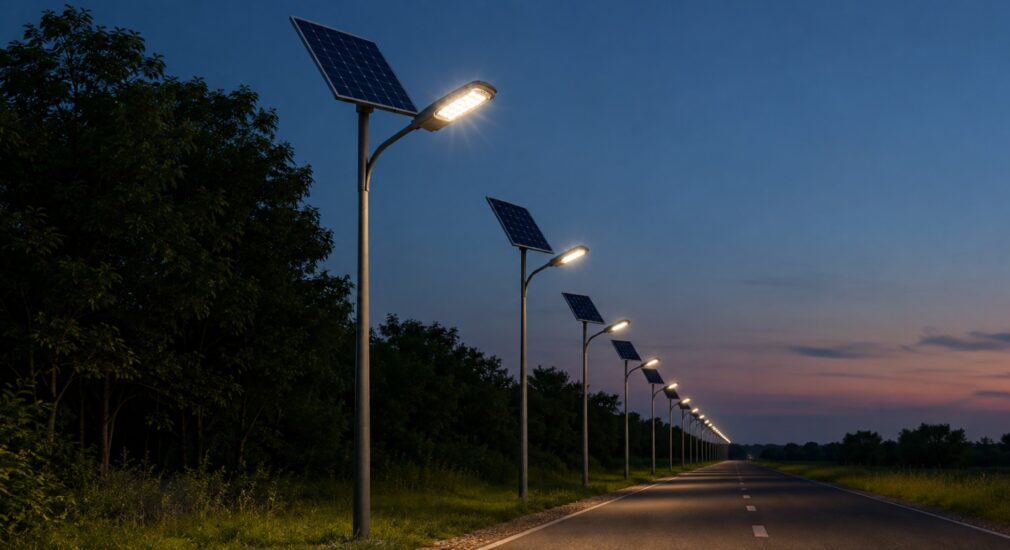
Solar lighting has evolved from a simple off-grid lighting option into a practical solution for architectural, landscape, commercial, hospitality, infrastructure and public-space projects. By combining high-efficiency LED technology with solar energy generation, battery storage and intelligent controls, modern solar lighting systems can provide reliable illumination while reducing dependence on conventional electrical infrastructure.
For architects, lighting designers, developers, MEP consultants, contractors and project procurement teams, successful solar lighting is not simply about selecting a solar-powered fixture. It requires a considered solar lighting design that evaluates the location, illumination requirements, solar availability, operating hours, mounting conditions, environmental factors and expected system performance.
Luzion develops architectural and outdoor lighting solutions for projects across international markets, supporting applications where efficient, durable and visually integrated illumination is required.
What Is Solar Lighting?
Solar lighting is an outdoor lighting system that uses sunlight as its primary energy source. During the day, a photovoltaic solar panel converts sunlight into electrical energy, which is stored in a battery. After sunset, the stored energy powers an LED luminaire according to the required operating schedule.
A typical solar lighting system consists of:
- Solar photovoltaic panel
- High-efficiency LED luminaire
- Rechargeable battery
- Charge controller
- Intelligent lighting control
- Mounting structure and accessories
The configuration of these components depends on the project’s location, required illumination, operating hours, environmental conditions and application.
Unlike conventional grid-connected lighting, solar lighting can reduce the requirement for underground electrical cabling and grid power connections. This makes it particularly useful for outdoor areas, remote locations, landscaped environments and developments where extending electrical infrastructure may be difficult or costly.
What Is Solar Lighting Design?
Solar lighting design is the process of planning and engineering a solar-powered lighting system to achieve the required visual performance, energy autonomy and project objectives.
A professional design considers much more than LED wattage. The solar resource available at the project location, required illumination levels, mounting height, beam distribution, battery capacity, panel configuration and operating schedule all influence the final system.
For architectural and landscape projects, the design must also consider the visual character of the space. Fixtures should provide the required illumination without creating excessive glare, unwanted brightness or visual clutter.
Depending on the application, solar lighting design may include:
- Site and environmental assessment
- Lighting requirement analysis
- Solar exposure evaluation
- Luminaire and optical selection
- Photometric calculations
- Solar panel assessment
- Battery and autonomy considerations
- Mounting and positioning
- Lighting control strategy
- Technical product specification
This approach allows solar lighting solutions to be developed around the actual project rather than relying on a standard fixture for every application.
Solar Lighting Design Services
Professional solar lighting design services help project teams determine the most appropriate lighting and solar configuration before procurement and installation.
The process generally begins with understanding the project’s location, application and operational requirements. For example, a landscaped hotel pathway may require a completely different lighting strategy from a public road, industrial site or architectural facade.
A project-specific solar lighting service can include concept development, fixture selection, lighting calculations, technical recommendations and product specifications. Where required, the lighting design can also be coordinated with the architectural, landscape and electrical requirements of the wider development.
For architects and lighting designers, this provides greater control over the appearance and performance of the completed installation. For developers, contractors and procurement teams, it can help establish clearer technical requirements before products are selected.
How a Solar Lighting System Works
The operating principle is straightforward:
Sunlight → Solar Panel → Energy Storage → LED Lighting → Controlled Illumination
During daylight hours, the solar panel generates electricity and charges the battery. Once ambient light levels fall, the control system activates the LED luminaire according to the programmed operating schedule.
The performance of the system depends on the relationship between solar generation, energy storage and lighting consumption. Therefore, solar panel capacity, battery capacity, LED power and operating duration need to be considered together during the design stage.
This is particularly important in locations where seasonal solar availability, high temperatures, dust or other environmental conditions can influence system performance.
Key Factors in Solar Lighting Design
A reliable solar lighting solution begins with the correct project assessment. Important considerations include:
Project Location
Geographic location influences solar availability and the amount of energy that can be generated throughout the year. The design should consider local solar conditions rather than applying a generic configuration.
Required Illumination
The lighting objective determines the required LED output, optical distribution and fixture positioning. Pathways, roads, facades, gardens and commercial outdoor areas may each have different illumination requirements.
Operating Hours
The expected nighttime operating period directly affects energy consumption and battery requirements. Systems may also use intelligent dimming or scheduled operation to optimize energy use.
Battery Autonomy
Battery capacity should be evaluated according to expected operating hours and required autonomy. The objective is to maintain dependable operation under the expected environmental and seasonal conditions.
Solar Panel Performance
Panel orientation, available sunlight, shading and environmental conditions influence energy generation. These factors should be evaluated during the design process.
Optical Distribution
Beam angle and light distribution are essential for directing illumination where it is needed. Correct optical selection can improve uniformity while minimizing unnecessary light spill and glare.
Environmental Protection
Outdoor solar luminaires may be exposed to rain, dust, humidity, heat and other environmental conditions. Appropriate construction, materials and protection ratings should therefore be considered according to the project environment.
Solar Lighting Beyond the Fixture
The most effective solar lighting projects treat lighting as part of the overall architectural or outdoor environment rather than as an isolated product.
For a landscape project, the objective may be to create comfortable pathway illumination, highlight planting and enhance architectural features. For a commercial development, the priority may be safety, wayfinding, visual identity and efficient operation. In a remote infrastructure project, reliability and energy autonomy may become the primary considerations.
This is why solar lighting solutions should be developed around the project’s purpose, environment and performance requirements.
For product-based requirements, Luzion’s Solar Lights category provides access to solar lighting products, while professional project requirements can be approached through a project-specific lighting design and specification process.
Types of Solar Lighting Solutions & Project Applications
Solar lighting can be adapted to a wide range of outdoor environments, from private landscapes and hospitality developments to commercial properties, public infrastructure and large-scale urban projects. The right solution depends on the character of the space, required illumination, operating conditions and the role lighting needs to play within the overall project.
Modern solar lighting solutions can be designed for functional illumination, architectural enhancement, landscape ambience, wayfinding, safety and energy-conscious outdoor development.
Solar Outdoor Lighting Solutions
Solar outdoor lighting is suitable for areas where reliable illumination is required without depending entirely on conventional grid infrastructure.
Applications can include:
- Building entrances
- Walkways and pedestrian zones
- Gardens and landscapes
- Parking areas
- Courtyards
- Outdoor seating areas
- Driveways
- Public spaces
- Roads and access routes
The design should balance useful illumination with the visual requirements of the environment. In premium developments, the lighting system should complement the architecture and landscape rather than appearing as an independent technical element.
Solar Architectural Lighting
Solar architectural lighting can be used where outdoor architectural features need to be illuminated with reduced dependence on grid electricity.
Architectural applications may include facades, entrances, boundary structures, columns, landscape walls and selected building details. The lighting approach can be subtle and integrated, emphasizing form, texture and architectural geometry.
For architectural projects, fixture positioning and optical distribution are particularly important. The objective is not simply to produce brightness, but to create controlled illumination that supports the character of the building.
Solar-powered architectural lighting can be considered for developments where electrical infrastructure is limited or where energy-conscious design is an important part of the project brief.
Solar Landscape & Garden Lighting
Landscape environments are among the most natural applications for solar lighting.
Solar landscape lighting can enhance gardens, planting zones, pathways, water features, outdoor seating areas and architectural elements within a landscape.
Typical applications include:
- Garden lighting
- Pathway lighting
- Tree and planting illumination
- Landscape feature lighting
- Driveway lighting
- Courtyard lighting
- Park lighting
- Outdoor amenity areas
A successful landscape lighting design uses different levels and distributions of light to create depth and visual hierarchy. Solar fixtures can be positioned where electrical cabling may be difficult to introduce without disturbing completed landscape works.
Solar Pathway & Bollard Lighting
Pathways require comfortable and consistent illumination to support movement and orientation after dark.
Solar pathway lighting and solar bollard lighting can be used along pedestrian routes, garden paths, hotel walkways, residential developments, campuses and public spaces.
Fixture spacing, mounting height, optical distribution and surrounding surfaces all influence the final result. Excessive brightness is not necessarily better; controlled and appropriately distributed light can provide a more comfortable outdoor environment.
For hospitality and residential landscapes, bollard and pathway lighting can also contribute to the overall visual identity of the development.
Solar Street Lighting
Solar street lighting is designed for roads, access routes, public areas and infrastructure where dependable outdoor illumination is required.
These systems can be particularly useful for locations where grid extension is difficult, remote areas, new developments or projects seeking greater energy independence.
A street-lighting project requires careful consideration of:
- Road geometry
- Pole height
- Mounting position
- Luminaire output
- Optical distribution
- Required illumination
- Traffic and pedestrian conditions
- Operating schedule
- Solar and battery capacity
For larger infrastructure projects, solar street lighting should be approached as a complete system rather than simply selecting a high-wattage solar fixture.
Solar Commercial Lighting
Commercial developments increasingly require outdoor lighting that combines operational efficiency with a strong visual environment.
Solar commercial lighting solutions can be considered for:
- Office developments
- Retail properties
- Shopping centres
- Business parks
- Commercial campuses
- Parking areas
- Building entrances
- Outdoor circulation zones
Lighting can support pedestrian movement, entrances, signage visibility, parking areas and the overall appearance of the property.
For developers and facility owners, the selection should consider not only initial installation but also expected operating requirements, maintenance access and long-term performance.
Solar Lighting for Hotels & Resorts
Hotels and resorts often contain extensive outdoor areas, making lighting an important part of the guest experience.
Solar lighting can be considered for:
- Resort pathways
- Garden areas
- Pool surroundings
- Outdoor restaurants
- Villa access routes
- Courtyards
- Parking areas
- Landscape features
- Recreational spaces
Hospitality lighting requires particular attention to colour quality, glare, fixture appearance and integration with landscape design. The lighting should support the atmosphere of the property while providing the necessary functional illumination.
For luxury developments, discreet fixture design and carefully controlled light distribution can help preserve the visual quality of the landscape after sunset.
Solar Industrial & Infrastructure Lighting
Industrial facilities, logistics areas, warehouses, service roads and infrastructure projects can have extensive outdoor lighting requirements.
Solar industrial lighting solutions may be suitable for access roads, perimeter areas, parking zones, loading areas and other external spaces where independent lighting infrastructure provides a practical advantage.
For infrastructure projects, durability and operational reliability become especially important. Environmental exposure, maintenance access, operating hours and system autonomy should be considered during specification.
Solar Lighting for Residential Developments
Solar lighting can also support outdoor environments within villas, residential communities and larger housing developments.
Applications may include:
- Villa entrances
- Garden pathways
- Driveways
- Community roads
- Parks
- Shared outdoor spaces
- Landscape features
- Boundary areas
Residential solar lighting should maintain a comfortable relationship between architectural illumination and the surrounding landscape. Decorative appearance can be important, but it should not compromise the functional purpose of the lighting.
Solar Public Space & Urban Lighting
Public spaces require lighting that supports safety, navigation and the usability of outdoor environments after dark.
Solar lighting can be considered for:
- Parks
- Pedestrian areas
- Public gardens
- Community spaces
- Recreational areas
- Transit surroundings
- Urban pathways
- Remote public facilities
In these environments, consistent illumination and system reliability are key considerations. The design should also account for vandal resistance, environmental exposure, maintenance requirements and the expected intensity of public use.
Integrated Solar Lighting Solutions
The strongest projects do not treat each outdoor fixture independently. Instead, architectural, landscape, pathway, commercial and infrastructure lighting can be considered as part of one coordinated lighting strategy.
For example, a resort development may combine solar pathway lights with landscape illumination, entrance lighting and selected architectural features. A residential development may integrate solar bollards, community-road lighting and garden illumination.
This coordinated approach creates a more consistent visual environment while allowing the solar lighting system to be matched to the specific requirements of each area.
The result is a solar lighting solution that combines energy-conscious operation, functional performance and architectural sensitivity rather than relying on a one-size-fits-all product selection.
Solar Lighting Solutions for Global Projects
Solar lighting requirements vary significantly from one market to another. Climate, solar availability, architecture, infrastructure, operating conditions and project standards can all influence the appropriate lighting strategy.
A successful solar lighting solution therefore needs to be adapted to its environment rather than based on a single specification for every location. From residential landscapes and hospitality developments to roads, commercial properties and public infrastructure, project-specific planning helps achieve dependable illumination and efficient energy use.
Solar Lighting Solutions in India
India offers a diverse range of applications for solar lighting, from residential and hospitality landscapes to roads, campuses, industrial developments and public infrastructure.
Projects may experience strong sunlight, seasonal monsoons, humidity, dust and significant variations in climate between regions. Solar lighting design should therefore consider local environmental conditions, expected operating hours, battery performance and maintenance requirements.
For architectural and landscape developments, solar pathway lights, garden lights, bollards, facade illumination and outdoor lighting can provide practical illumination while reducing dependence on conventional electrical infrastructure.
Luzion’s lighting expertise in India extends across major project markets and applications, with lighting strategies developed around architecture, environmental conditions and project objectives.
Solar Lighting Solutions in UAE & GCC
The UAE and wider GCC represent important markets for outdoor and architectural lighting, particularly across luxury villas, hospitality developments, commercial destinations, landscapes and infrastructure.
Solar lighting in UAE and GCC projects requires careful attention to intense sunlight, high temperatures, dust, sand and, in coastal areas, humidity and salt exposure.
Applications can include:
- Solar landscape lighting
- Solar pathway lighting
- Solar garden lighting
- Solar street lighting
- Solar architectural lighting
- Solar parking-area lighting
- Solar public-space lighting
In Dubai, Abu Dhabi, Riyadh, Doha, Kuwait City, Muscat and Manama, the design approach should be adapted to the project’s architecture and local environmental conditions rather than simply selecting a standard solar luminaire.
For larger developments, solar lighting can also complement wider energy-efficiency and smart-lighting strategies. The objective is to achieve reliable outdoor illumination while maintaining the premium visual character expected from contemporary GCC architecture.
Solar Lighting Solutions in Saudi Arabia
Saudi Arabia’s large-scale urban, hospitality, infrastructure and residential developments create opportunities for solar lighting across both established cities and developing project locations.
Outdoor areas such as access roads, landscapes, pedestrian routes, parking areas and public spaces may benefit from solar-powered illumination where independent energy generation is advantageous.
The design should account for high temperatures, dust exposure, solar availability, operating schedules and maintenance access. For large infrastructure developments, system reliability and long-term performance should be considered alongside initial installation requirements.
Solar Lighting Solutions in Qatar, Kuwait, Oman & Bahrain
Across Qatar, Kuwait, Oman and Bahrain, solar lighting can support outdoor applications ranging from residential landscapes and hospitality projects to public areas, commercial developments and infrastructure.
Although these markets share some regional environmental characteristics, individual projects can have very different requirements.
For example, a coastal hospitality development may require greater attention to humidity and corrosion protection, while an inland infrastructure project may place greater emphasis on heat, dust and accessibility for maintenance.
This makes solar lighting design services particularly valuable for projects where environmental conditions and operational requirements need to be evaluated before final product selection.
Solar Lighting Solutions in the USA
The USA presents a broad range of solar lighting applications across residential, commercial, municipal, landscape, infrastructure and remote outdoor projects.
Project requirements can vary considerably between regions. Solar lighting designed for a warm and sunny environment may require a different approach from a project exposed to colder temperatures, snow or seasonal variations in sunlight.
Applications may include:
- Pathways and pedestrian areas
- Parks and public spaces
- Parking facilities
- Commercial properties
- Residential landscapes
- Remote infrastructure
- Solar street lighting
- Outdoor recreational areas
For American projects, site-specific solar analysis, operating requirements and environmental conditions should guide the selection of the complete system.
Solar Lighting Solutions in the UK & Europe
Solar lighting can contribute to outdoor projects across the UK and Europe where sustainability, energy efficiency and reduced grid dependence are important considerations.
However, lower seasonal solar availability in some northern regions makes system planning particularly important. Solar panel performance, battery storage, operating hours and seasonal conditions should be evaluated as part of the design.
Applications can include pathways, parks, gardens, residential developments, hospitality landscapes, public spaces and selected infrastructure projects.
For architectural applications, the visual integration of luminaires is equally important. Solar lighting should complement contemporary architecture and landscape design without introducing unnecessary visual clutter.
Solar Lighting Solutions Across Asia-Pacific
Asia-Pacific includes highly diverse climates and project environments, from tropical regions to temperate and subtropical markets.
Solar lighting applications can support residential communities, resorts, commercial developments, pathways, public spaces, gardens and infrastructure.
In tropical environments, high humidity and rainfall can influence material selection and outdoor protection requirements. In other regions, seasonal solar variation may have a greater effect on system planning.
Markets such as Australia, New Zealand, Japan, South Korea and Southeast Asia therefore benefit from application-specific solar lighting design rather than a universal specification.
Solar Lighting Solutions for Africa
Solar technology has particular relevance for locations where reliable grid infrastructure may be limited or where off-grid lighting can provide a practical alternative.
Applications across Africa can include:
- Solar street lighting
- Rural access lighting
- Public spaces
- Schools and campuses
- Community facilities
- Industrial sites
- Commercial developments
- Pathways and security areas
For remote projects, the design priority may focus strongly on autonomy, durability, energy generation and simplified maintenance.
For urban and commercial projects, architectural appearance and user experience can be equally important. The appropriate balance depends on the purpose and scale of the development.
Designing Solar Lighting for Different Climates
A global solar lighting strategy must account for environmental differences rather than treating every project in the same way.
Hot & Arid Environments
High temperatures, dust and intense solar exposure can influence fixture, battery and system performance. Suitable materials, thermal considerations and protection against environmental exposure should be evaluated.
Coastal Environments
Humidity and airborne salt can increase corrosion risk. Material selection, surface protection and suitable outdoor construction become important considerations.
Tropical Environments
Heavy rainfall and high humidity require appropriate environmental protection and careful consideration of drainage, materials and long-term outdoor exposure.
Cold & Seasonal Environments
Lower temperatures and seasonal changes in daylight can influence battery performance and available solar energy. System sizing should account for expected seasonal operating conditions.
A Global Approach to Solar Lighting Design
Worldwide solar lighting projects require a balance between consistent engineering principles and local project knowledge.
The fundamental design process remains similar, but the final specification should respond to:
Location → Solar Conditions → Climate → Application → Illumination → Operating Hours → Energy Storage → Environment → Maintenance
This approach allows solar lighting solutions to be developed for the actual project rather than relying on a generic product specification.
For architects, developers, lighting designers, MEP consultants and contractors, this also creates a clearer basis for evaluating products and technical proposals.
Solar Lighting for International Architectural Projects
Solar lighting is no longer limited to basic street or pathway applications. With modern LED technology and carefully planned system design, it can become part of sophisticated architectural and landscape environments.
Luxury villas, hotels, resorts, commercial developments, residential communities and public spaces can incorporate solar lighting where the technology and project conditions are appropriate.
The strongest results come from integrating solar lighting into the overall architectural lighting concept. Pathways can guide movement, landscape fixtures can reveal planting and outdoor spaces, while architectural lighting can emphasize selected forms and features.
This creates an exterior environment that is both functional and visually considered.
Choosing a Solar Lighting Partner for Global Projects
International projects require more than access to lighting products. Project teams often need technical guidance, appropriate product selection, lighting calculations, documentation and coordination with the wider design.
A capable solar lighting design company should understand both lighting and the environmental requirements of solar-powered systems.
Luzion combines architectural lighting expertise with LED product development and project-focused lighting solutions. Its wider lighting design capabilities include project evaluation, photometric analysis, product specification and technical support across commercial, hospitality, residential, industrial and infrastructure applications.
The objective is to create a solar lighting system that is appropriate for the location, visually compatible with the architecture and practical for long-term operation.
From India and the GCC to the USA, UK, Europe, Asia-Pacific and Africa, the principle remains the same: design the lighting around the project, not the project around the product.
Selecting the Right Solar Lighting Solution
Choosing the right solar lighting solution requires a balance between lighting performance, solar energy generation, energy storage, environmental conditions and the purpose of the space.
A higher wattage fixture does not automatically mean better lighting. The right solution should deliver the required illumination where it is needed while maintaining appropriate operating hours and energy autonomy.
Key considerations include:
- Project location and solar availability
- Required illumination and uniformity
- LED wattage and efficacy
- Beam angle and light distribution
- Mounting height and spacing
- Daily operating hours
- Battery capacity and autonomy
- Solar panel configuration
- Environmental exposure
- IP and mechanical protection
- Maintenance accessibility
- Expected operating life
For architectural and landscape projects, aesthetics should also be considered. Fixture proportions, mounting details, light colour and glare control can significantly influence the appearance of a completed project.
Solar Lighting vs Conventional Outdoor Lighting
Solar lighting and conventional grid-connected lighting can both provide effective outdoor illumination, but their infrastructure and energy requirements are different.
| Factor | Solar Lighting | Conventional Outdoor Lighting |
|---|---|---|
| Energy Source | Solar energy | Electrical grid |
| Grid Dependency | Low or none | Required |
| Electrical Cabling | Reduced | Generally required |
| Off-Grid Applications | Highly suitable | Limited |
| Installation Flexibility | High | Dependent on infrastructure |
| Energy Storage | Battery-based | Usually not required |
| Best Applications | Outdoor, remote and off-grid areas | Grid-connected developments |
The better option depends on the project. Solar lighting can be particularly attractive where extending electrical infrastructure is difficult or where energy independence is part of the project objective. Conventional lighting may remain more appropriate where reliable grid infrastructure is already available and continuous high-power operation is required.
The decision should therefore be based on a complete project assessment rather than choosing one technology universally.
Smart Solar Lighting Solutions
Modern solar lighting can incorporate intelligent controls to improve energy management and operating efficiency.
Depending on the project requirements, smart functionality may include scheduled dimming, motion-based operation, programmable lighting profiles and automatic dusk-to-dawn control.
For pathways, residential communities, hospitality landscapes and public areas, intelligent operation can help match lighting output to actual usage patterns.
Smart solar lighting can also form part of a broader energy-conscious outdoor lighting strategy, particularly in developments where operating efficiency and responsible energy use are important design objectives.
Sustainable Outdoor Lighting Design
Solar lighting supports sustainable outdoor development by using renewable solar energy rather than relying entirely on grid electricity.
However, sustainability should not be evaluated only by the presence of a solar panel. A genuinely effective solution should also consider:
- Efficient LED technology
- Appropriate lighting levels
- Reduced unnecessary light
- Long-term product durability
- Responsible energy management
- Maintainability
- Appropriate material selection
- Reduced infrastructure requirements where practical
Good solar lighting design therefore combines energy efficiency with useful illumination, durability and responsible light distribution.
Why Professional Solar Lighting Design Matters
A solar lighting project can underperform when the fixture, battery, panel and lighting requirements are considered independently.
Professional solar lighting design services bring these elements together into one coordinated solution.
For architects and lighting designers, this can mean better integration with the visual concept. Developers can evaluate solutions against project requirements, while MEP consultants and contractors can work from clearer technical specifications.
Depending on the project, professional support may include:
- Project consultation
- Lighting concept development
- Site and application assessment
- Photometric calculations
- Product selection
- Solar system recommendations
- Technical specifications
- Project-specific customization
- Documentation and technical support
This project-based approach is especially valuable for large outdoor developments where lighting performance, appearance and long-term operation all need to work together.
Frequently Asked Questions
1. What is solar lighting design?
Solar lighting design is the process of planning a solar-powered lighting system according to the project’s location, illumination requirements, operating hours, solar availability, battery capacity, fixture performance and environmental conditions.
2. What are solar lighting solutions used for?
Solar lighting solutions can be used for pathways, gardens, landscapes, architectural features, streets, parking areas, commercial properties, hotels, resorts, residential developments, public spaces and infrastructure.
3. Is solar lighting suitable for architectural projects?
Yes. Solar lighting can be considered for selected architectural, façade, landscape and outdoor applications where the project’s solar conditions and lighting requirements are suitable.
4. Can solar lighting be designed for UAE and GCC climates?
Yes. Solar lighting can be designed for UAE and GCC projects with appropriate consideration of high temperatures, dust, sand, solar exposure, humidity and other environmental conditions.
5. What should be considered when selecting solar lighting?
Location, solar availability, illumination requirements, LED output, optical distribution, operating hours, battery autonomy, solar panel capacity, environmental protection and maintenance requirements should all be considered.
6. Does Luzion provide solar lighting solutions for international projects?
Luzion develops and supplies architectural and outdoor LED lighting solutions for projects in India and international markets. Project-specific solar lighting requirements can be evaluated according to the application, location and technical objectives.
Solar Lighting Solutions by Luzion
Luzion provides architectural LED lighting and project-oriented lighting solutions for outdoor, landscape, commercial, hospitality, industrial and architectural applications.
For projects requiring solar-powered illumination, the focus should be on selecting a solution that matches the location, application, environmental conditions and lighting objectives.
From a landscape pathway or luxury resort garden to a commercial development, public space or infrastructure project, solar lighting can be developed as part of a wider outdoor lighting strategy.
Explore the Luzion Solar Lights collection for solar lighting products and applications, or discuss a project requiring a customized solar lighting design and solution.
Related posts
21 Oct 2026
Channel Letter Signage in UAE: Types, Materials and Applications
Channel letter signage is widely used by retail stores, hotels, restaurants, shopping malls and commercial buildings to display business names,…

21 Oct 2026
3D Letter Signage in UAE: Materials, Finishes and Applications
In a competitive commercial environment, signage plays an important role in how customers recognise a brand, locate a business and…
21 Oct 2026
Types of Illuminated Signage: A Guide for UAE & GCC Projects
Illuminated signage plays an important role in how commercial buildings, hotels, retail developments and corporate spaces communicate their identity. In…

17 Oct 2026
Commercial Signage Solutions UAE & GCC
How to Choose Commercial Signage Solutions in the UAE & GCC Commercial signage plays an important role in how people…
02 Oct 2026
Canadian Bespoke Lights
Canadian Bespoke Lighting: Where Design Becomes a Signature Luxury architecture is rarely defined by one element alone. The character of…
subscribe for newsletter

Luzion is a leading manufacturer and exporter of high-quality LED lighting solutions. With a focus on design, research, and innovation, we offer a wide range of products for commercial, industrial, residential, and outdoor spaces.
