

Search
Category
- Bollard Light
- Commercial Lighting
- Energy-Efficient Lighting
- LAMPS
- LED Lights
- LED Uplighter
- Light and Colour Theory
- Lighting Design and Facade Lighting
- Lighting Design Consultancy UAE
- lighting design principles
- Lighting Fundamentals and Design Principles
- Lighting Solutions
- Nature of Light in Lighting Design
- Panel Lights vs. Spot Lights
- Portable Lights
- Signage Solutions
- Smart Controllers for Streetlights
- Solar Lights
- Tree Lighter
- Uncategorized
Recent Posts




Commercial Signage Solutions UAE & GCC

Canadian Bespoke Lights
Tags
- Architectural Lighting
- Architectural Lighting Design
- Architectural Lighting Design UAE
- automation
- Best Lighting Design Consultancy in UAE
- COB LED Technology
- COB Spotlights
- Color Temperature in Lighting
- Commercial Lighting Design
- Commercial Lighting Fixtures
- Commercial Lighting Innovations
- Commercial Lighting UAE
- Cylinder COB Lights
- Dialux Lighting Design
- Dialux Lighting Design UAE
- Energy Efficient Lighting
- Energy-Efficient Lighting USA
- Exterior Lighting Solutions
- Facade & Exterior Lighting
- Facade Lighting
- Facade Lighting Design
- Facade Lighting Design UAE
- Facade lighting ideas
- Facade Lighting UAE
- Facade Uplighting
- Green Building Design
- Indoor & Exterior Lighting Solutions
- Interior Lighting Design
- Lamps
- LED Lighting Solutions
- LED lights
- LED Panel
- LED Uplighters
- LED vs Halogen
- Light and Color Theory
- Lighting Basics
- Lighting Consultancy UAE
- Lighting Design
- Lighting Design Consultancy in UAE
- Lighting Design Principles
- Lighting Design UAE
- Lighting Fundamentals Guide
- Lighting Layers
- Lumen Output in Lighting
- Modern Building Lighting Ideas
- Modern Lighting Ideas
- Office Lighting Solutions
- Outdoor Lighting Consultants UAE
- Panel Lights vs. Spot Lights
- Portable Lights
- smart light
- Smart Lighting Systems
- Sustainable Architecture
- Sustainable Lighting UAE
- Villa Lighting UAE
28Apr 2026
- lighting design principles


Lighting Basics and Design Principles in Contemporary Spaces
Lighting design principles play a critical role in creating spaces that feel comfortable, balanced, and functional. Most people don’t immediately notice good lighting—but they experience it through comfort, clarity, and ease of use.
Lighting is not just about brightness or fixtures. It is about how light behaves in a space and how users interact with it. This is why understanding lighting basics, lighting fundamentals, and basic lighting design concepts is essential for modern interiors and architecture.
These lighting design principles are widely used in projects across Dubai, UAE, USA, and the UK.
Lighting Design Principles: The Lighting Triangle Explained
Lighting design principles are guidelines that help designers plan lighting effectively. They ensure that lighting is not only visually appealing but also functional and efficient.
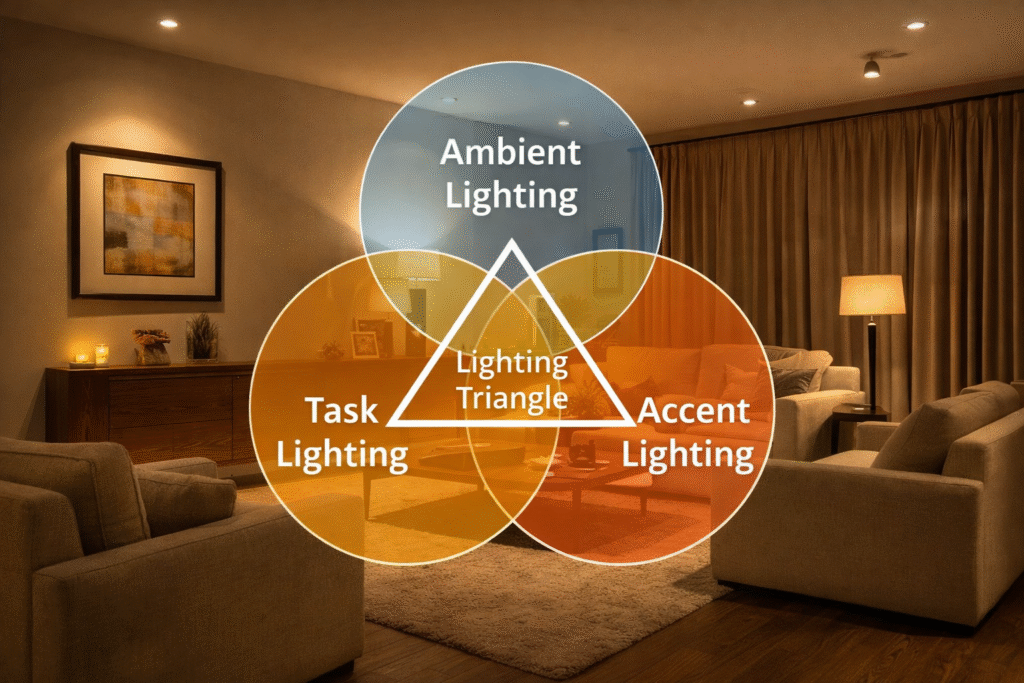
These principles focus on light placement, brightness balance, visual comfort, energy efficiency, and functionality. When applied correctly, they create spaces that feel natural and easy to use.
Ignoring these principles often leads to glare, uneven lighting, or uncomfortable environments—even with expensive fixtures.
Lighting Layers: Why One Light Is Never Enough
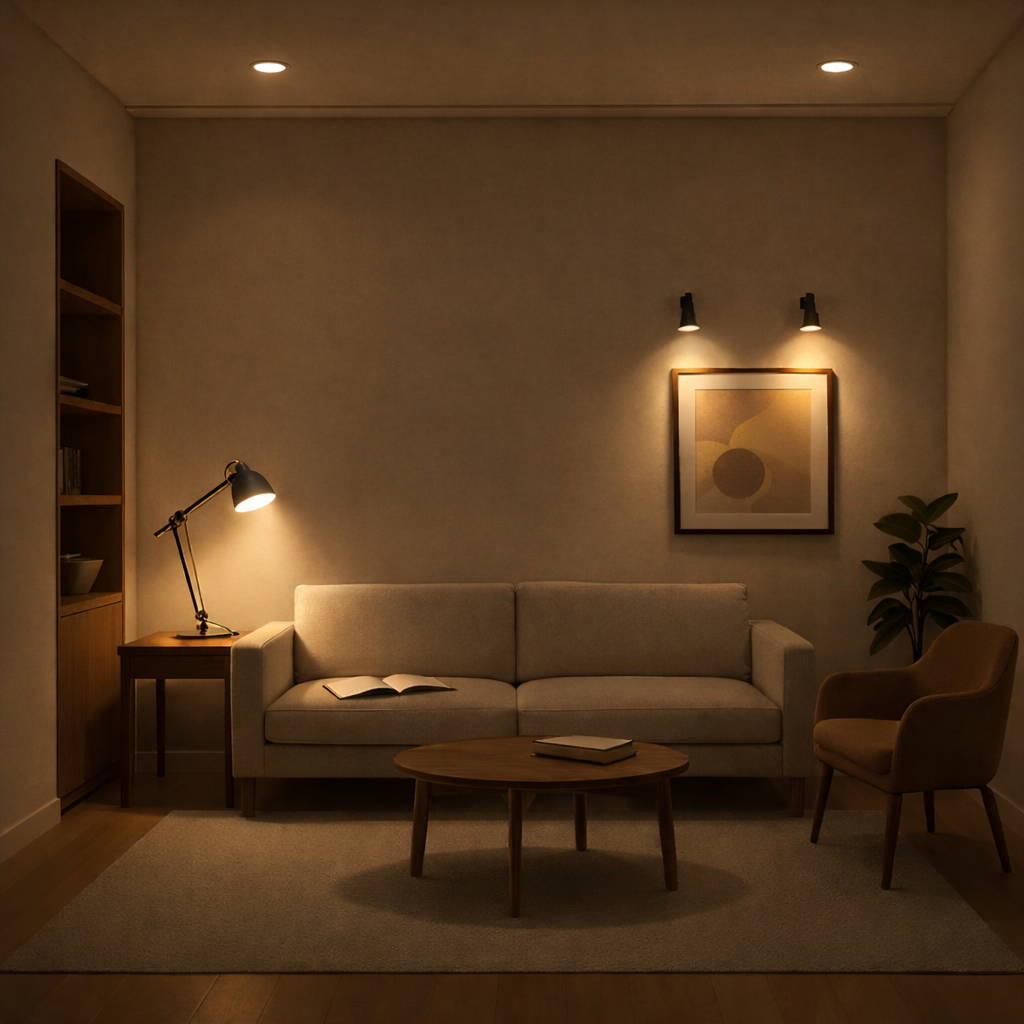
Single-source lighting is rarely sufficient. Without layering, most spaces appear flat and unusable.
This is why lighting layers are used. Lighting layers increase functionality and interest and accommodate various activities throughout the day.
The three layers of lighting that are most commonly employed in lighting projects are ambient lighting, task lighting, and accent lighting.
Lighting Fundamentals Explained
Lighting fundamentals define how light works within a space. They are the technical foundation behind every successful lighting project.
Key fundamentals include light intensity, distribution, color temperature, color rendering, and glare control. Together, these factors determine how a space looks and feels.
Understanding these basics helps designers create lighting that supports both usability and aesthetics.
Types of Lighting in Interior Design
One of the most important lighting basics is understanding lighting layers. A single light source is never enough for modern spaces.
Ambient Lighting
This is the base layer of lighting. It provides general illumination for movement and safety. Ceiling lights and recessed fixtures are commonly used.
Task Lighting
Task lighting supports specific activities like reading, cooking, or working. Proper placement is more important than brightness.
Accent Lighting
Accent lighting highlights features such as artwork or textures. It adds depth and visual interest to a space.
Using these layers correctly is a core part of architectural lighting design principles.
Architectural Lighting Design Principles
Architectural lighting design goes beyond interiors. It focuses on how lighting interacts with structures, materials, and space.
Designers consider factors such as:
- Light direction and shadow
- Surface reflection
- Uniformity and contrast
- Visual hierarchy
These lighting techniques in architecture help enhance both functionality and aesthetics in buildings.
This approach is commonly used in architectural lighting UAE, commercial lighting design USA, and interior lighting design UK projects.
Accent Lighting: Adding Personality to a Space
Accent lighting is the personality that gives a space character. It highlights artwork, architectural details, textures, or display objects.
Common accent lighting includes spotlights, wall washers, and directional lighting. When used properly, accent lighting adds dimension and interest. Too much accent lighting can overwhelm a space—so it’s all about balance.
Lighting Design Guidelines and Standards
Professional lighting follows specific lighting design guidelines to ensure safety, efficiency, and comfort.
These include:
- Proper illumination levels
- Glare control
- Energy efficiency standards
- Uniform light distribution
In regions like:
- UAE → lighting design principles UAE
- USA → lighting design guidelines USA
- UK → lighting design standards UK
Following these standards ensures compliance and long-term performance.
How to Design Lighting for a Room
A common user search is: how to design lighting for a room
Here’s a simple approach:
- Start with ambient lighting
- Add task lighting for functionality
- Use accent lighting for depth
- Balance brightness levels
- Avoid glare and shadows
This method is part of lighting layout design basics used in both residential and commercial projects.
Lighting for Commercial Buildings
Lighting in commercial spaces requires higher precision and planning.
Key considerations:
- Consistent illumination
- Energy-efficient systems
- User comfort and productivity
- Smart lighting controls
This is why businesses often hire a lighting consultant in Dubai, lighting design consultant UK, or commercial lighting design USA experts..
Glare Control: A Frequently Overlooked Issue
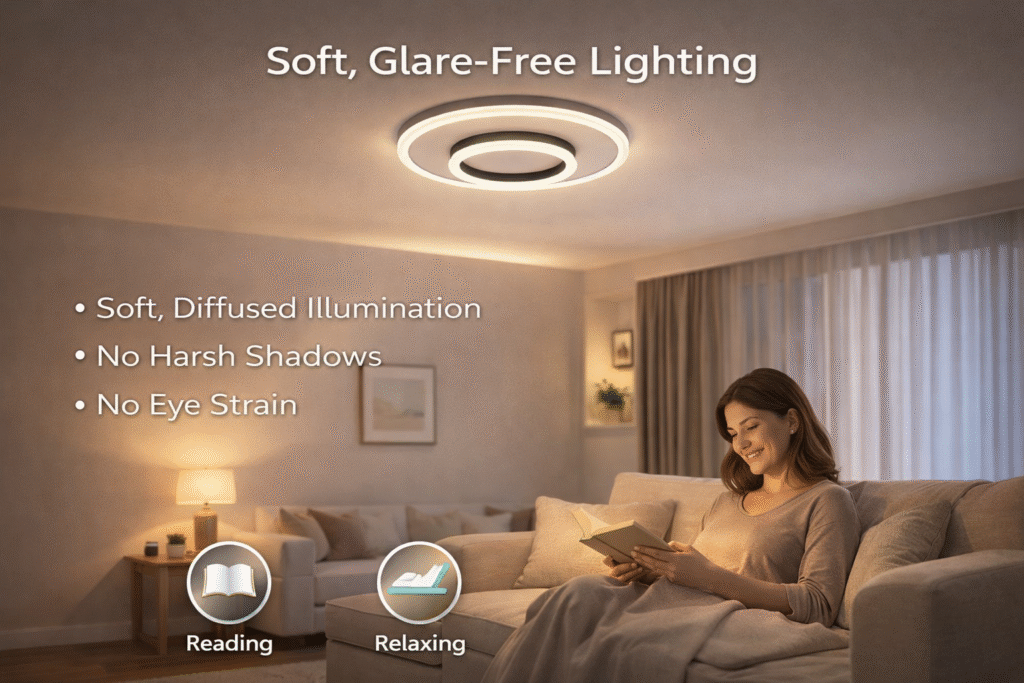
Glare is the number one complaint in poorly designed lighting systems. Glare occurs when lighting is too bright, improperly located, or inadequately controlled.
Glare control usually requires the use of better-designed lighting fixtures, proper directional lighting, and diffused or indirect lighting. Minor adjustments in lighting location can make a world of difference in comfort.
Energy Efficiency: Design with Responsibility
Energy efficiency is no longer a choice in modern lighting design. Energy-efficient lighting systems reduce energy costs and help create sustainable buildings.
LED lighting is now the norm because of its durability, flexibility, and energy efficiency. Combining LED lighting with lighting controls such as dimming, occupancy sensing, and daylight harvesting can reduce energy consumption by a substantial margin without compromising quality.
Effective lighting design does more with less energy—less lighting, smarter design.
Modern lighting standards and energy efficiency guidelines are often referenced by international lighting organizations such as the Illuminating Engineering Society (IES).
Conclusion
At Luzion Lighting, the success of any lighting project depends on applying the right lighting design principles and understanding lighting fundamentals.
By using proper lighting layers, controlling glare, balancing intensity, and following lighting design guidelines, Luzion Lighting creates spaces that are both functional and visually appealing.
Whether it’s a residential interior or a commercial project, these principles improve comfort, efficiency, and overall user experience.
In today’s global markets—including Dubai, UAE, USA, and the UK—Luzion Lighting understands that lighting design is not optional. It is a critical part of modern architecture.
Related posts
21 Oct 2026
Channel Letter Signage in UAE: Types, Materials and Applications
Channel letter signage is widely used by retail stores, hotels, restaurants, shopping malls and commercial buildings to display business names,…
21 Oct 2026
3D Letter Signage in UAE: Materials, Finishes and Applications
In a competitive commercial environment, signage plays an important role in how customers recognise a brand, locate a business and…
21 Oct 2026
Types of Illuminated Signage: A Guide for UAE & GCC Projects
Illuminated signage plays an important role in how commercial buildings, hotels, retail developments and corporate spaces communicate their identity. In…

17 Oct 2026
Commercial Signage Solutions UAE & GCC
How to Choose Commercial Signage Solutions in the UAE & GCC Commercial signage plays an important role in how people…
02 Oct 2026
Canadian Bespoke Lights
Canadian Bespoke Lighting: Where Design Becomes a Signature Luxury architecture is rarely defined by one element alone. The character of…
subscribe for newsletter

Luzion is a leading manufacturer and exporter of high-quality LED lighting solutions. With a focus on design, research, and innovation, we offer a wide range of products for commercial, industrial, residential, and outdoor spaces.
